
3D Printed Permanent Crown Resin for High-Precision Restorations
3180 Permanent Crown Resin is a ceramic-filled biocompatible material for direct 3D printing of definitive single-unit dental restorations. Featuring 0.25% polymerization shrinkage and a dimensional tolerance of ±0.05 mm, it eliminates manual seating adjustments. With 119 MPa fracture strength and ultra-low water sorption (3.8 μg/mm³), 3180 provides labs and clinics a high-strength, stain-resistant, and cost-effective alternative to ceramic milling.
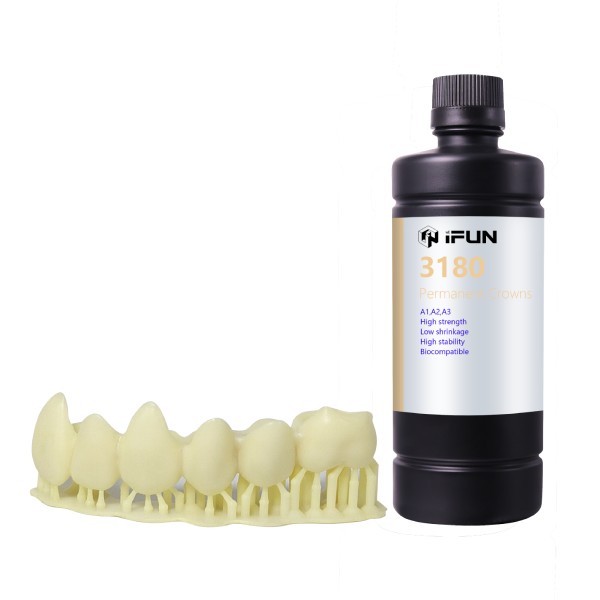
Engineered for Industrial Repeatability
Overcoming the limitations of traditional resin 3D printing with precision optical hardware and robust closed-loop motion systems.
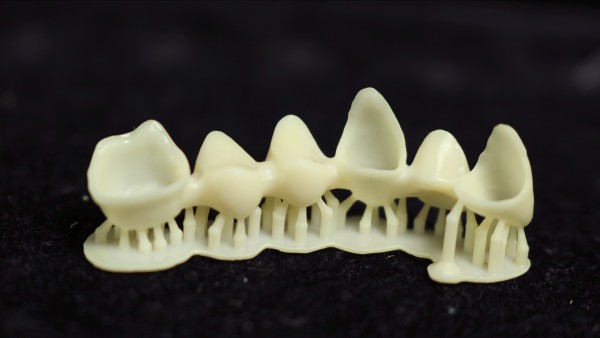
Unmatched Precision & Marginal Fit
Achieve a perfect fit every time. With a low polymerization shrinkage of just 0.25%, this resin delivers a dimensional tolerance of ±0.05 mm, ensuring superior marginal adaptation and reducing the need for chairside adjustments.
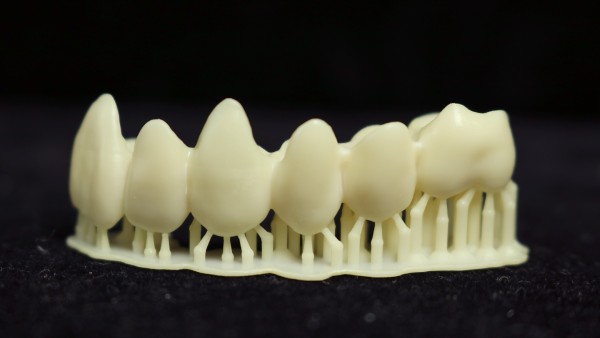
High Mechanical Strength for Longevity
Engineered to endure. Boasting a 119 MPa fracture strength and 92D hardness, our resin is built to withstand continuous occlusal pressure, offering a long-term solution that resists chipping and wear.
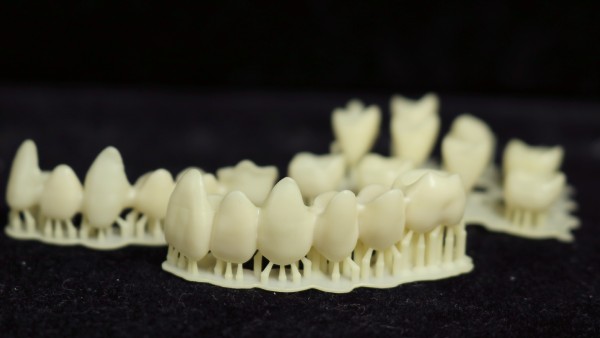
Natural Aesthetics & Color Stability
Create confident smiles. Available in VITA shades A1, A2, and A3, the material features optimized translucency and fluorescence that mimic natural enamel. Thanks to its ultra-low water sorption (3.8 μg/mm³), restorations resist discoloration and plaque accumulation over time.
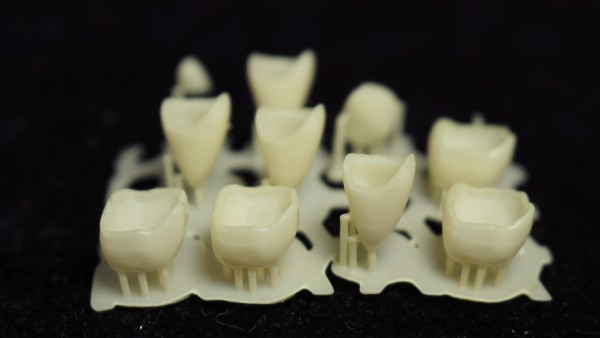
Certified Biocompatibility
Safety first. The 3180 resin is fully validated for long-term intraoral use through comprehensive cytotoxicity and biocompatibility testing, providing peace of mind for both clinicians and patients.
Technical Performance Matrix
Verified parameters and testing protocols for jewelry casting validation.
| Content | Data Value | Testing Method |
|---|---|---|
| Color | A1,A2,A3 | – |
| Density | 2.32g/cm³ | ASM D1875-69(1980) |
| Shrinkage | 0.25% | Capillary method |
| Hardness | 92D | ASTM D2240-05(2010) |
| Flexural modulus | 3612MPa | ASTM D790 |
| Fracture strength | 119MPa | IS010477:2020 |
| Rise strength | 63MPa | ASTM D638 |
Engineering Notes & Technical Interpretation
In-depth material breakdown of how 3180's ceramic-filled matrix dictates sub-0.05 mm marginal accuracy, occlusal durability, and long-term intraoral stability.
Why does a 0.25% polymerization shrinkage rate matter for crown seating?
In digital crown fabrication, shrinkage dictates whether a restoration seats passively or requires manual internal adjustment. High-shrinkage materials deform around delicate internal preparation angles, creating tight spots or distorted margins. At 0.25% shrinkage, 3180 resin preserves the exact internal geometry generated by CAD software, maintaining a consistent 30–50 μm cement gap for predictable clinical placement.
How does ultra-low water sorption (3.8 μg/mm³) affect long-term restorations?
Dental polymers exposed to the oral environment absorb water over time, which hydrolyzes polymer chains, degrades mechanical strength, and absorbs staining agents from food and drink. The dense, ceramic-filled matrix of 3180 limits water absorption to 3.8 μg/mm³, keeping the material clinically stable, color-accurate, and hygienic over years of service.
How does 3180 resin reduce total manufacturing costs compared to ceramic milling blocks?
Milling zirconia or lithium disilicate involves high raw material costs, continuous spindle/bur wear, and substantial material waste during subtractive cutting. Printing 3180 resin uses only the material required for the crown itself, allows dozens of units to be produced simultaneously on a single build platform, and eliminates machine maintenance associated with wet milling units.
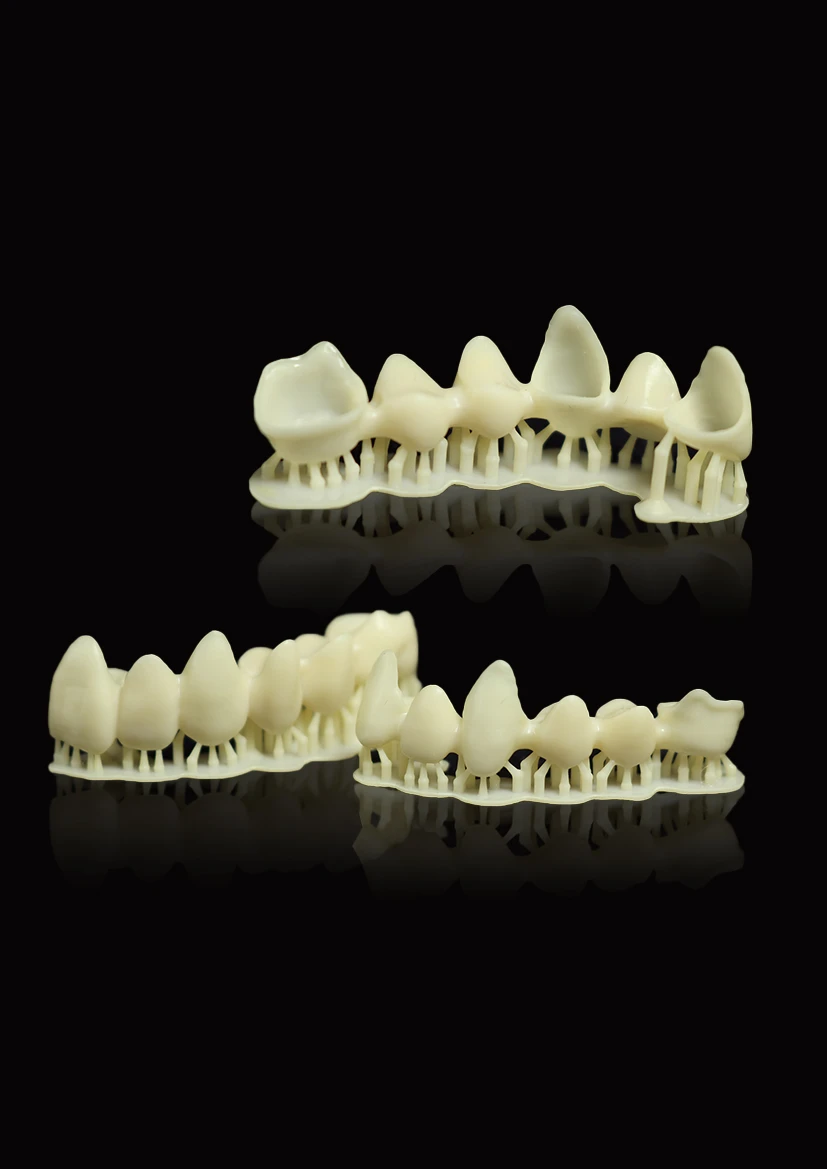
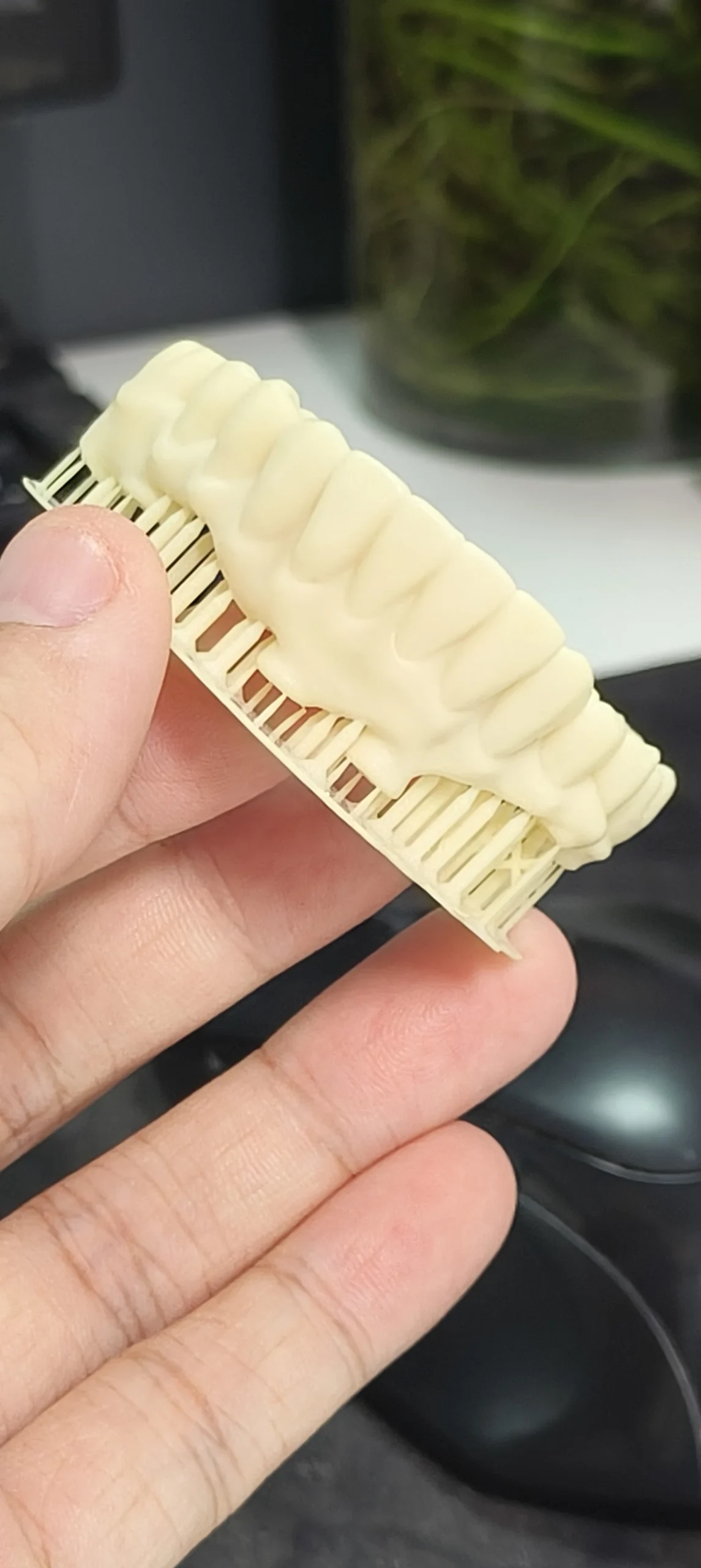
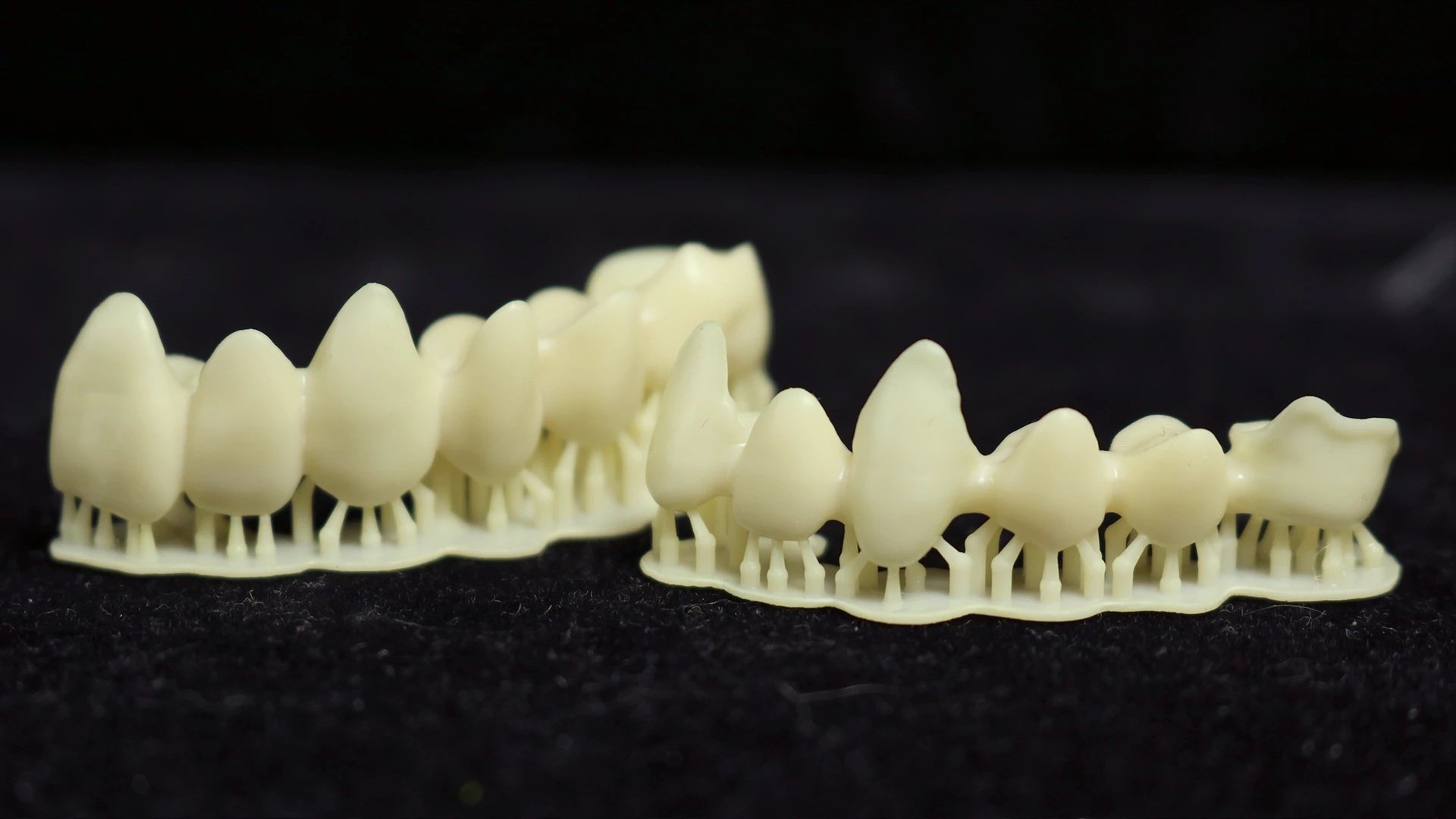
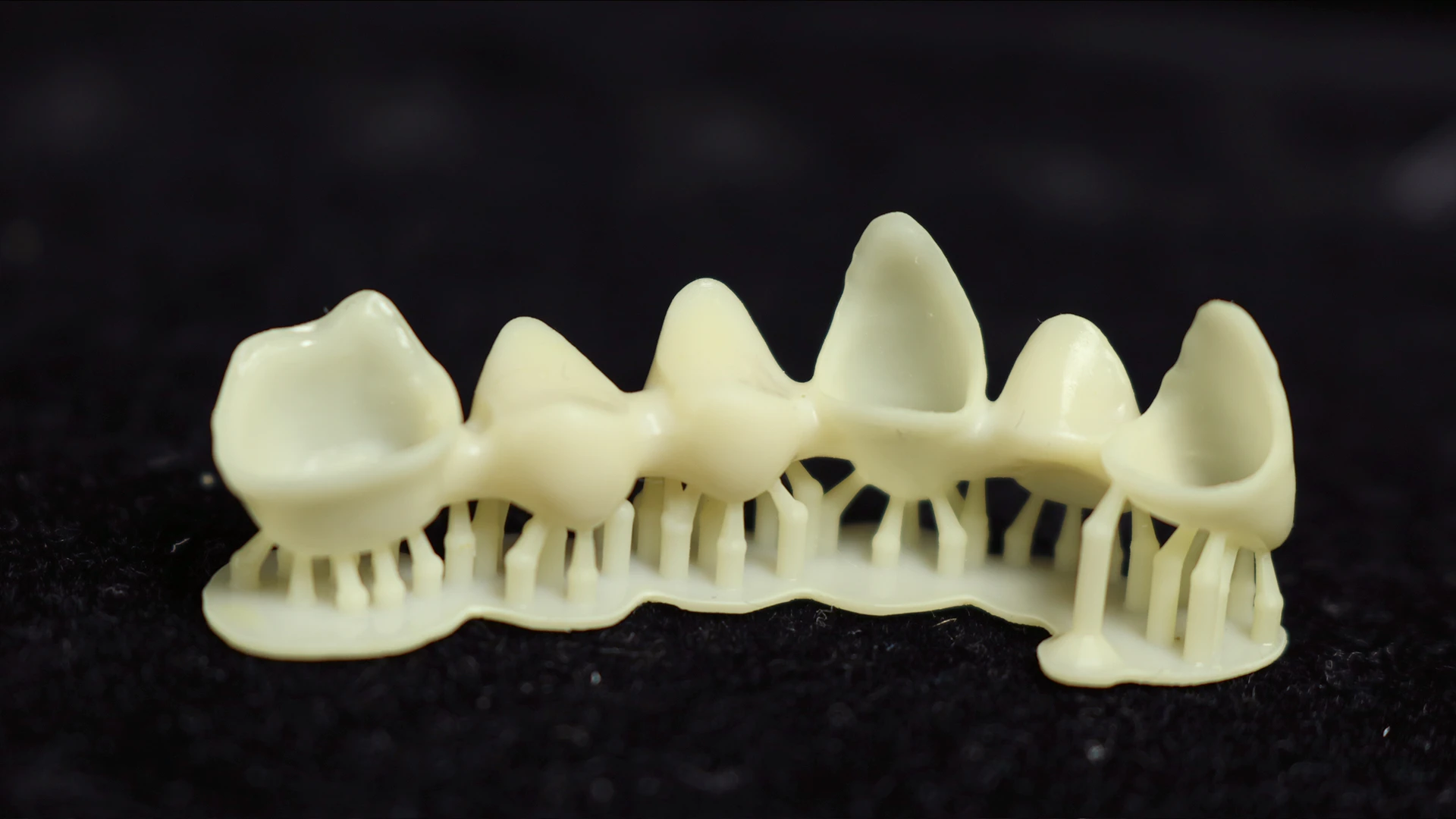
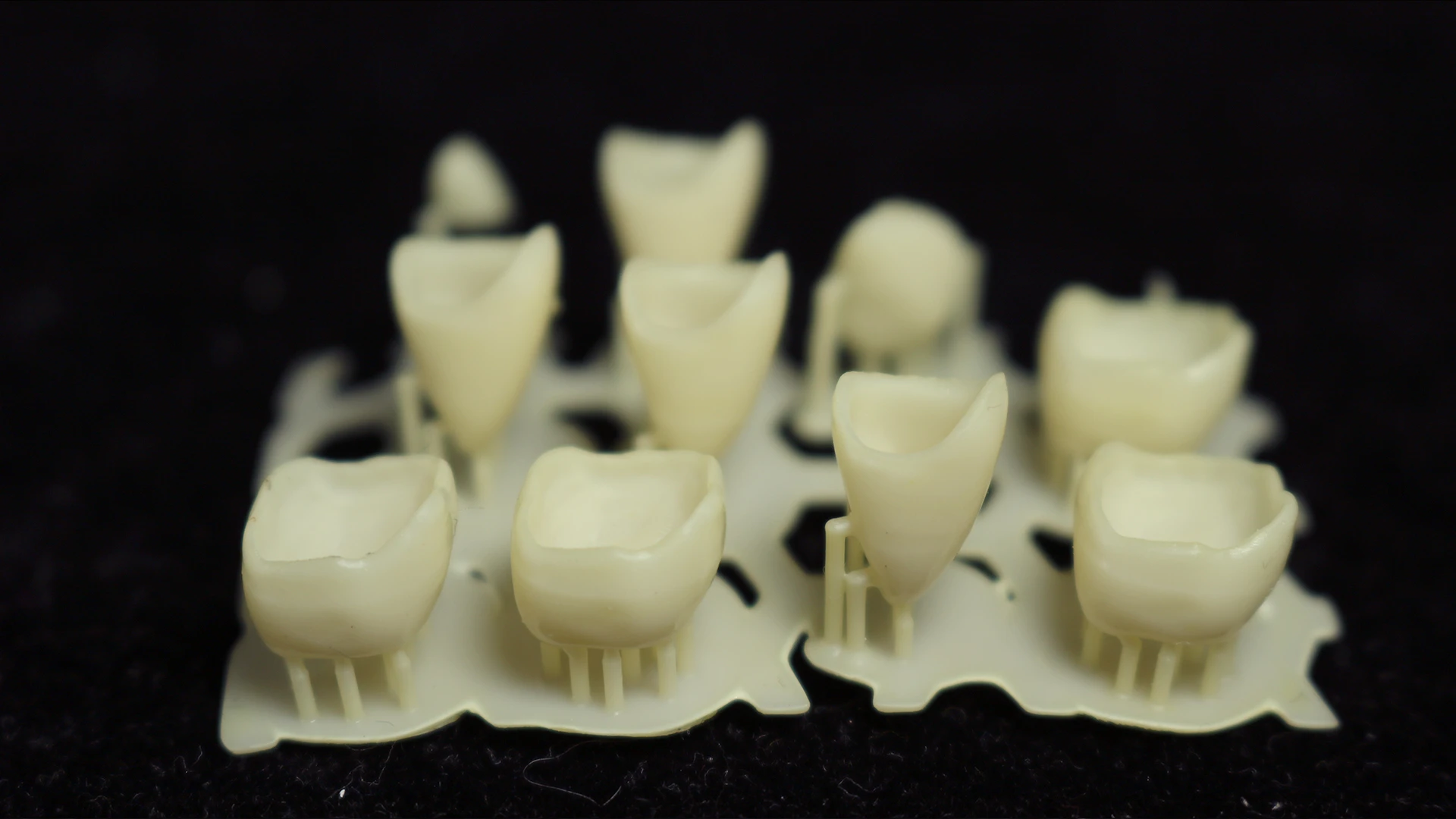
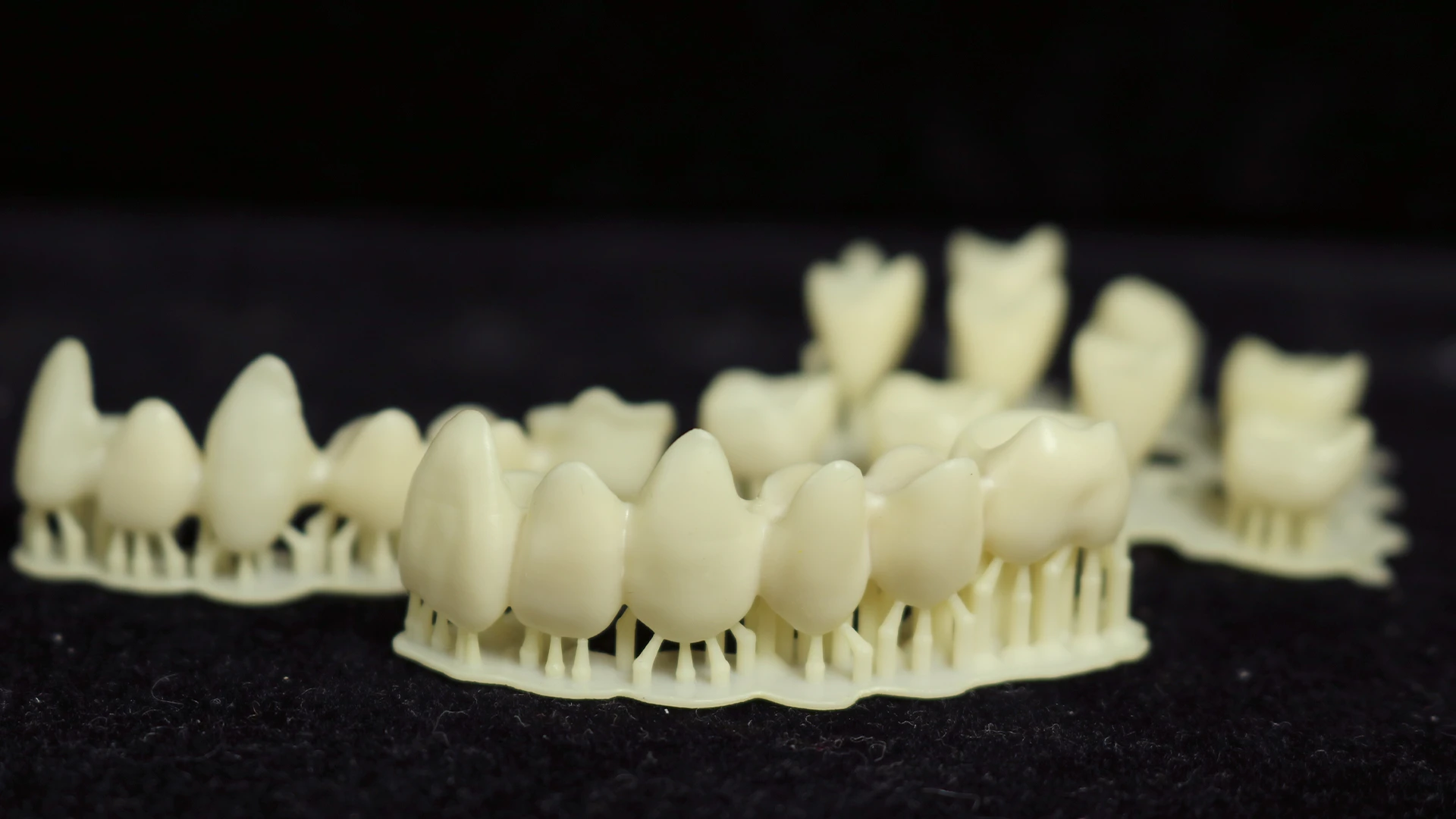
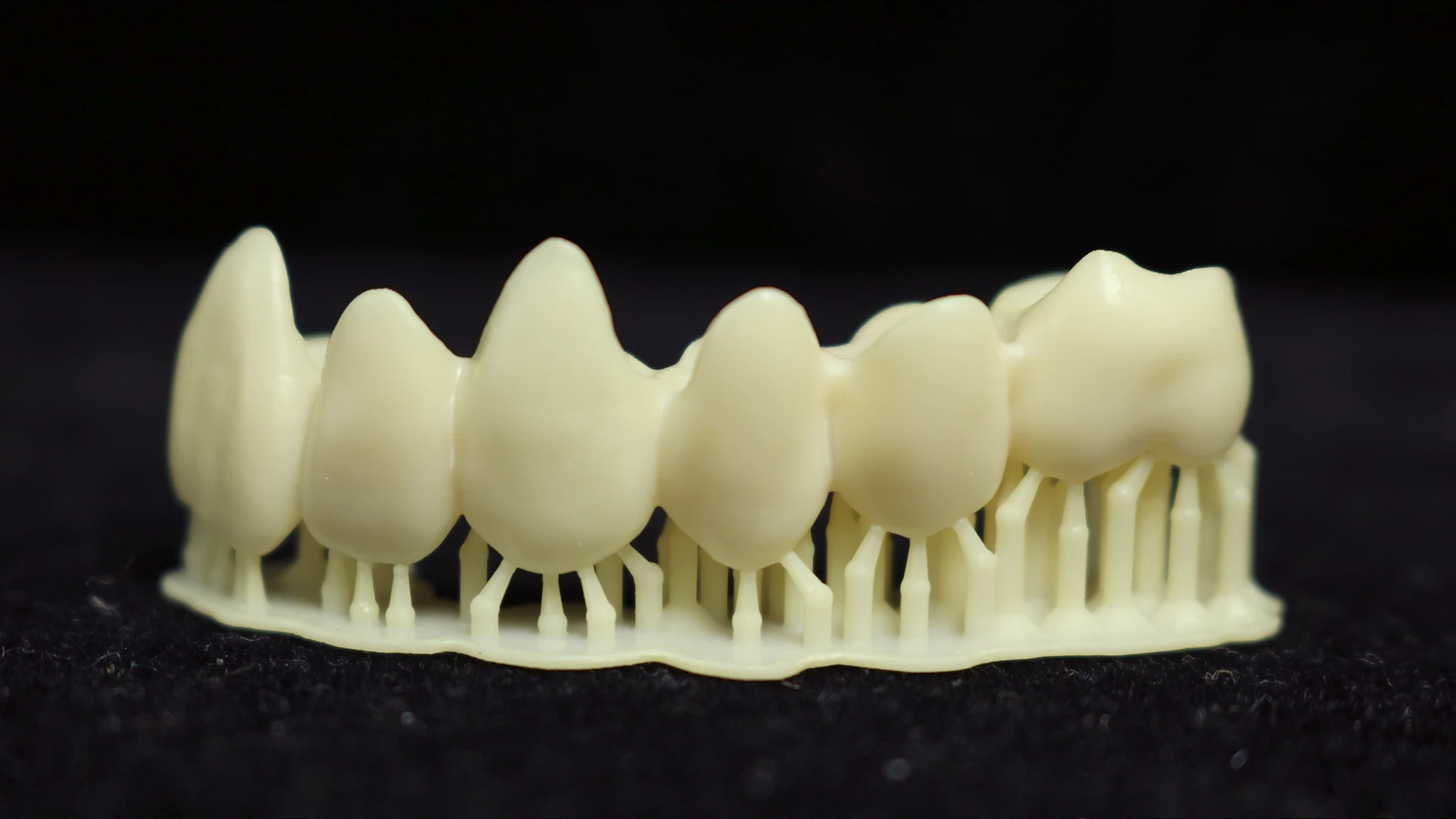
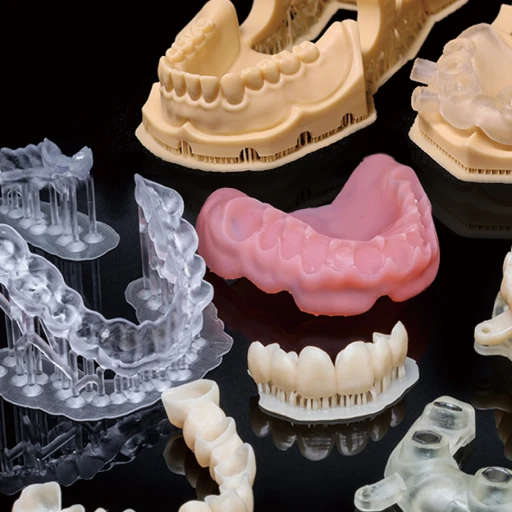
Print & Clinical Results
Explore 3D printed dental resins, precision models, and real-world clinical restorations.
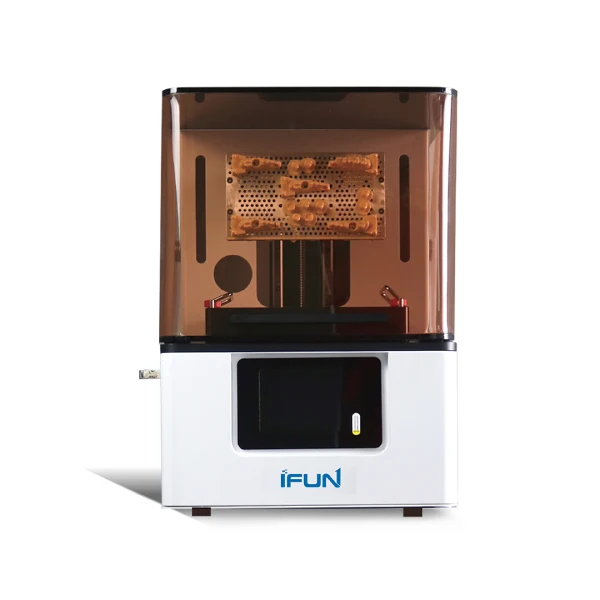
Related Products & Solutions
Discover high-performance 3D printing equipment, specialized resins, and end-to-end digital solutions tailored to your manufacturing needs.
Get an Instant Quote for Your 3D Printing Setup
Connect with our application engineers to select the ideal 3D printer (Resin/Wax) and materials (Dental/Jewelry) for your production, complete with unit cost calculations and a customized proposal.
Need a Faster Response?
Chat directly with our sales engineers on WhatsApp for quick price estimates, resin matching, or bulk ordering details.