
Biocompatible Temporary Crown Resin for High-Precision Dental 3D Printing
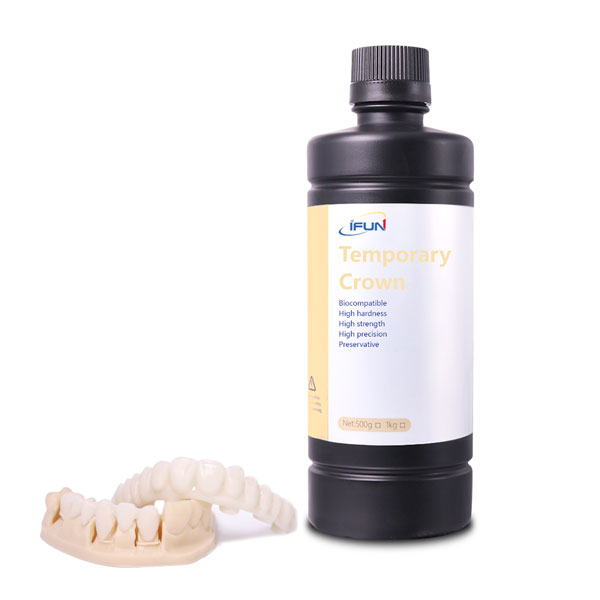
Temporary Crown Resin 3164 is an ISO 10993-certified 3D printing photopolymer engineered for high-precision, same-day temporary crowns, bridges, and inlays. Combining high bending strength (>55 MPa), flexural modulus (1600 MPa), and ultra-low shrinkage (<0.5%), this tooth-colored resin delivers fracture-resistant provisional restorations with seamless marginal fit in under 2 hours—eliminating manual chairside adjustments and emergency remakes for dental clinics and labs.
Engineered for Industrial Repeatability
Overcoming the limitations of traditional resin 3D printing with precision optical hardware and robust closed-loop motion systems.

Fast Chairside Production
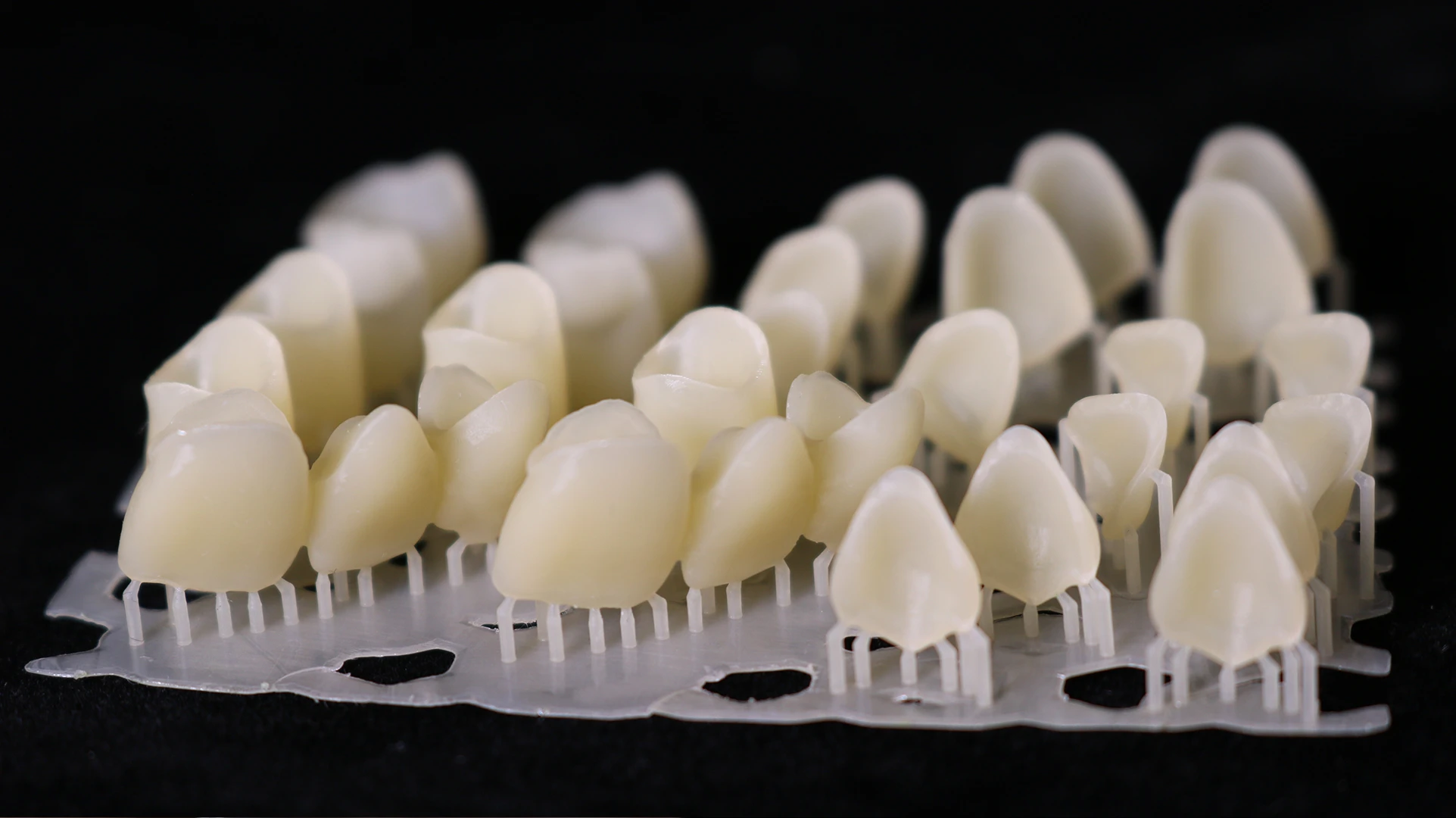
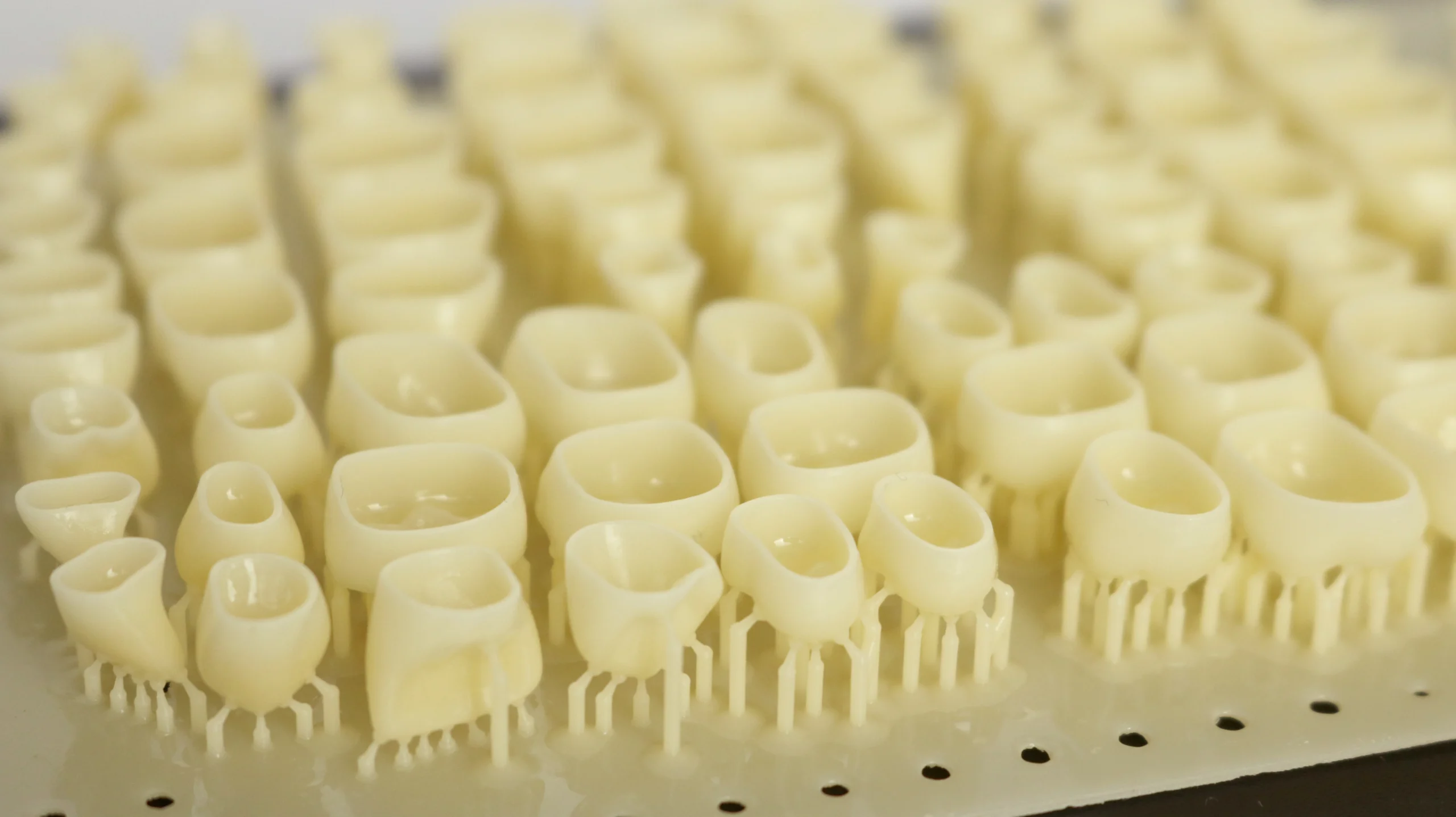
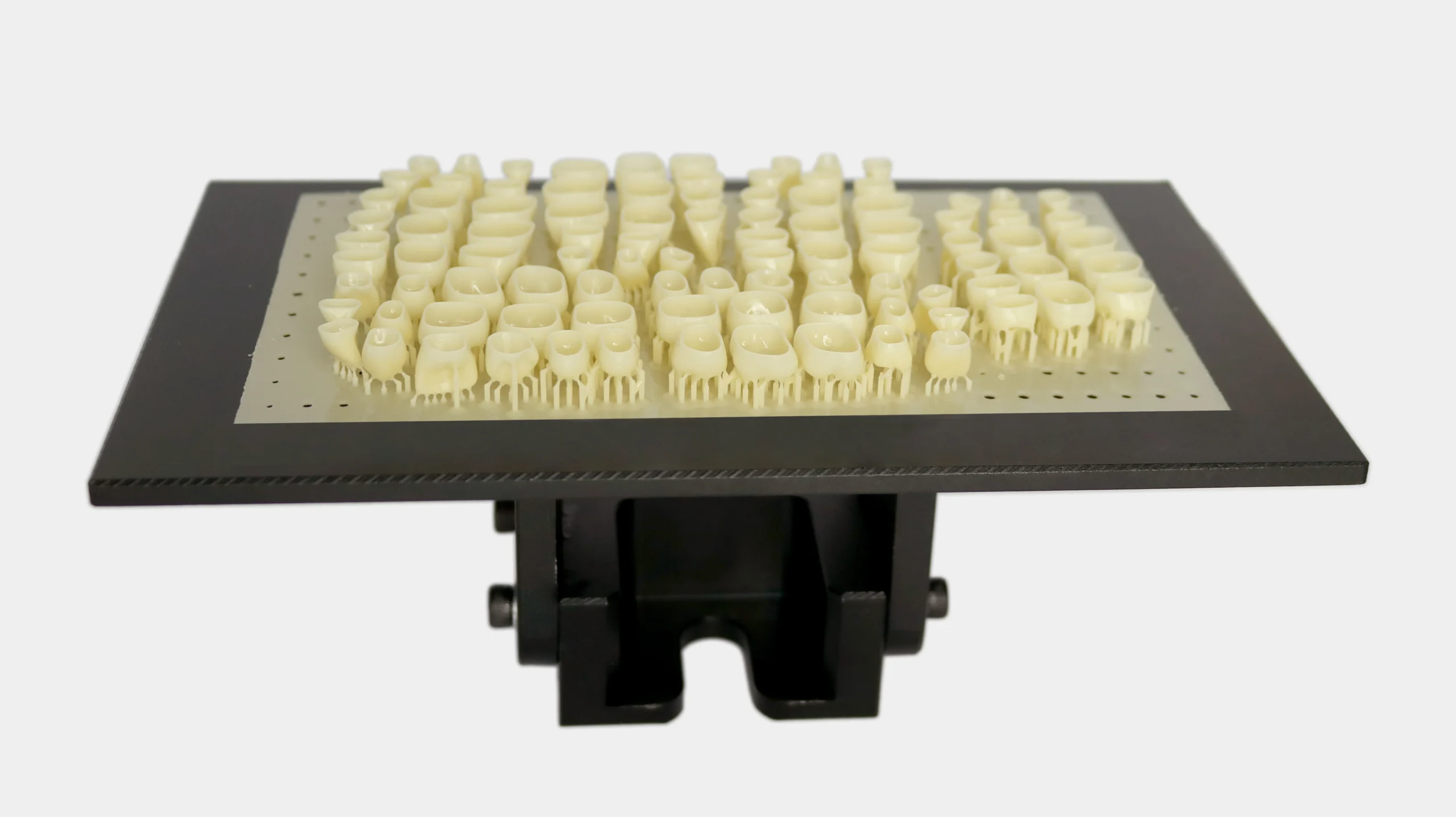
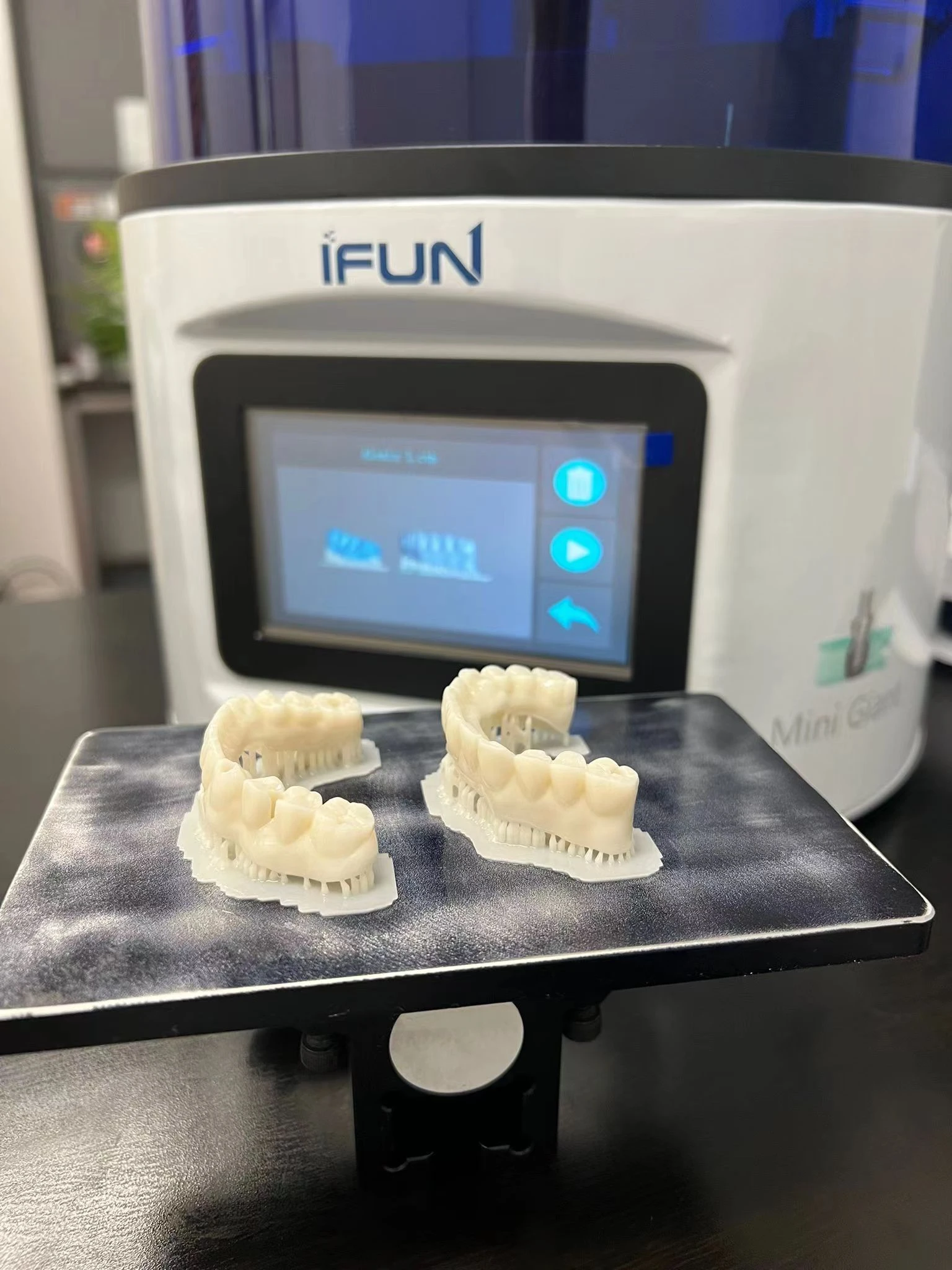
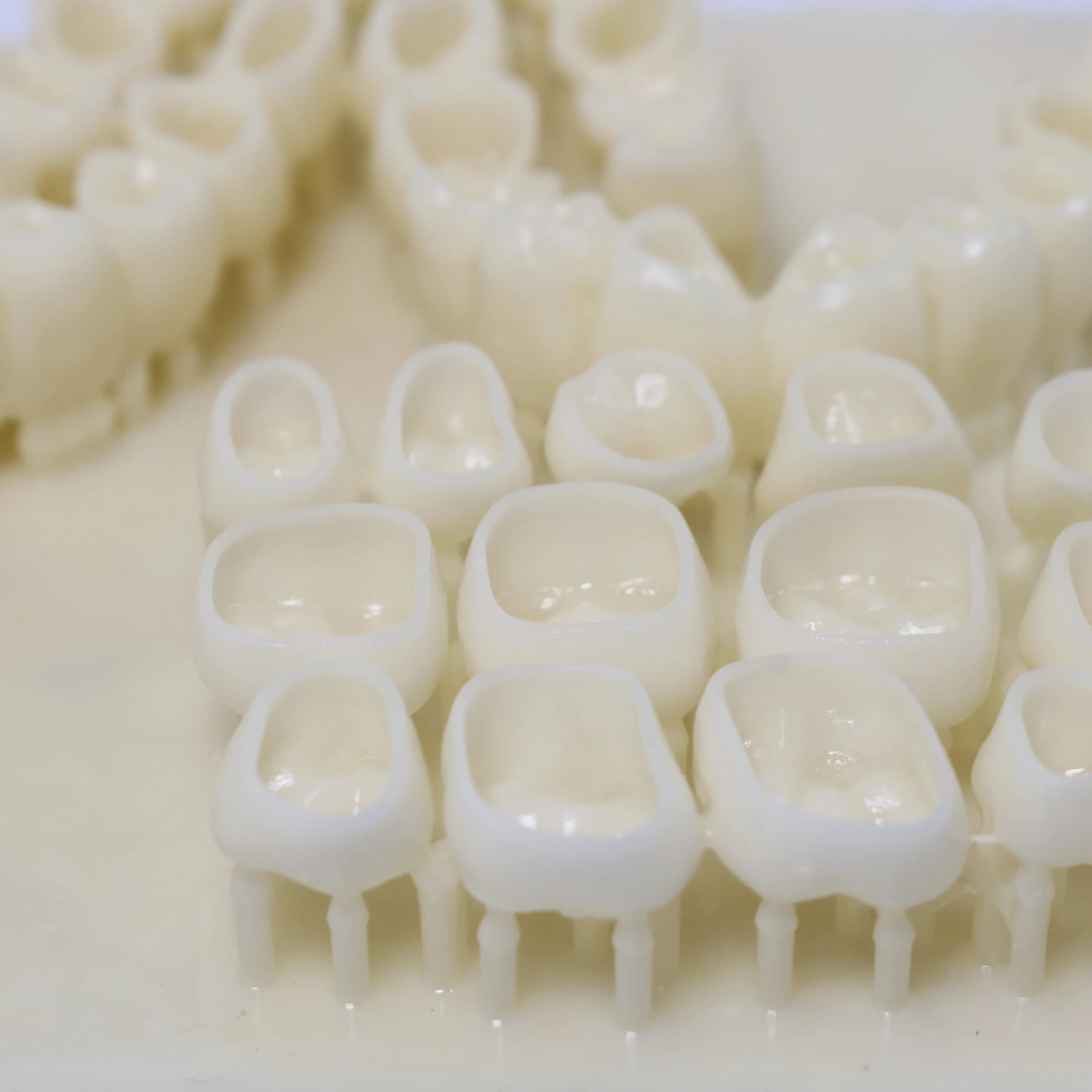
Print up to 88 resin crowns in just 50 minutes; full workflow from scan to delivery in under 2 hours—reducing patient chair time and enabling true same-day dentistry.

Natural Aesthetics
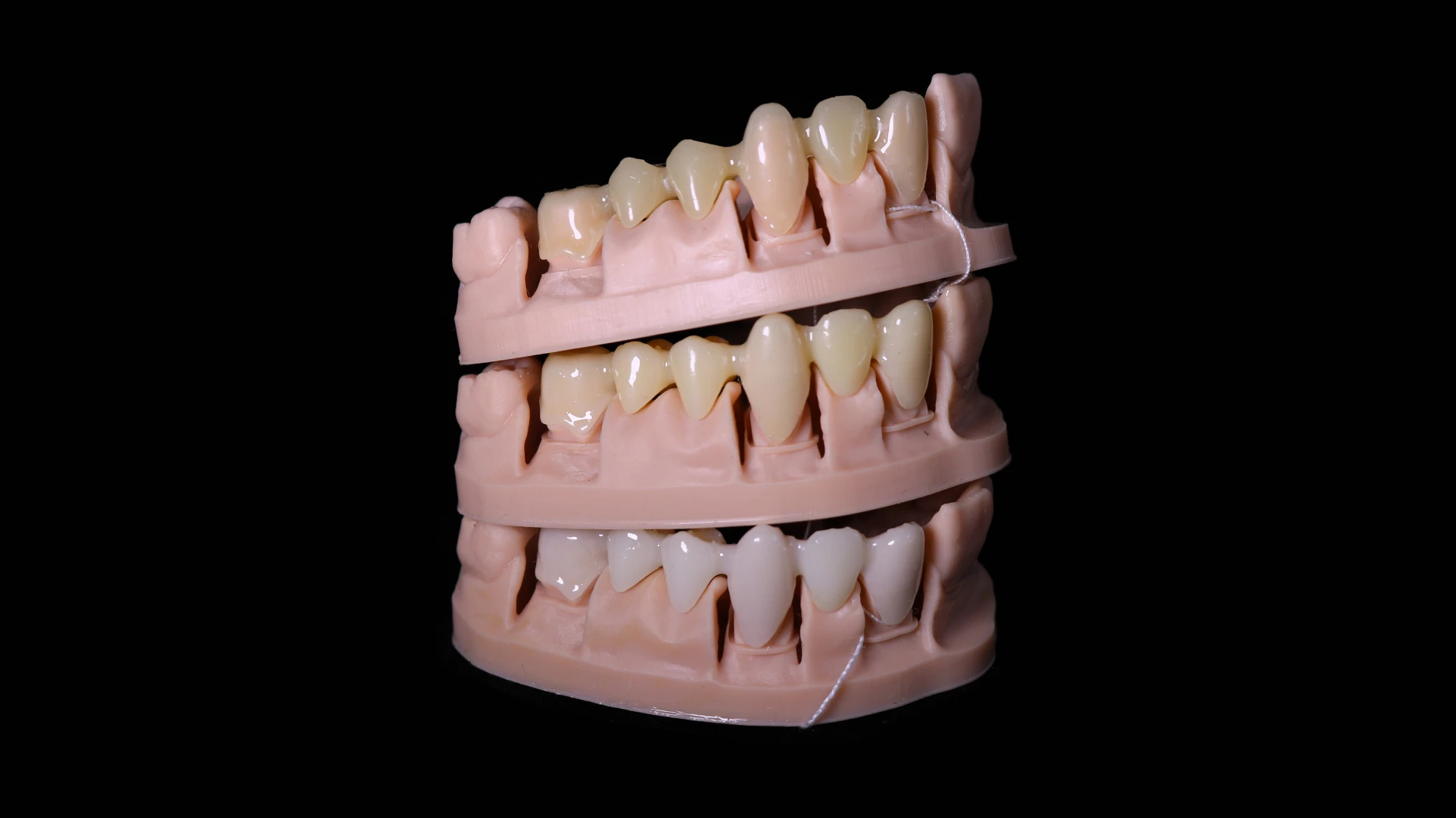
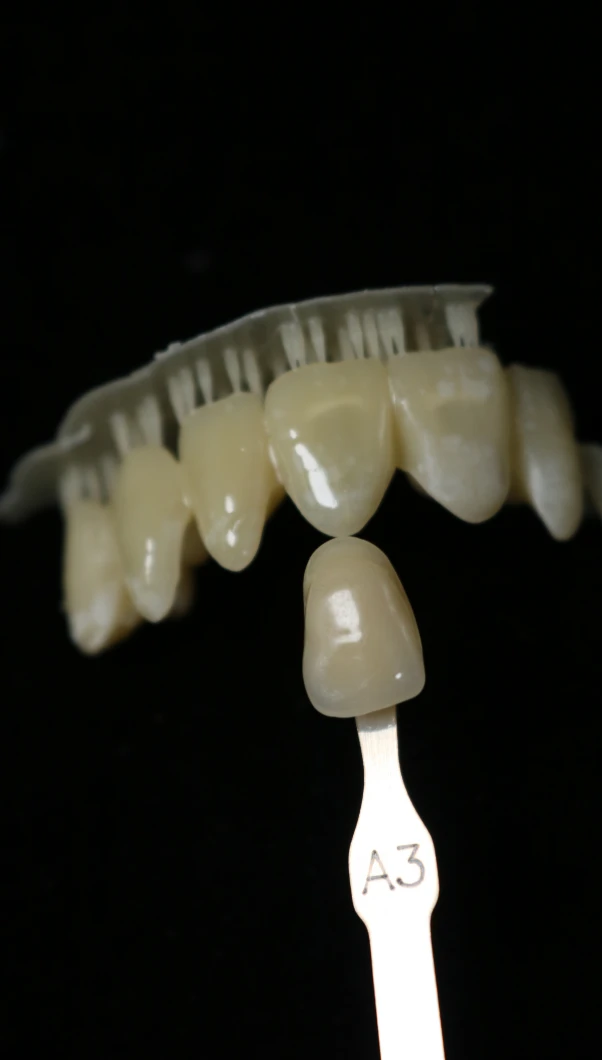
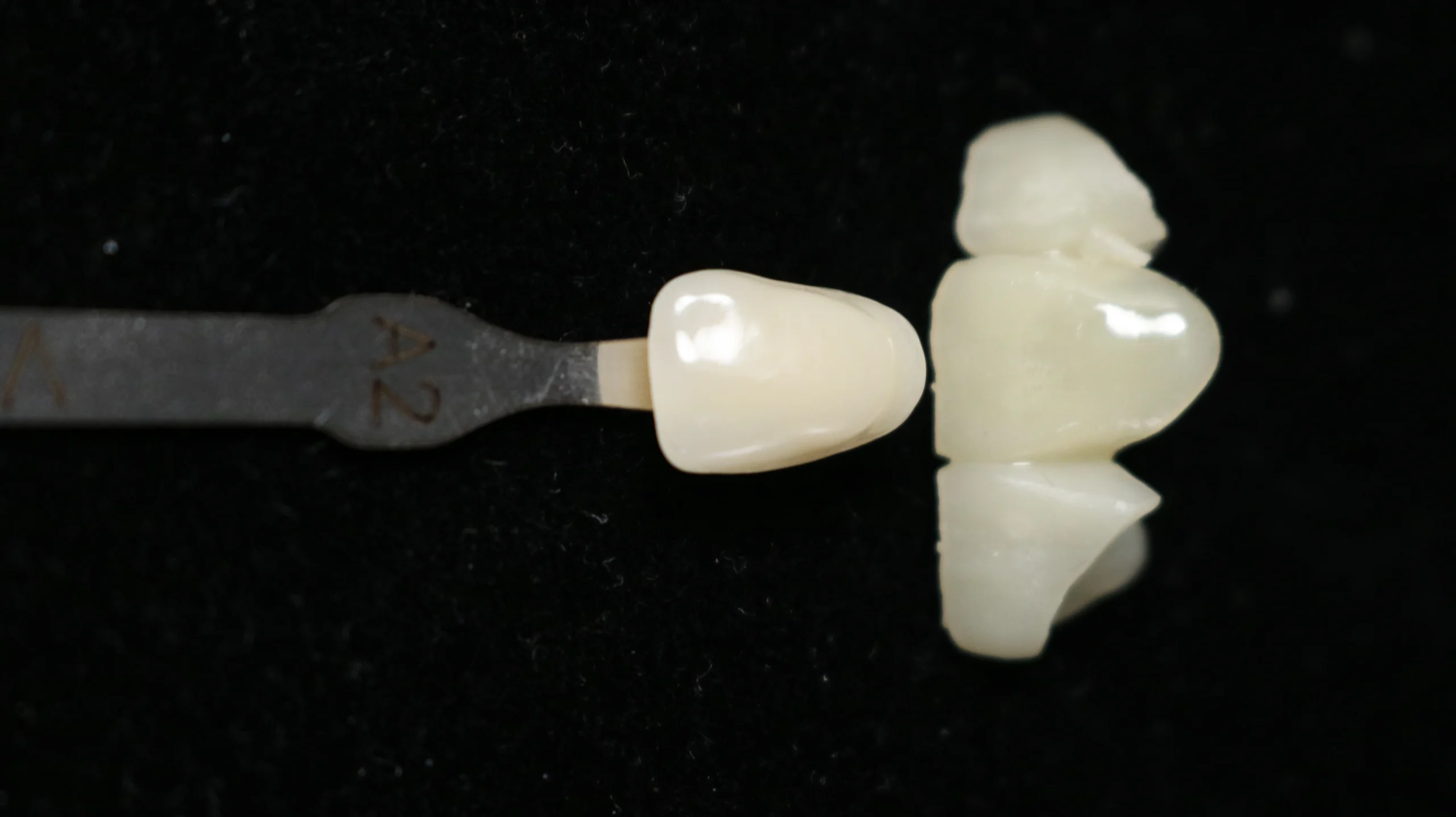
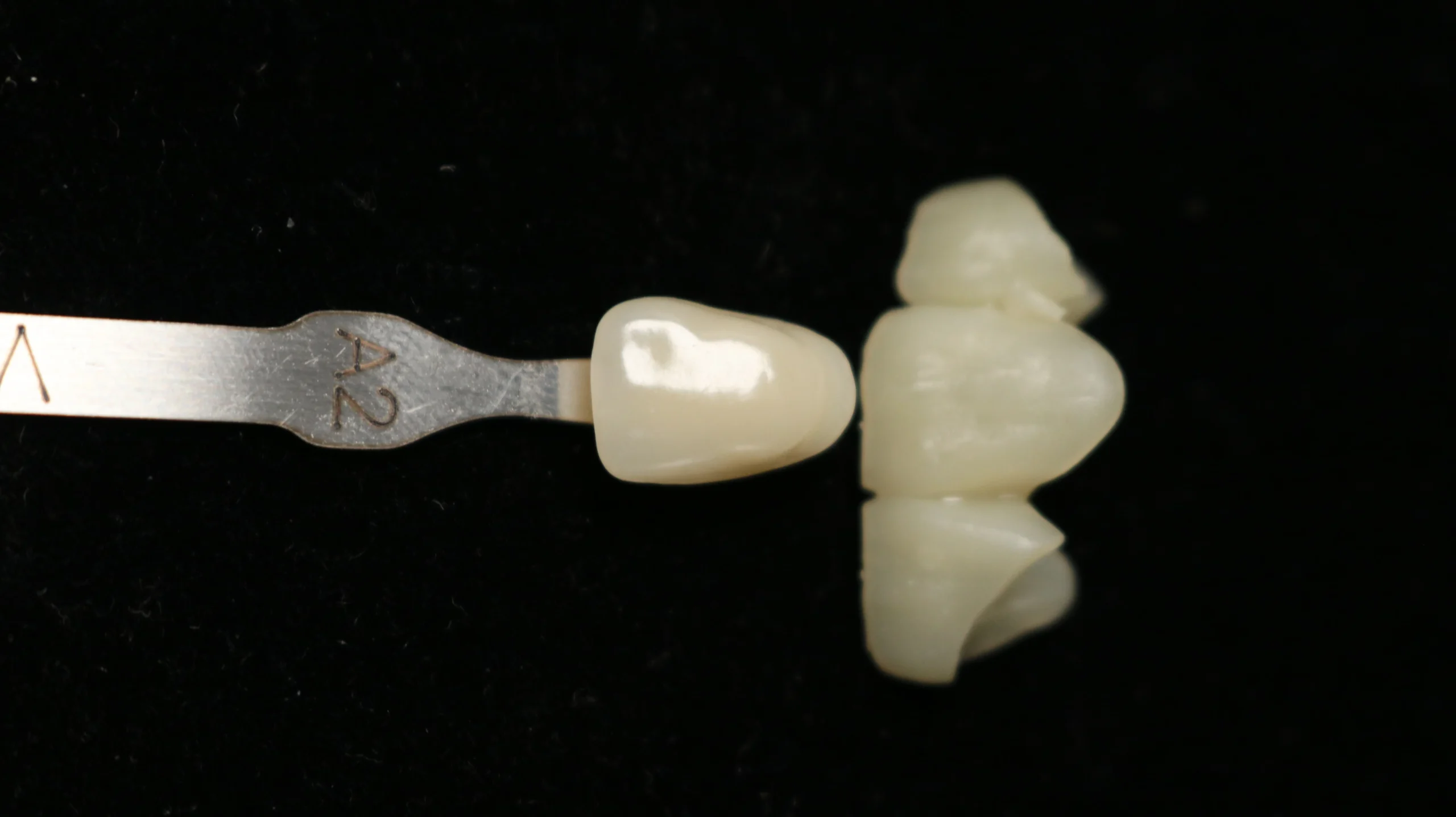
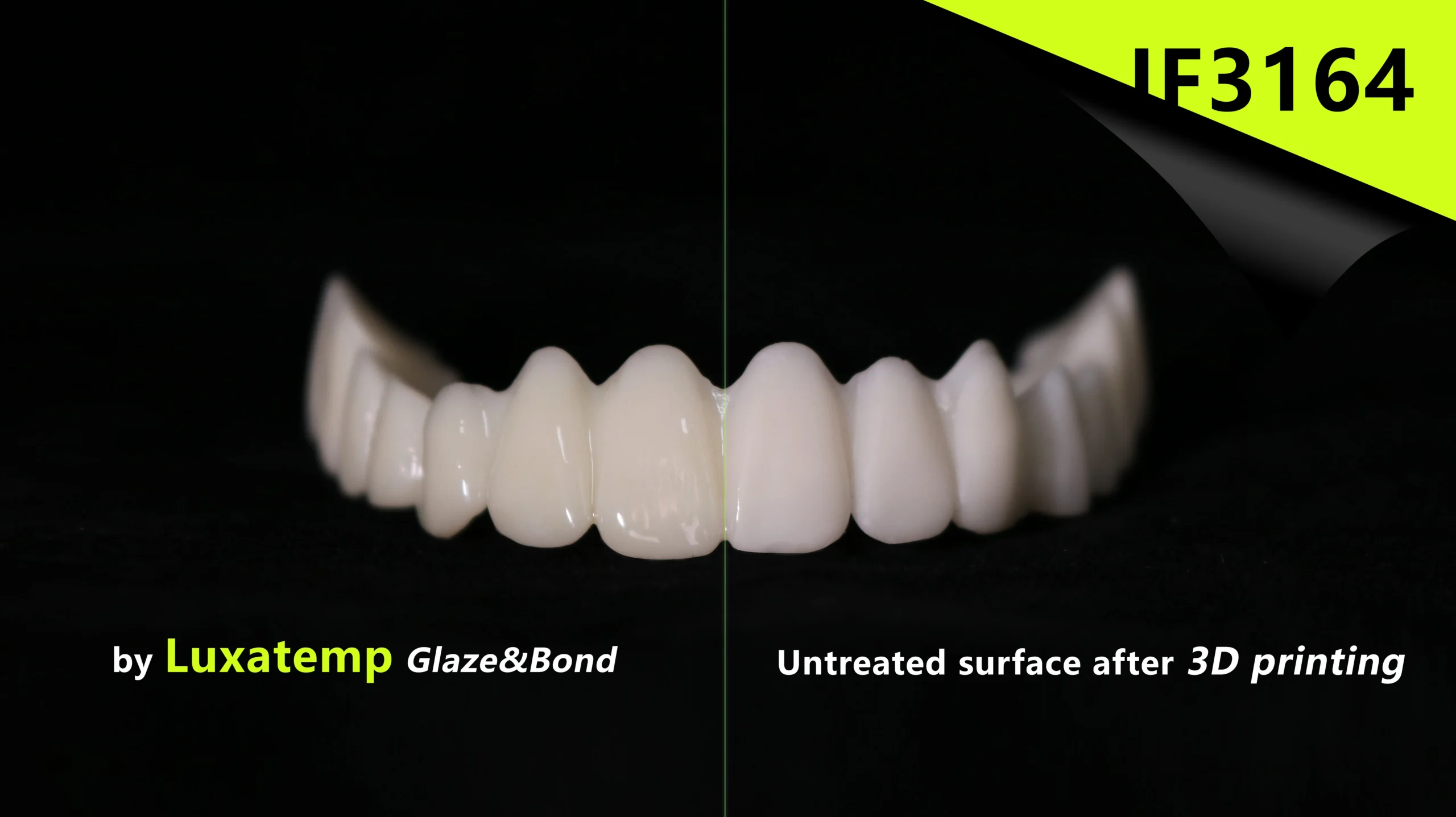
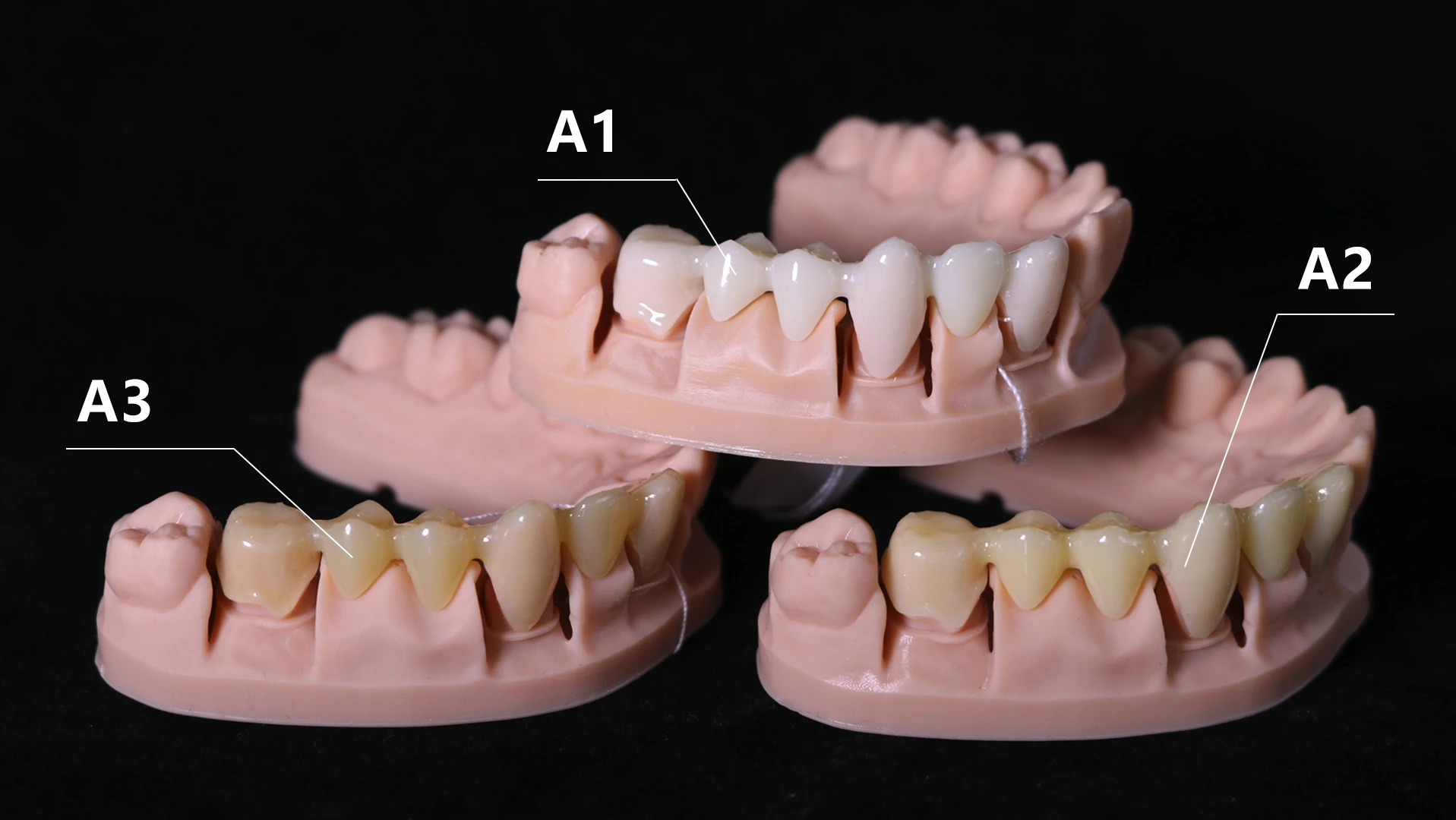
Available in A1, A2, A3 shades, this tooth-colored resin mimics natural teeth with excellent gloss, stain resistance, and long-lasting shade stability.

High Strength & Durability
With bending strength >55 MPa and flexural modulus of 1600 MPa, this temporary crown resin resists fracture and deformation, even under daily chewing stress.

Biocompatible & Patient-Safe
Certified under ISO 10993 for biocompatibility and toxicity, ensuring gum-friendly comfort with minimized irritation and sensitivity during the provisional period.

Precision Fit & Low Shrinkage
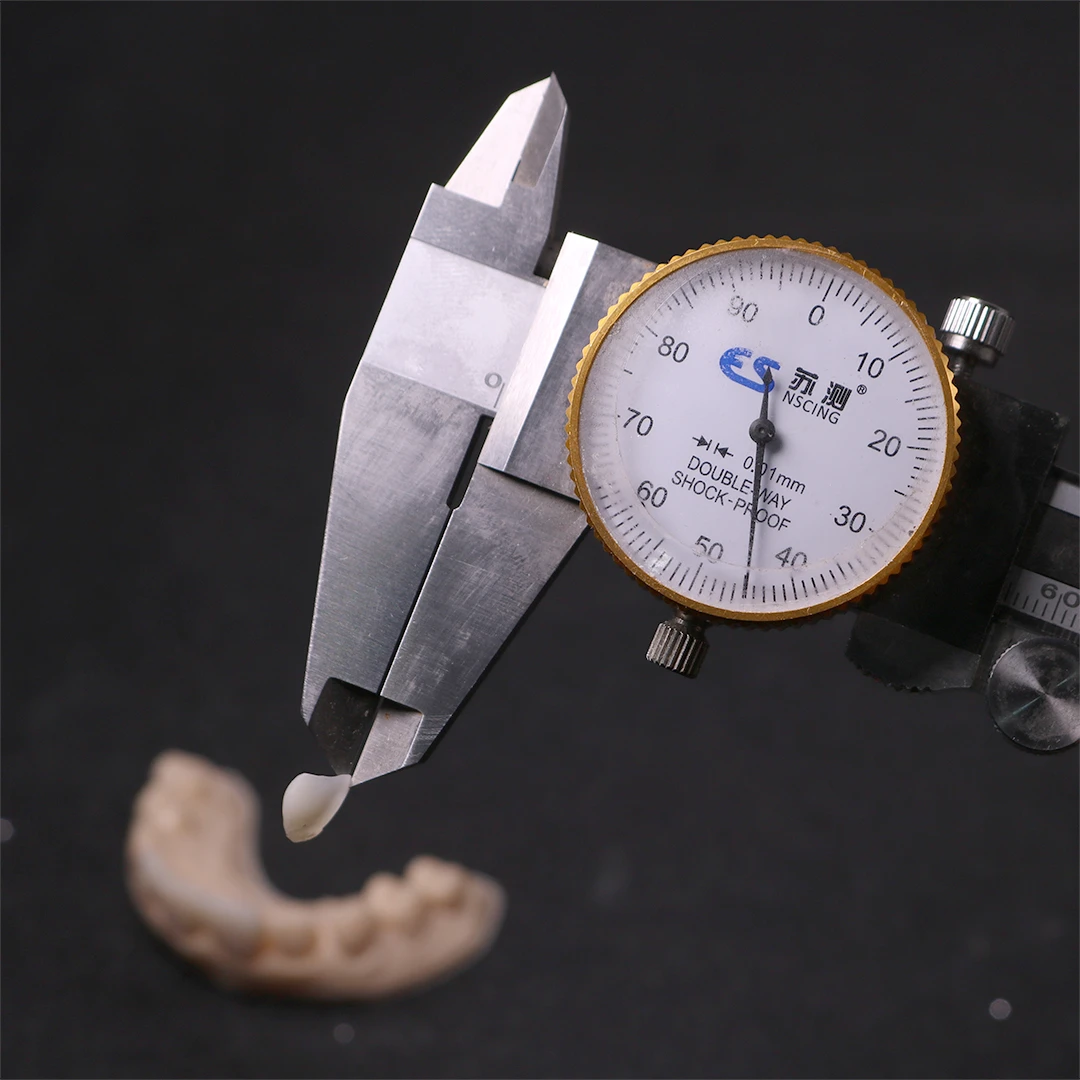
With <0.5% shrinkage, the resin guarantees accurate marginal adaptation, reducing microleakage and secondary decay while ensuring a consistent clinical outcome.

Antibacterial & Corrosion-Resistant
Formulated with high-quality raw materials from the US and Japan, protecting against staining and oral environment corrosion.
Technical Performance Matrix
Verified parameters and testing protocols for jewelry casting validation.
| Feature | Data Value | Testing Method |
|---|---|---|
| Viscosity | 350-420cps(25℃) | ASTM D1084-1997 |
| Density | 1.25 | ASM D1875-69(1980) |
| Shrinkage | <0.5% | Capillary method |
| Hardness | 85D | ASTM D2240-05(2010) |
| Water absorption | 0.50% | ASTM D570 |
| Bending strength | 55MPa | ASTM D1781 |
| Flexural modulus | 1600MPa | ASTM D747 |
| Biocompatibility | TEST PASS | ISO10993-1/ISO10993-10 |
Engineering Notes & Technical Interpretation
An in-depth technical analysis of how Temporary Crown Resin 3164 optimizes performance, precision, and operational efficiency in same-day provisional restorations.
Why is ultra-low shrinkage (<0.5%) the most critical metric for temporary crowns?
In digital dentistry, shrinkage directly dictates marginal adaptation. If a resin shrinks by 2% or 3%, the internal cavity of the crown becomes too small, preventing it from seating fully on the prepared tooth. This forces the dentist to manually grind the inside of the crown, wasting clinical time. Furthermore, poor marginal fit leads to cement wash-out, microleakage, and severe tooth sensitivity. By keeping shrinkage under 0.5%, this resin ensures a seamless, drop-in fit directly from the curing unit to the patient's mouth.
How does a flexural modulus of 1600 MPa benefit the clinical outcome?
Flexural modulus is a measure of stiffness. While bending strength determines if a material will break, modulus determines if it will flex. In multi-unit temporary bridges, if the material has a low modulus, the bridge will flex slightly every time the patient chews. This microscopic bending slowly breaks the bond of the temporary cement, leading to the bridge falling out. A high modulus of 1600 MPa keeps the restoration rigid, ensuring the cement seal remains unbroken.
Why do we rigorously test for water absorption (0.50%)?
The oral cavity is a harsh, wet environment. Standard 3D printing resins act like microscopic sponges, absorbing moisture over time. If a temporary crown absorbs saliva, two catastrophic things happen: First, the material swells, altering the carefully engineered fit and causing pressure on the underlying tooth. Second, it absorbs pigments from food and drink, turning an A1 shaded tooth into a stained, unnatural color within days. An exceptionally low water absorption rate of 0.50% guarantees the provisional restoration remains structurally stable and aesthetically perfect for the duration of the temporary phase.
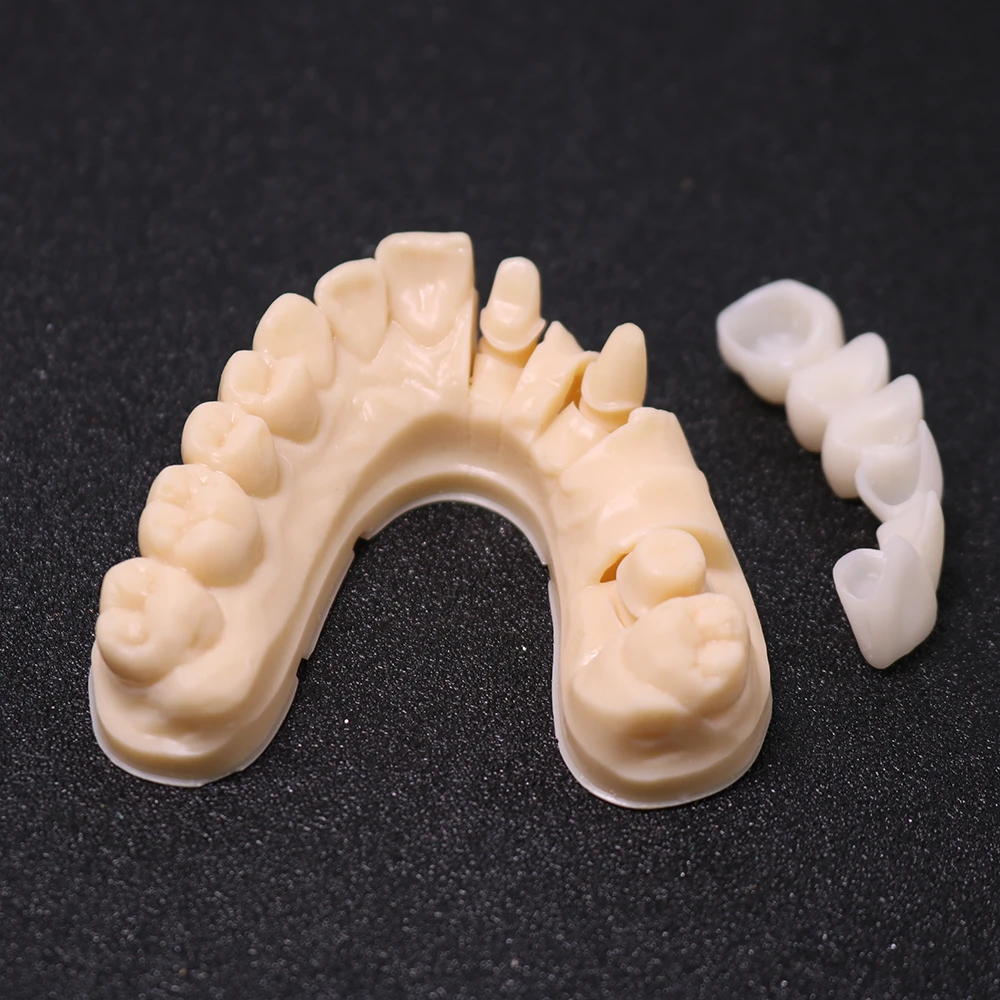
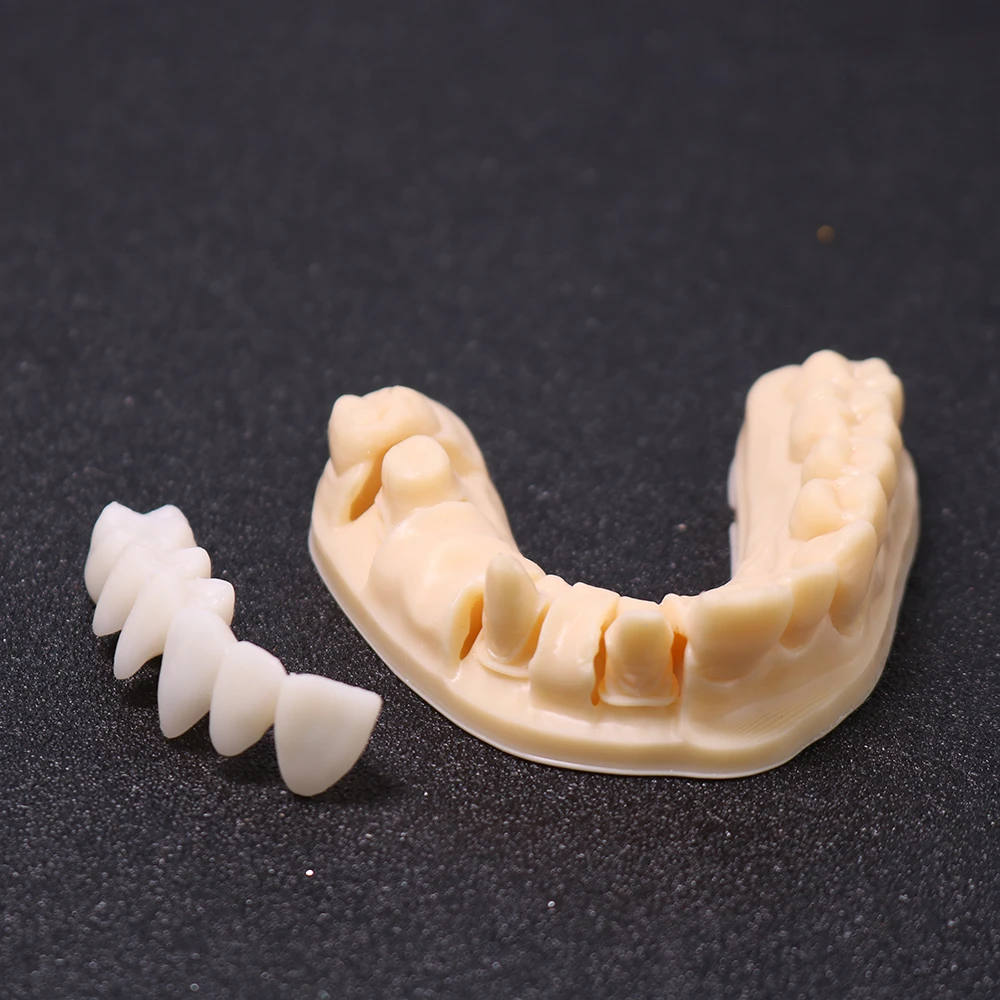
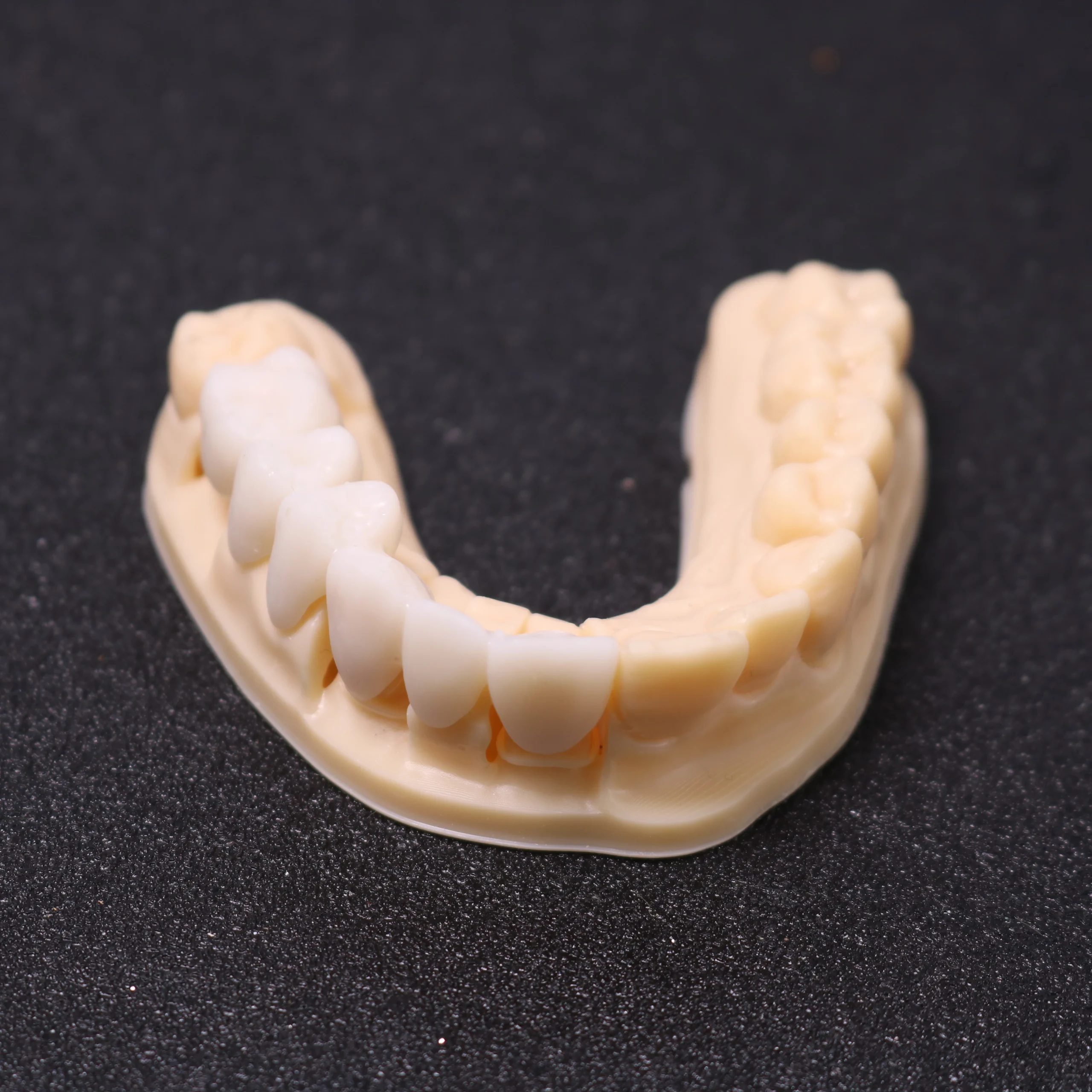
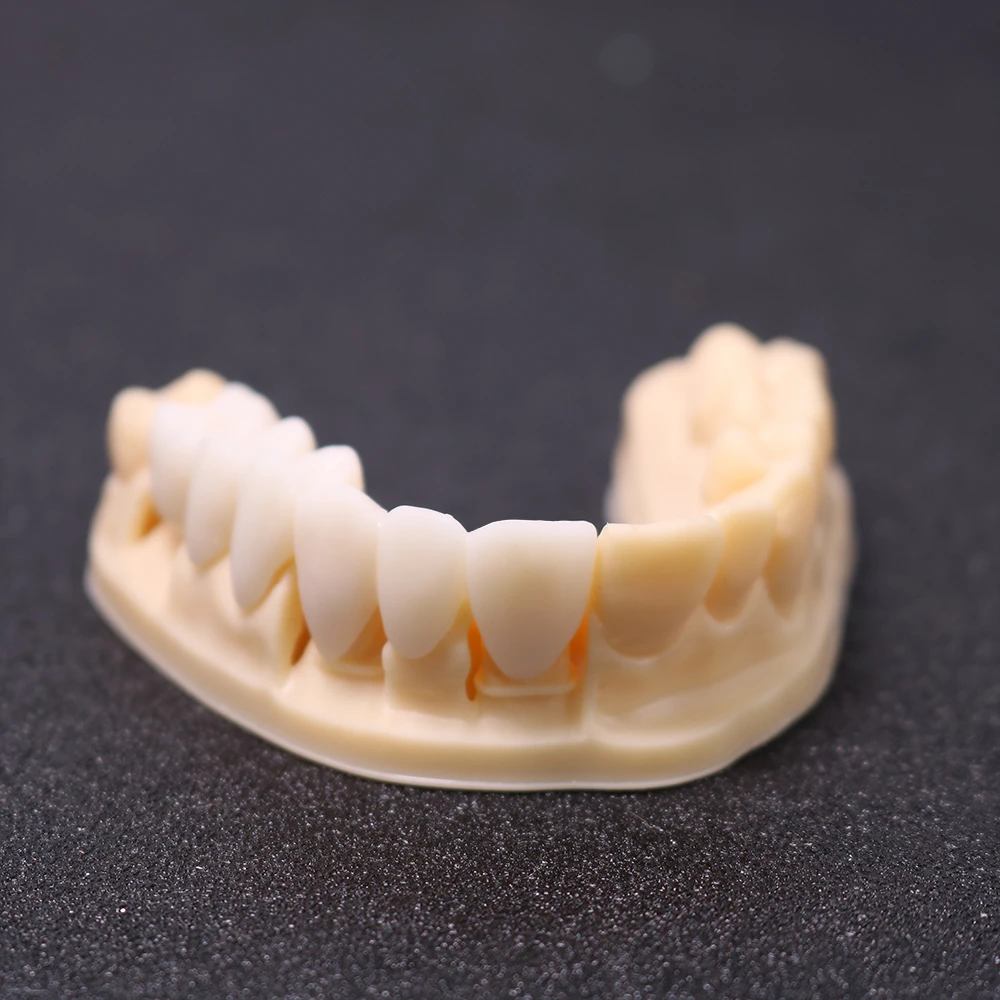
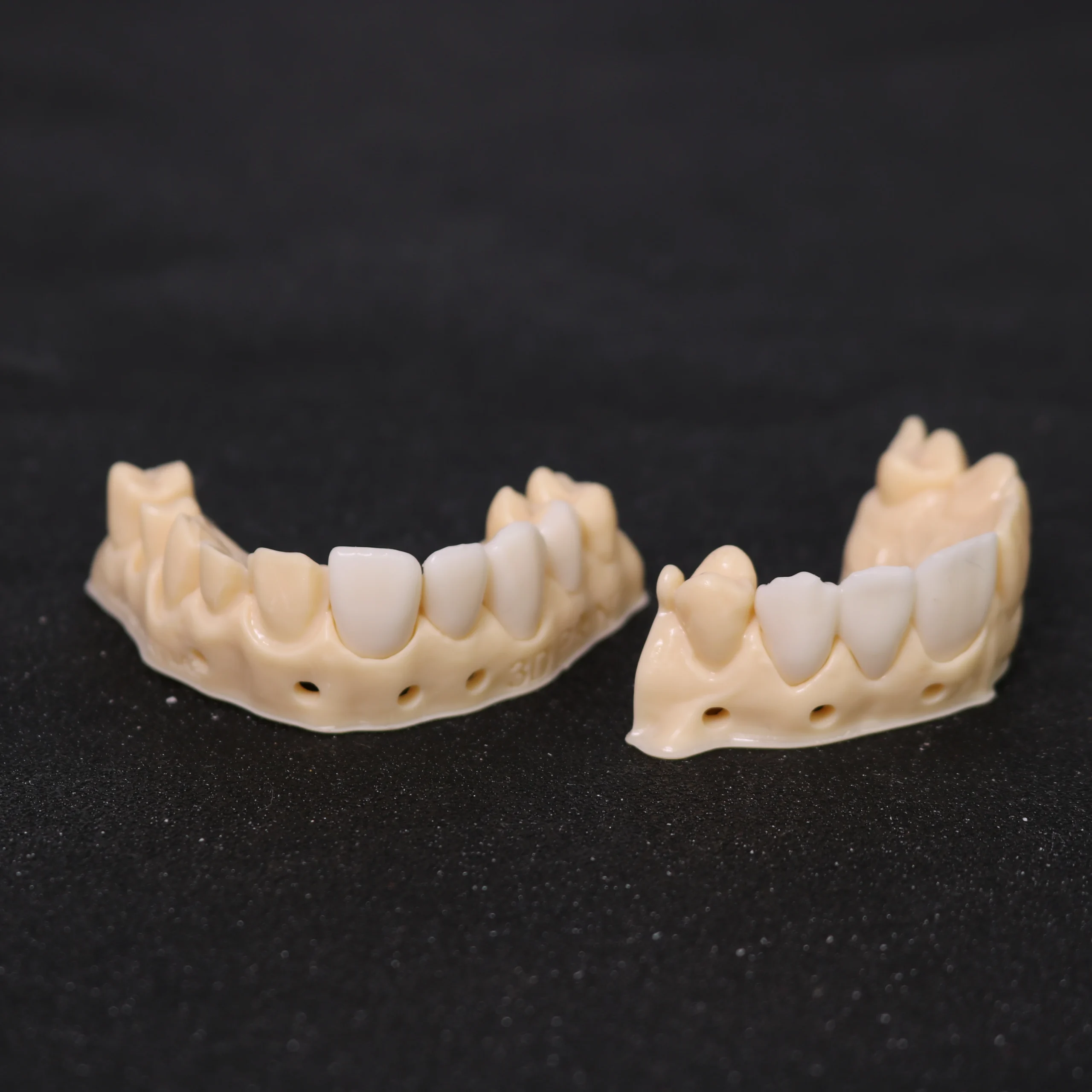
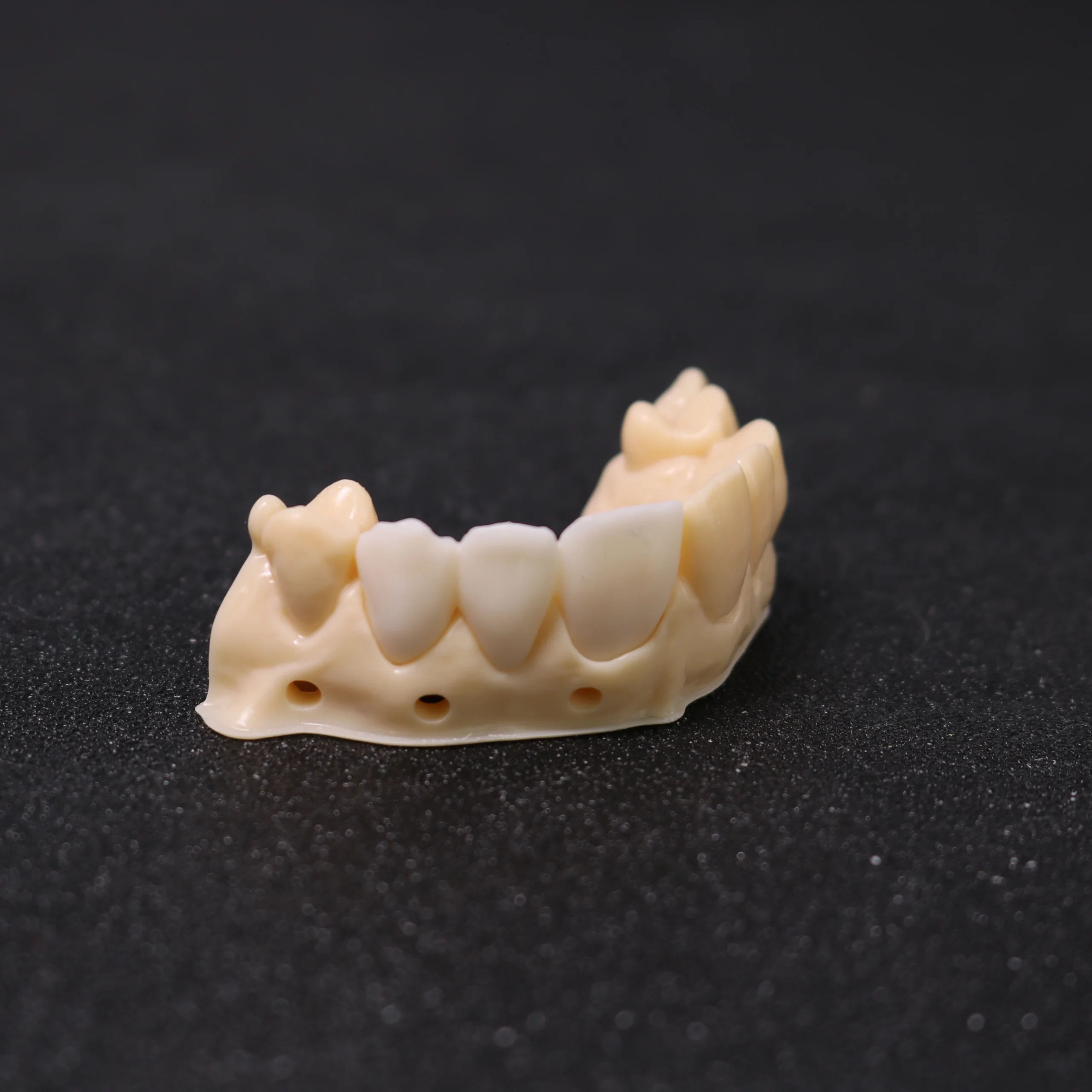
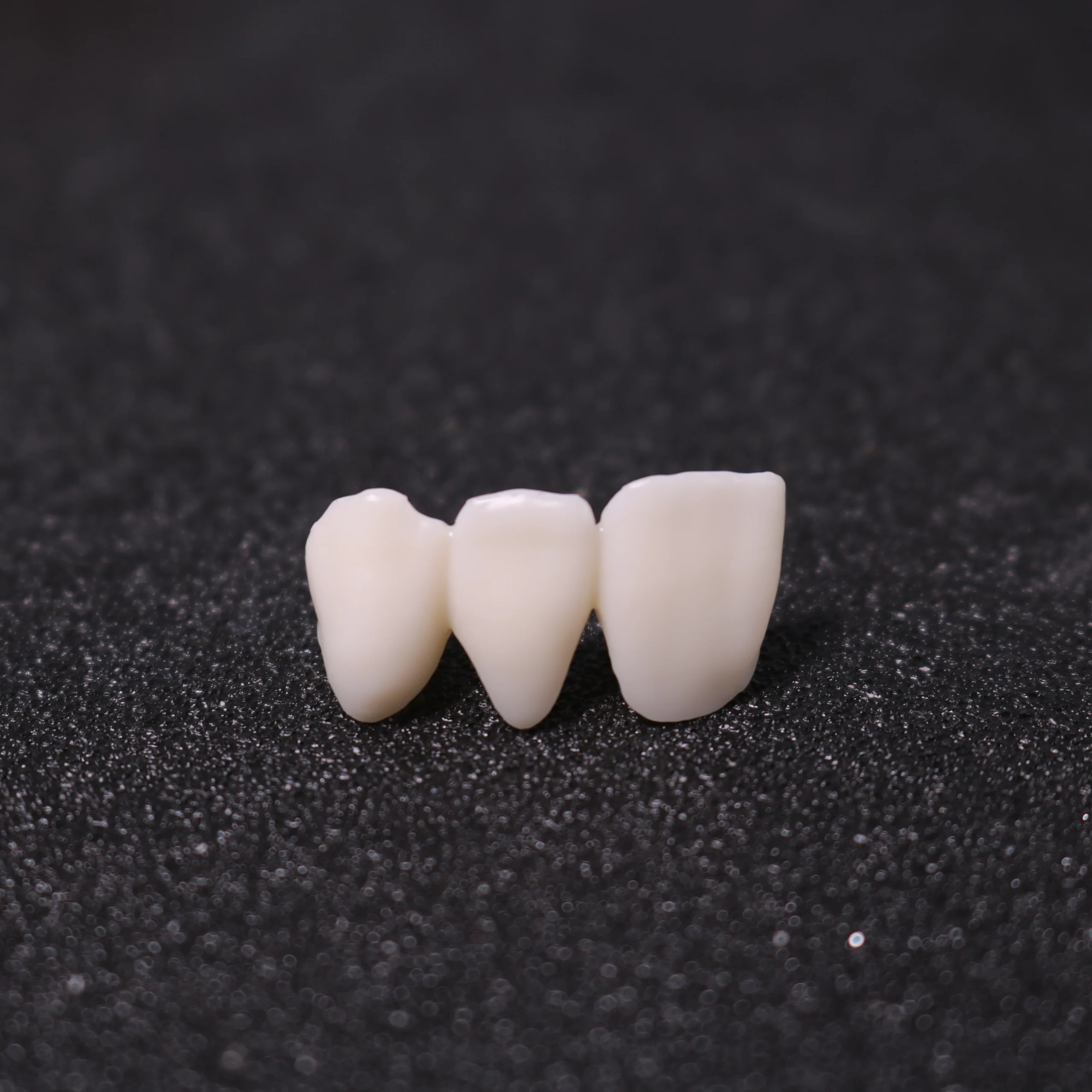
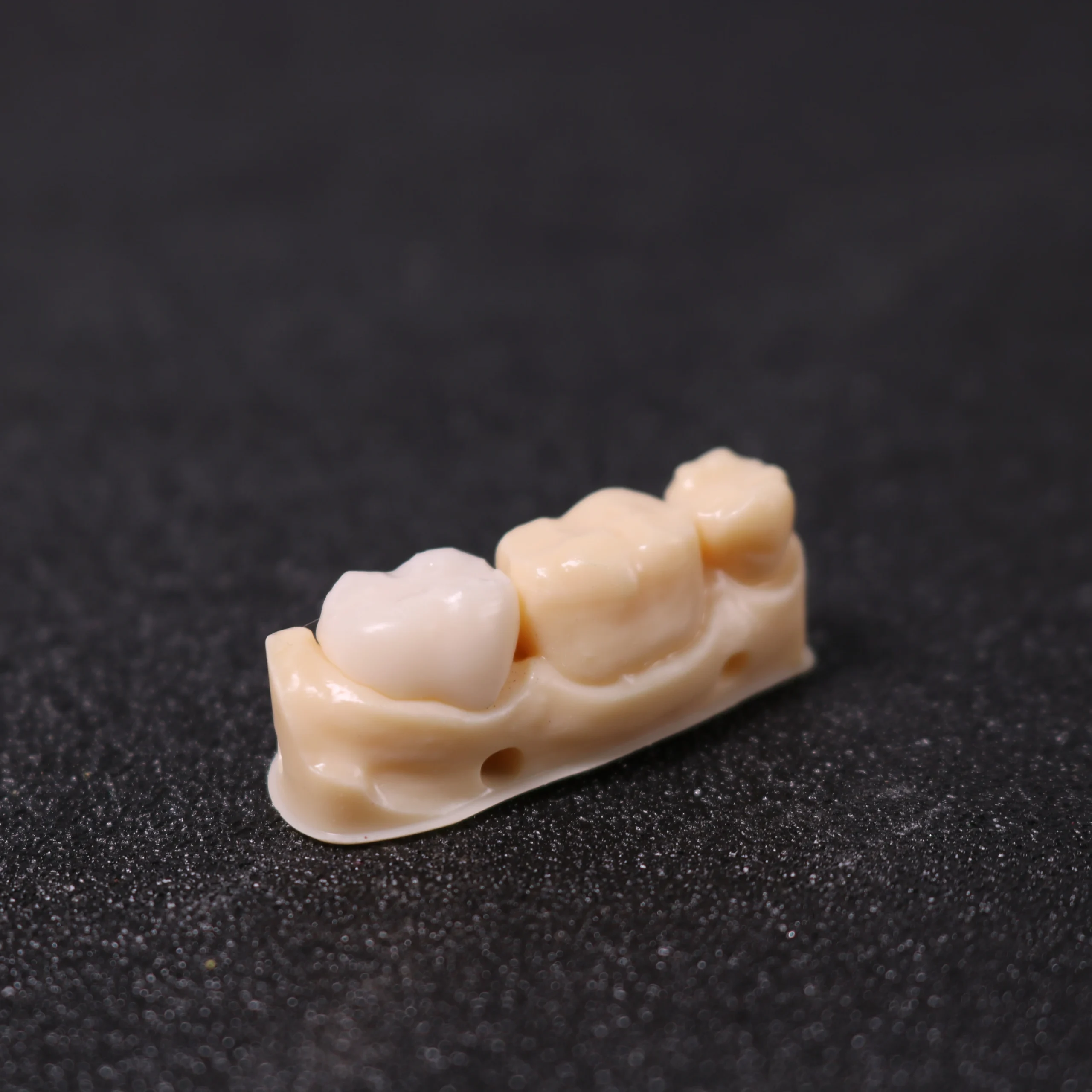
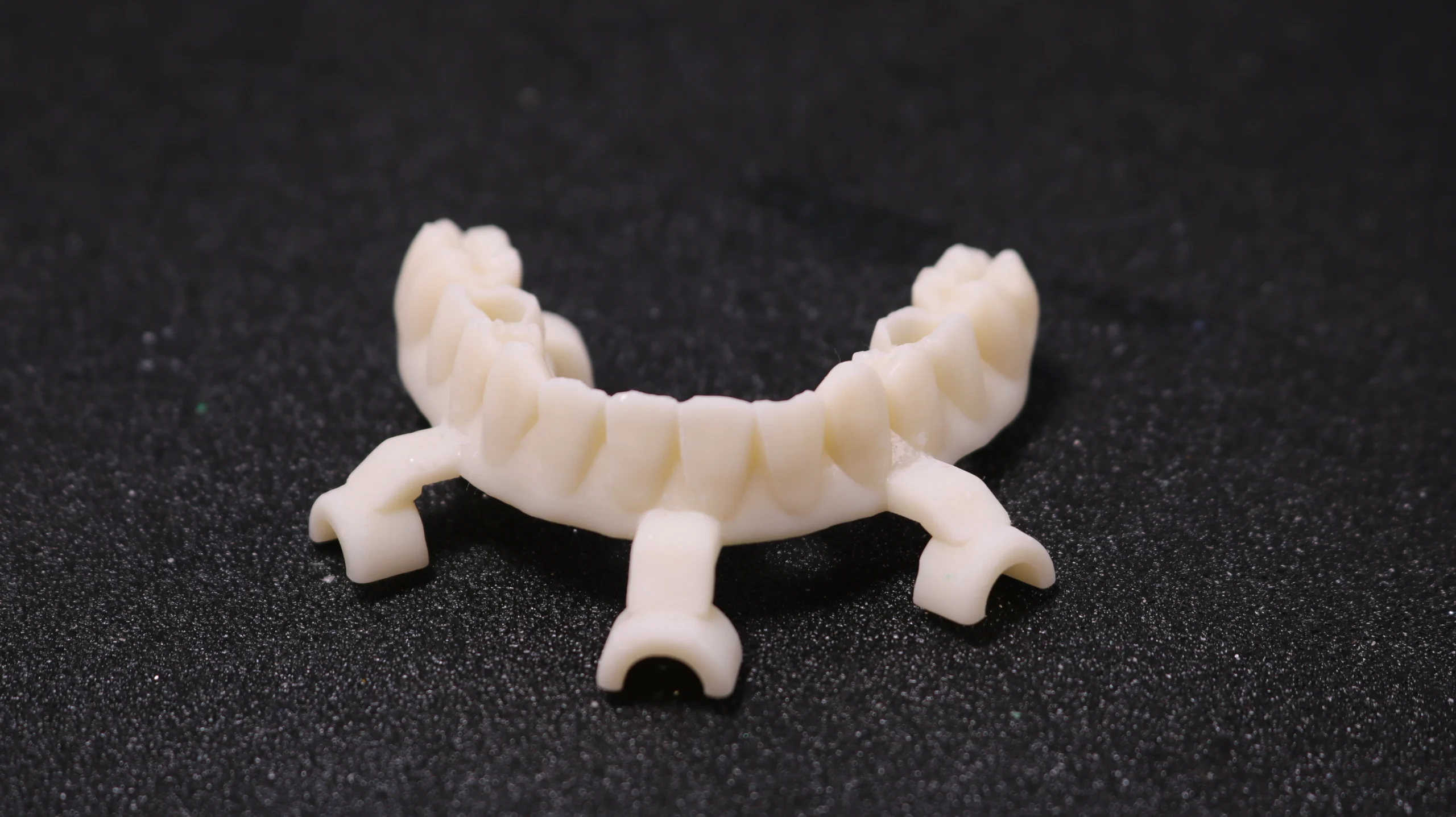
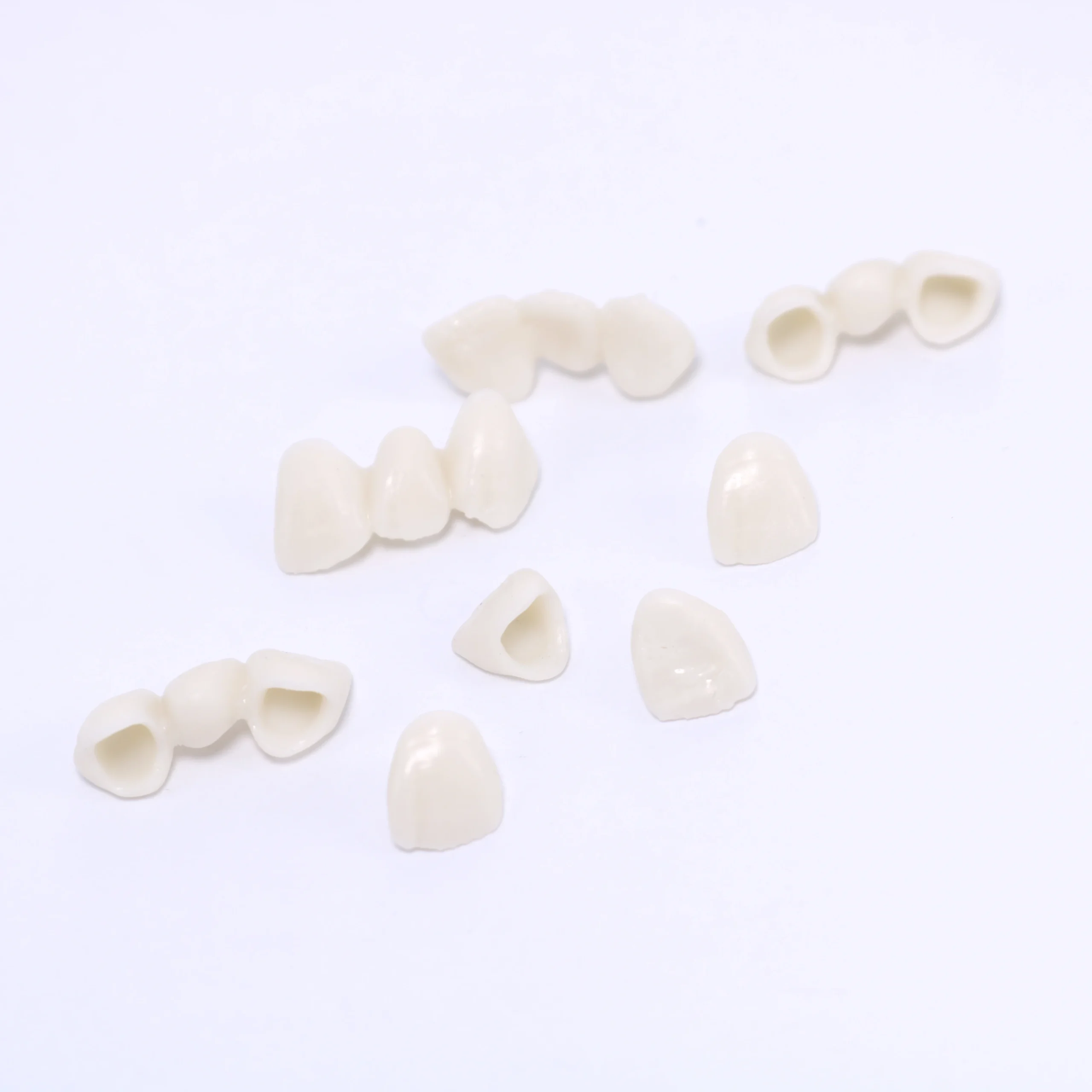
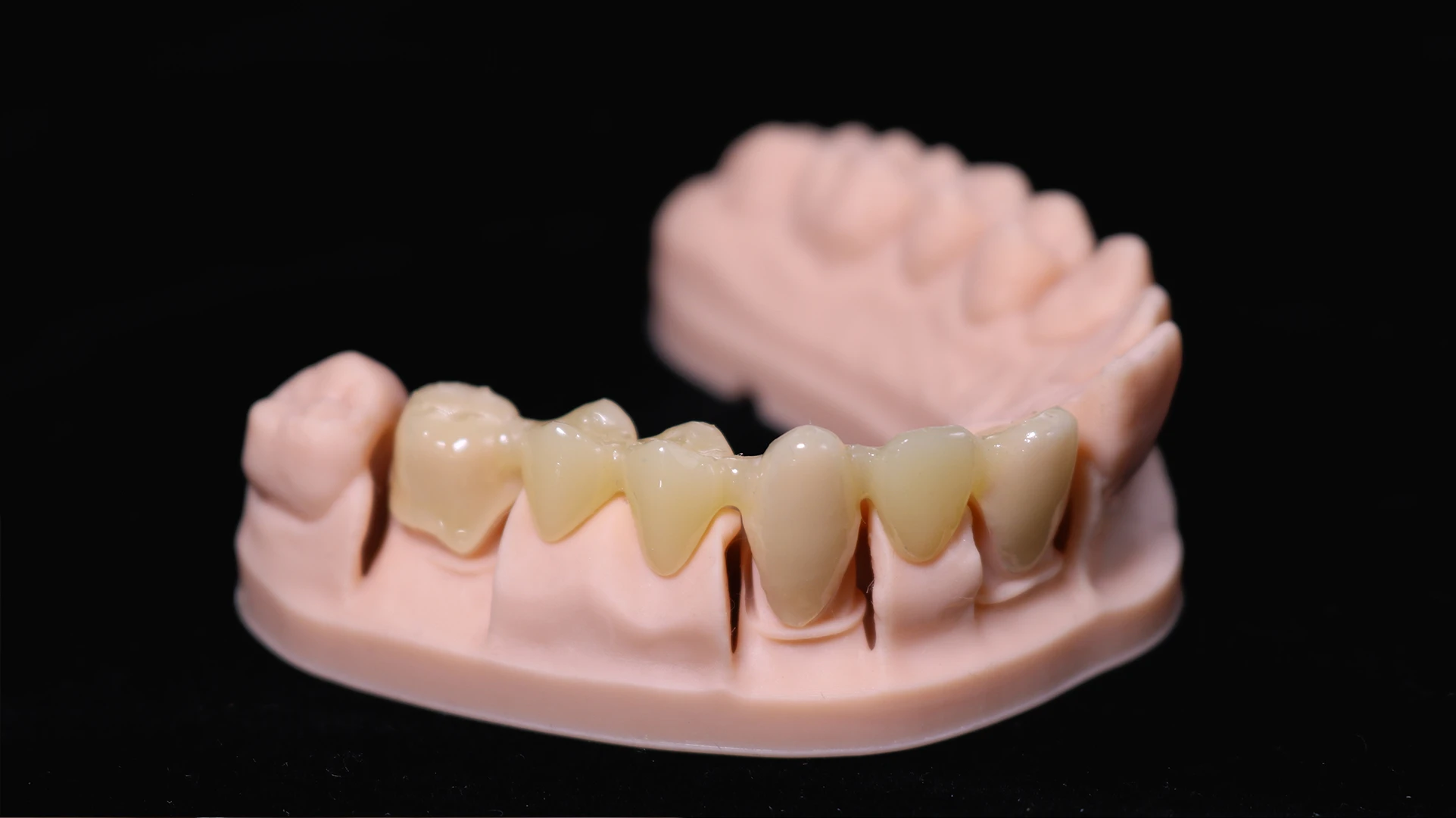
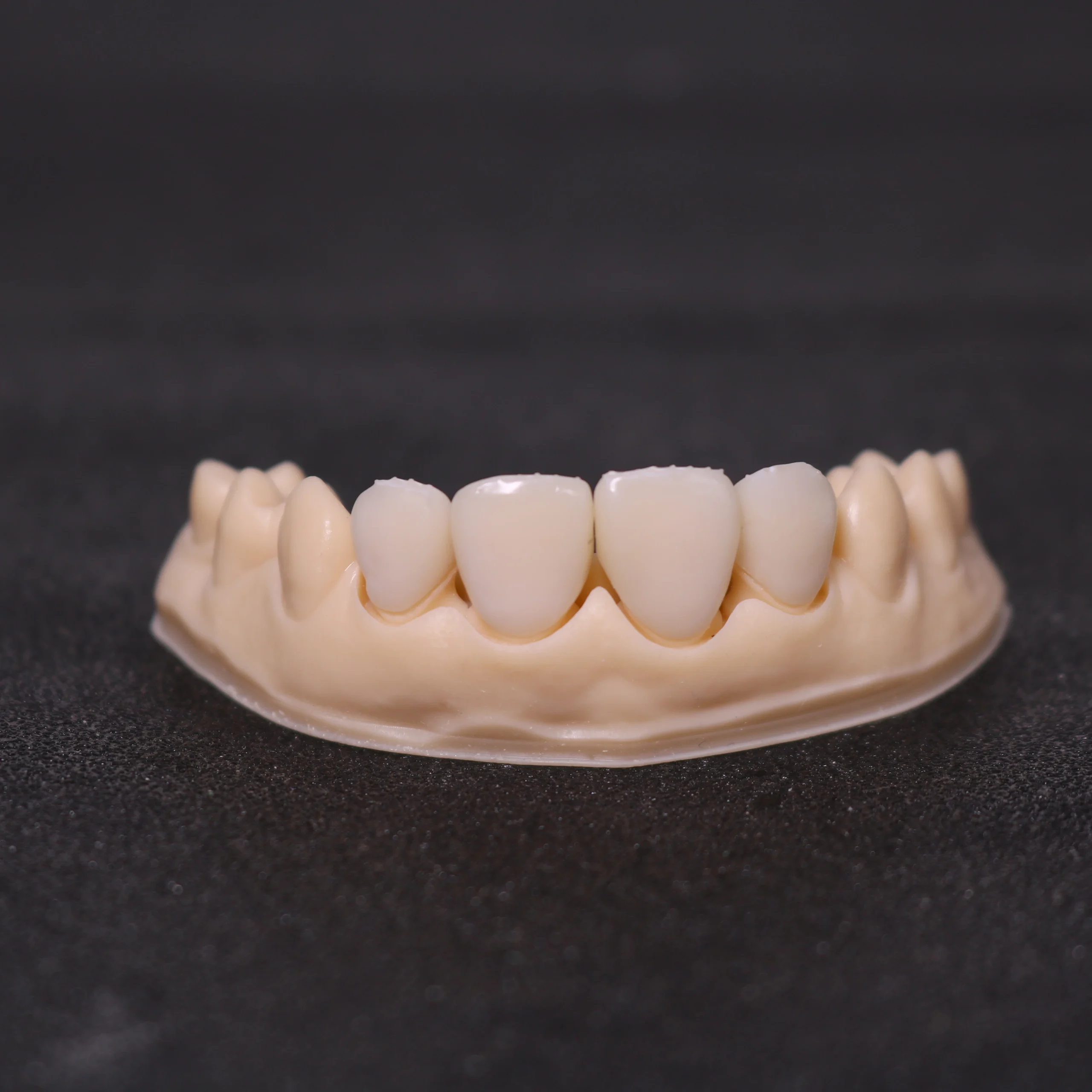
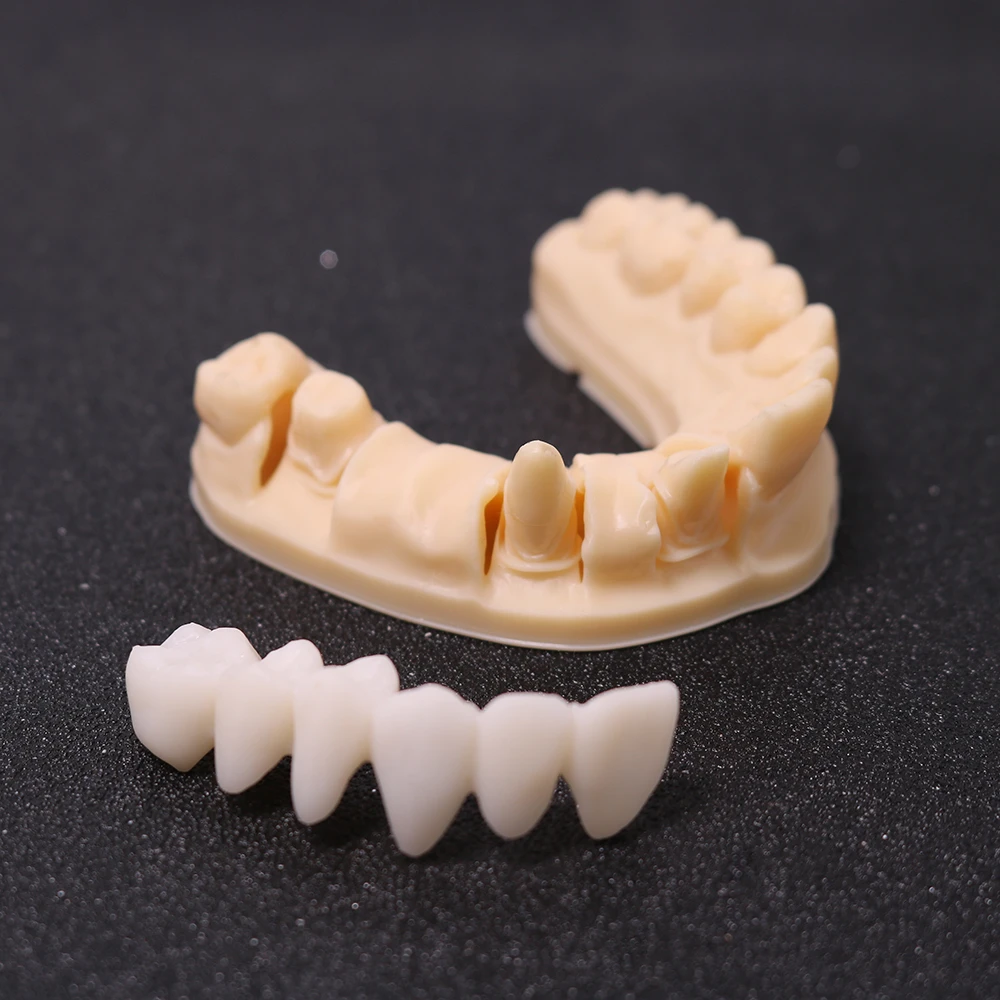
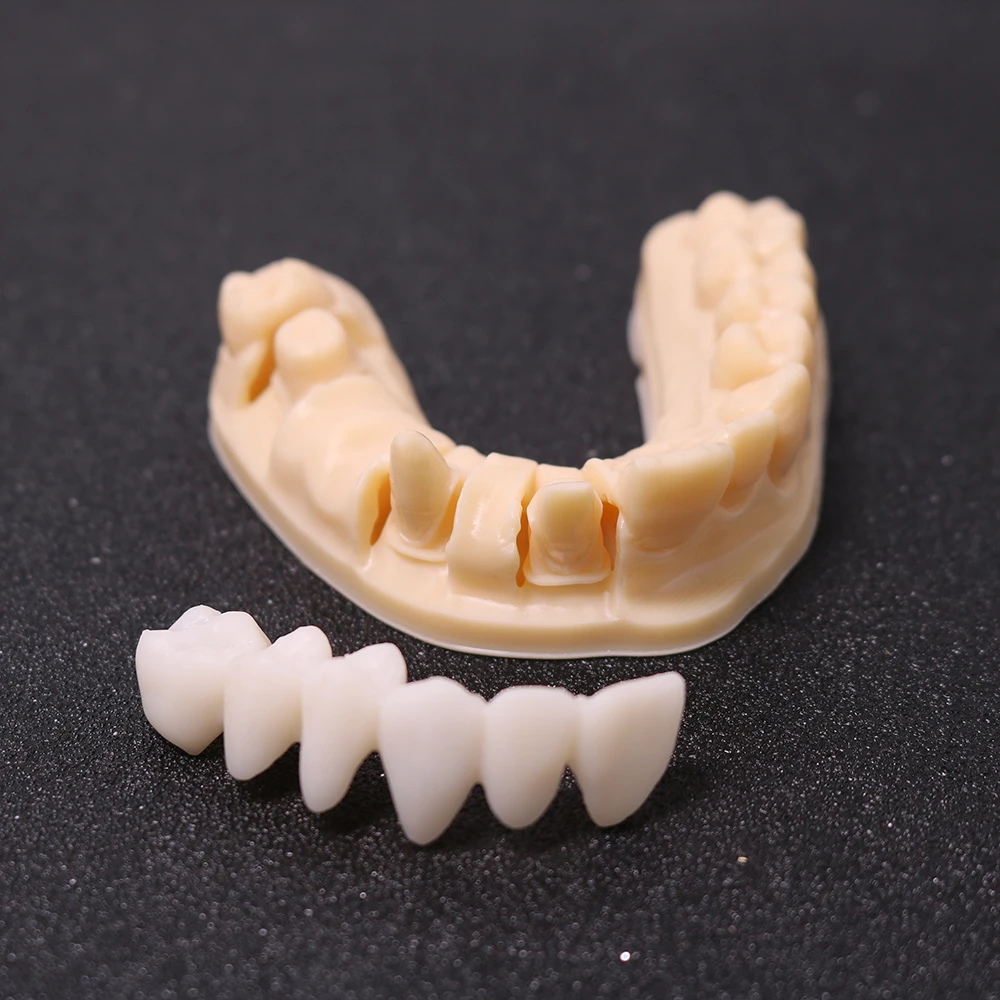
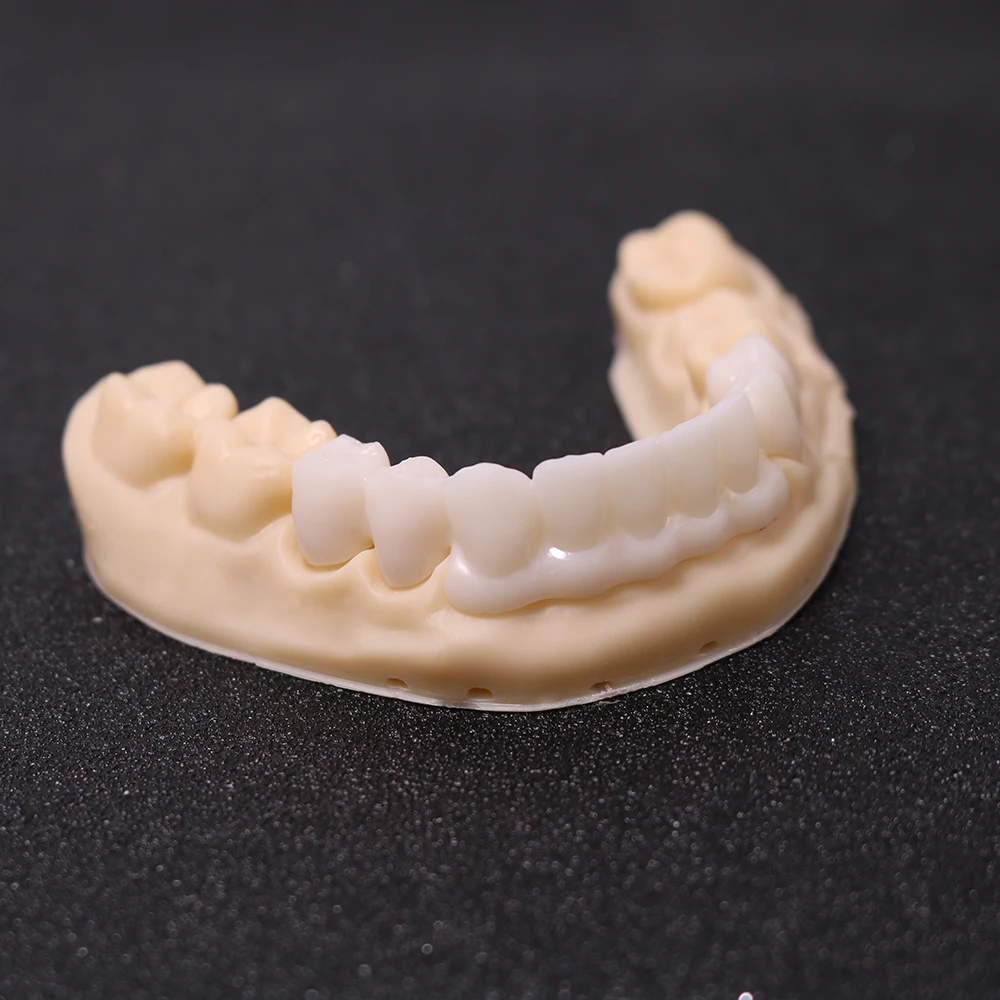
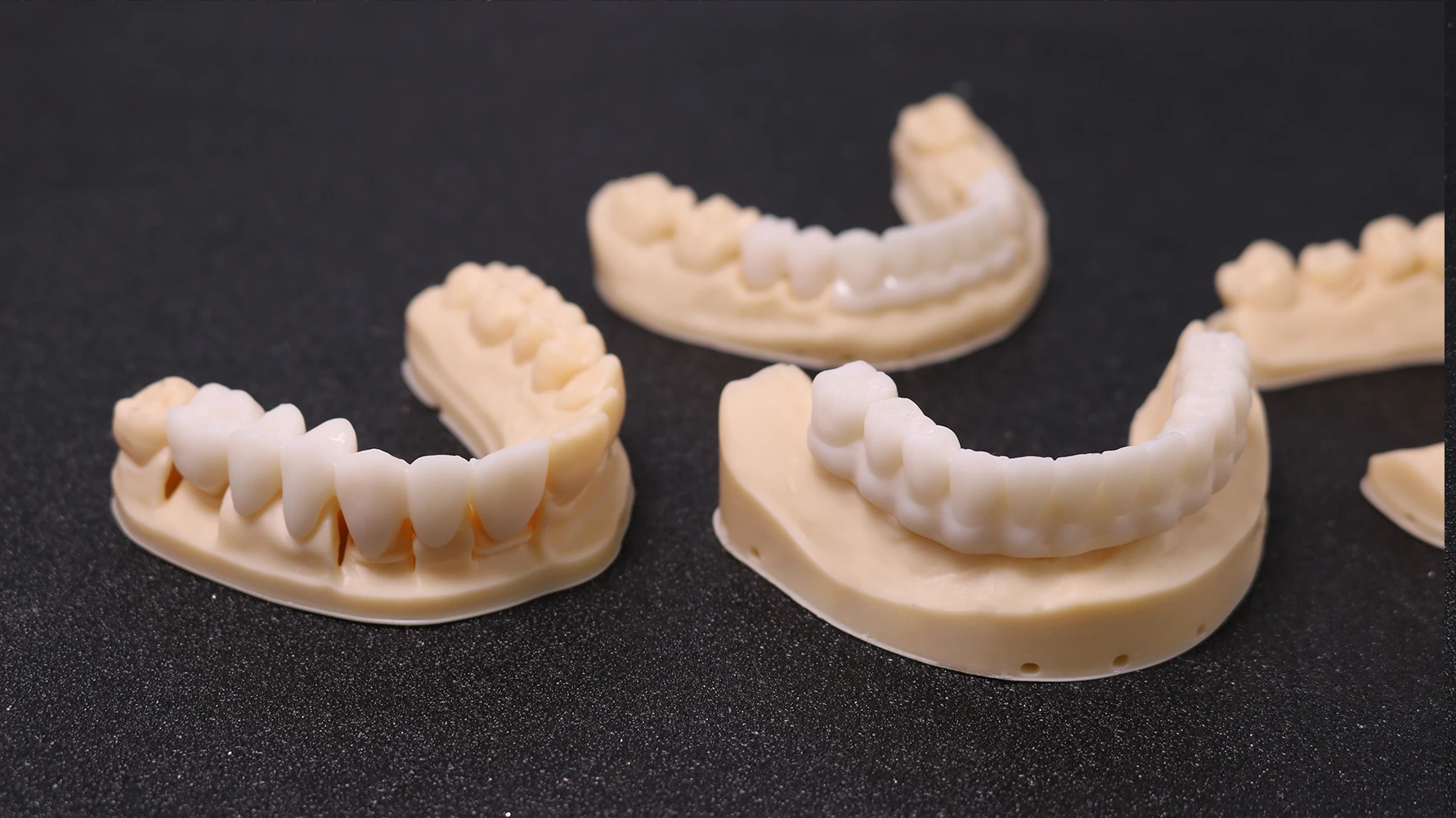
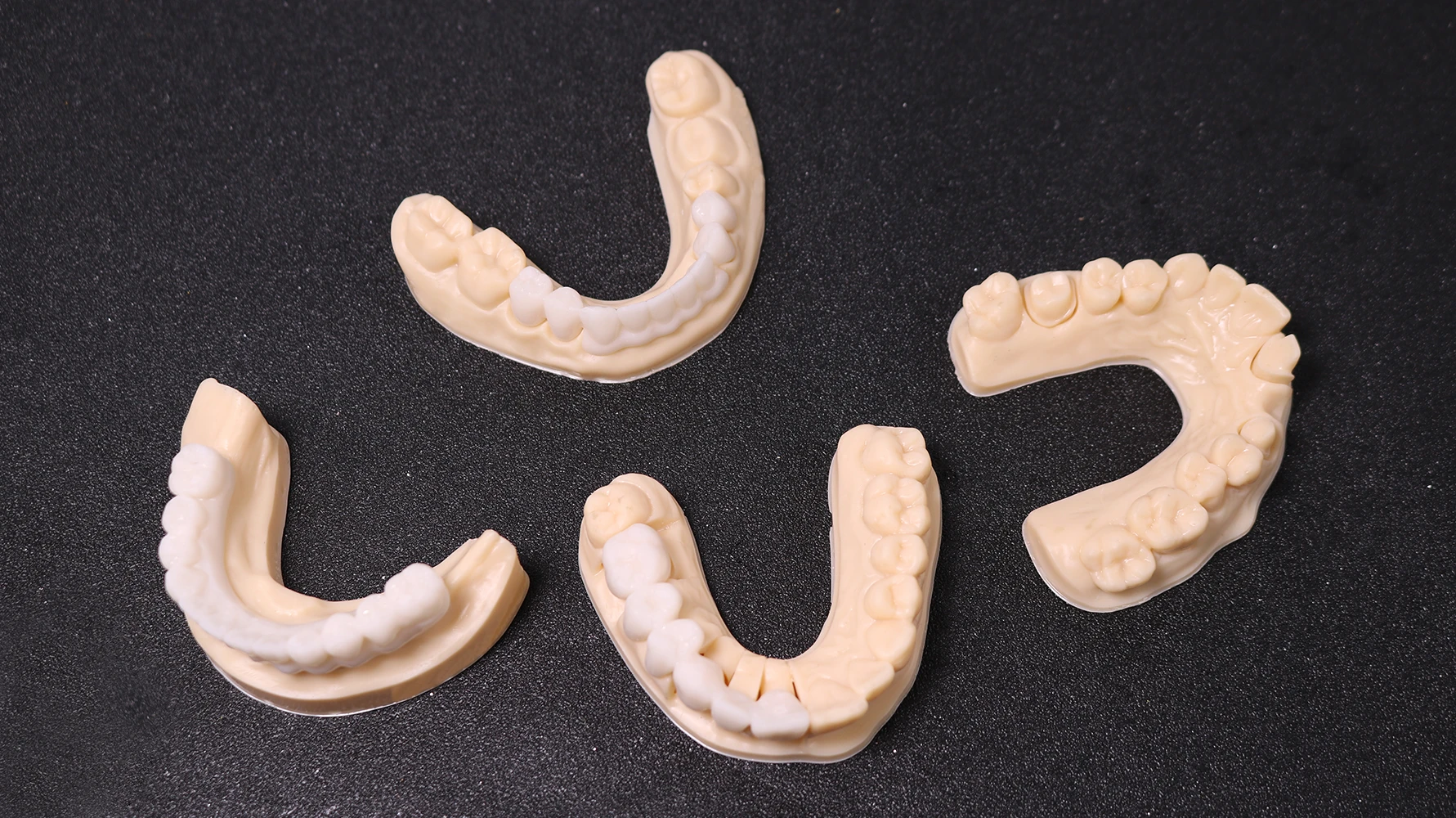
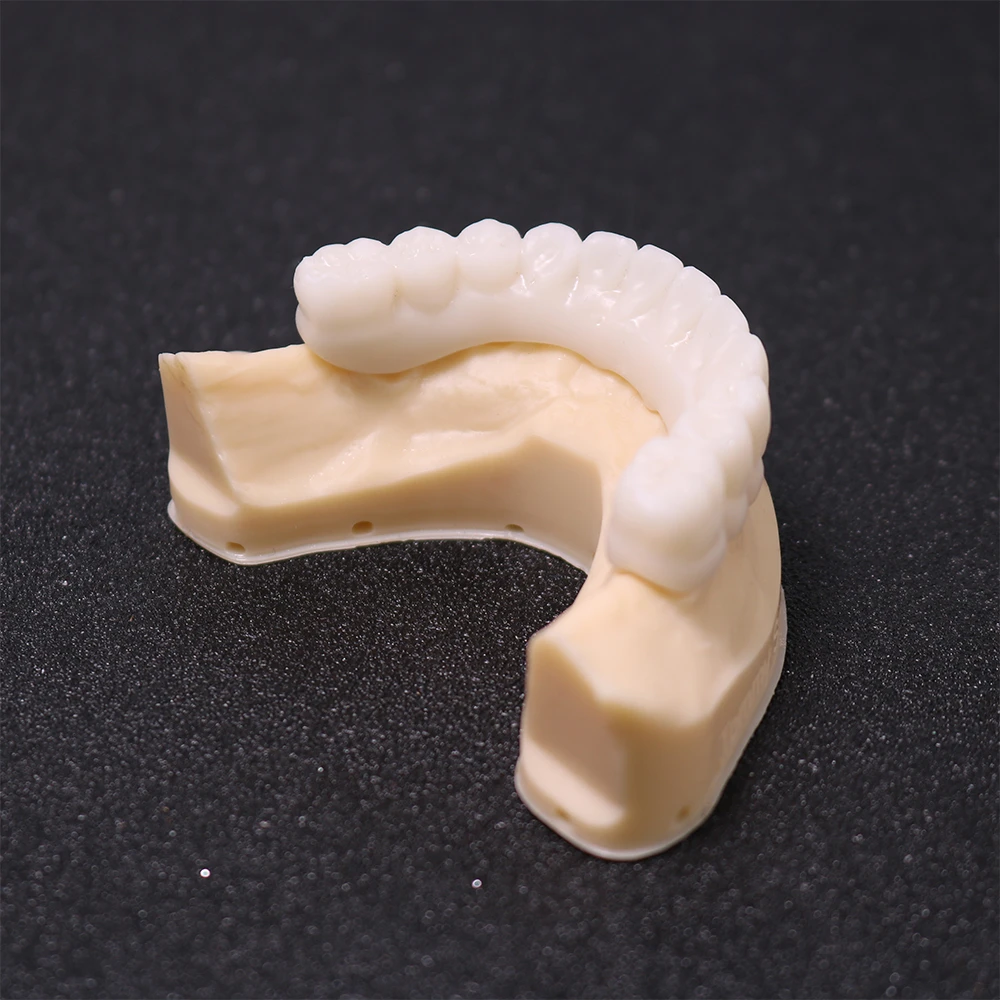
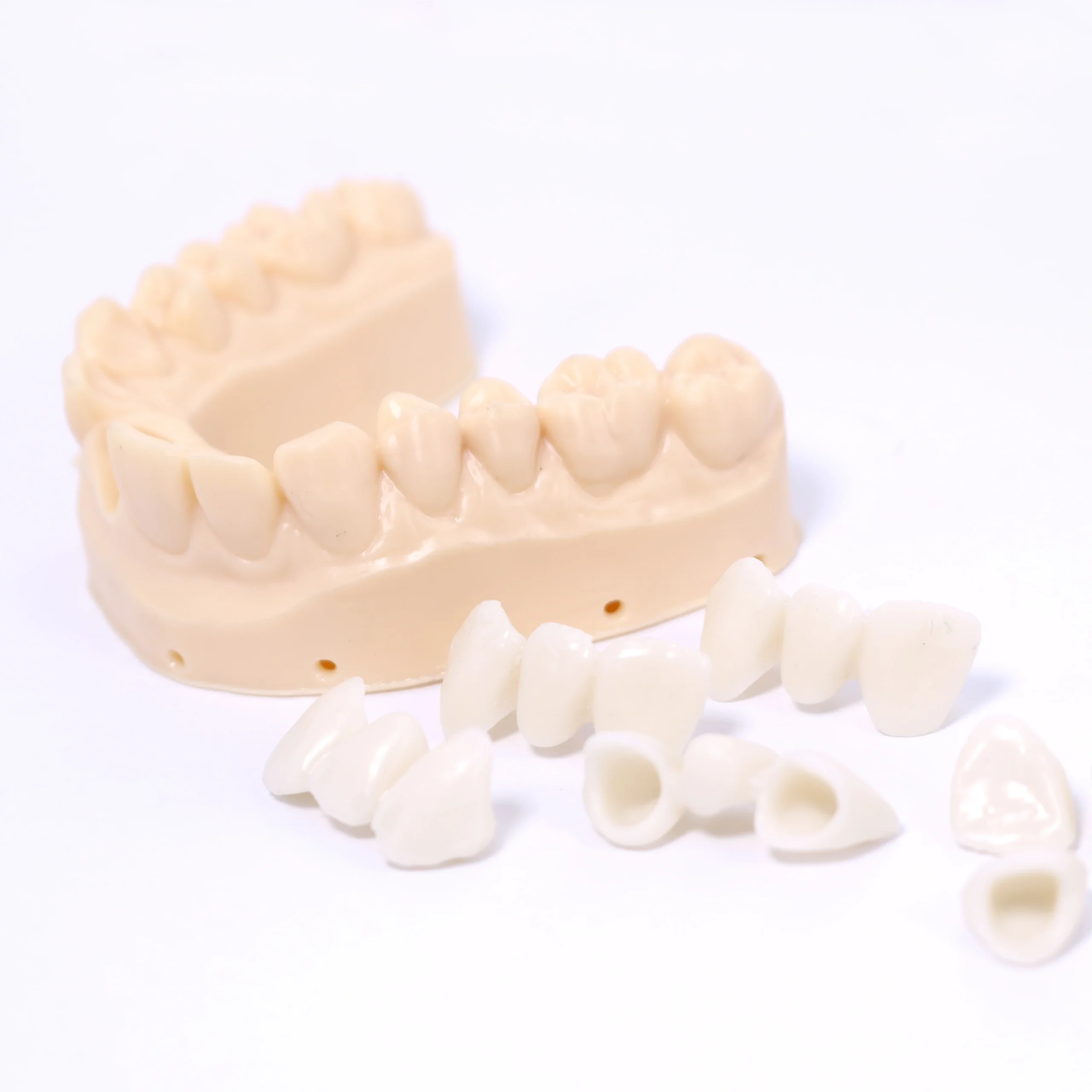
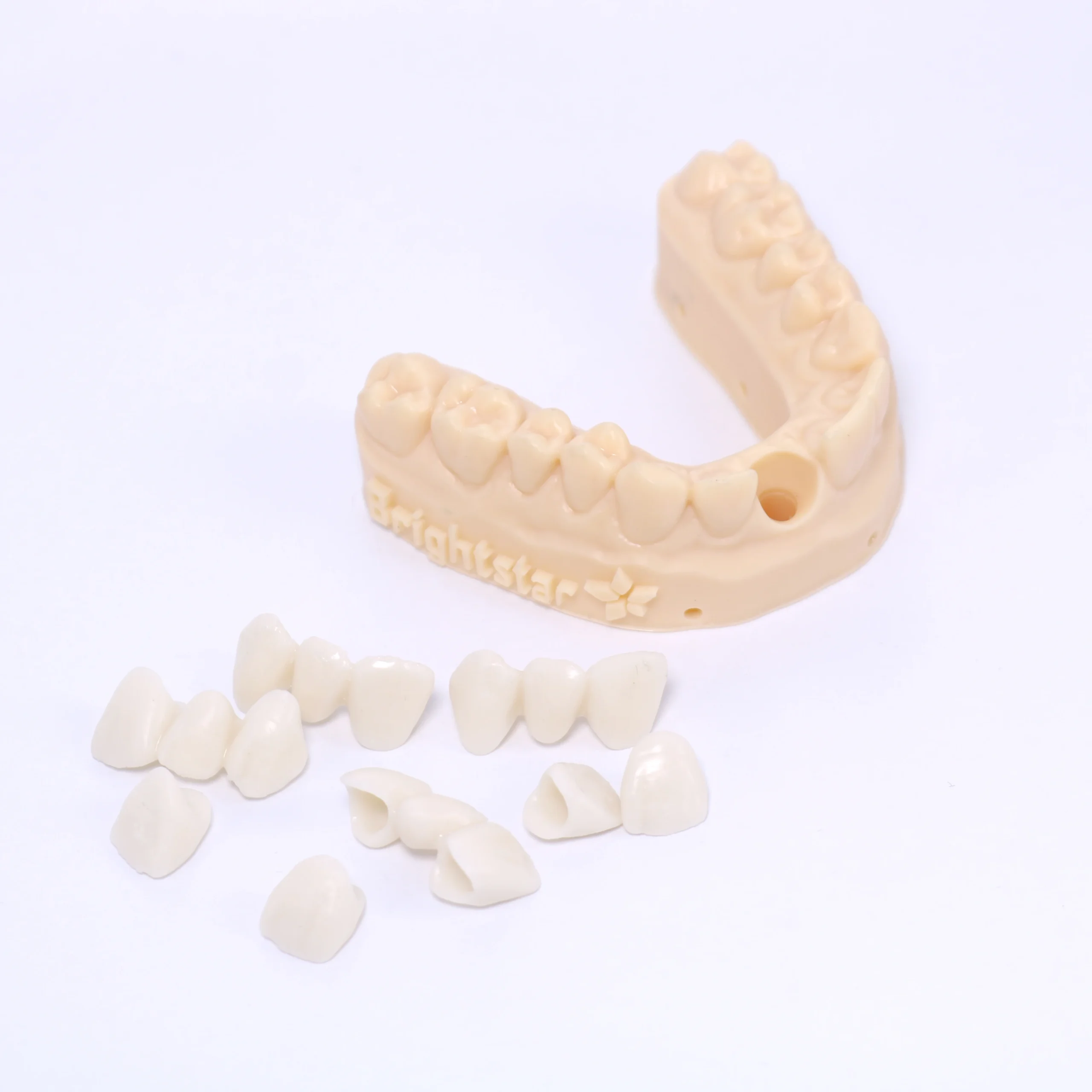
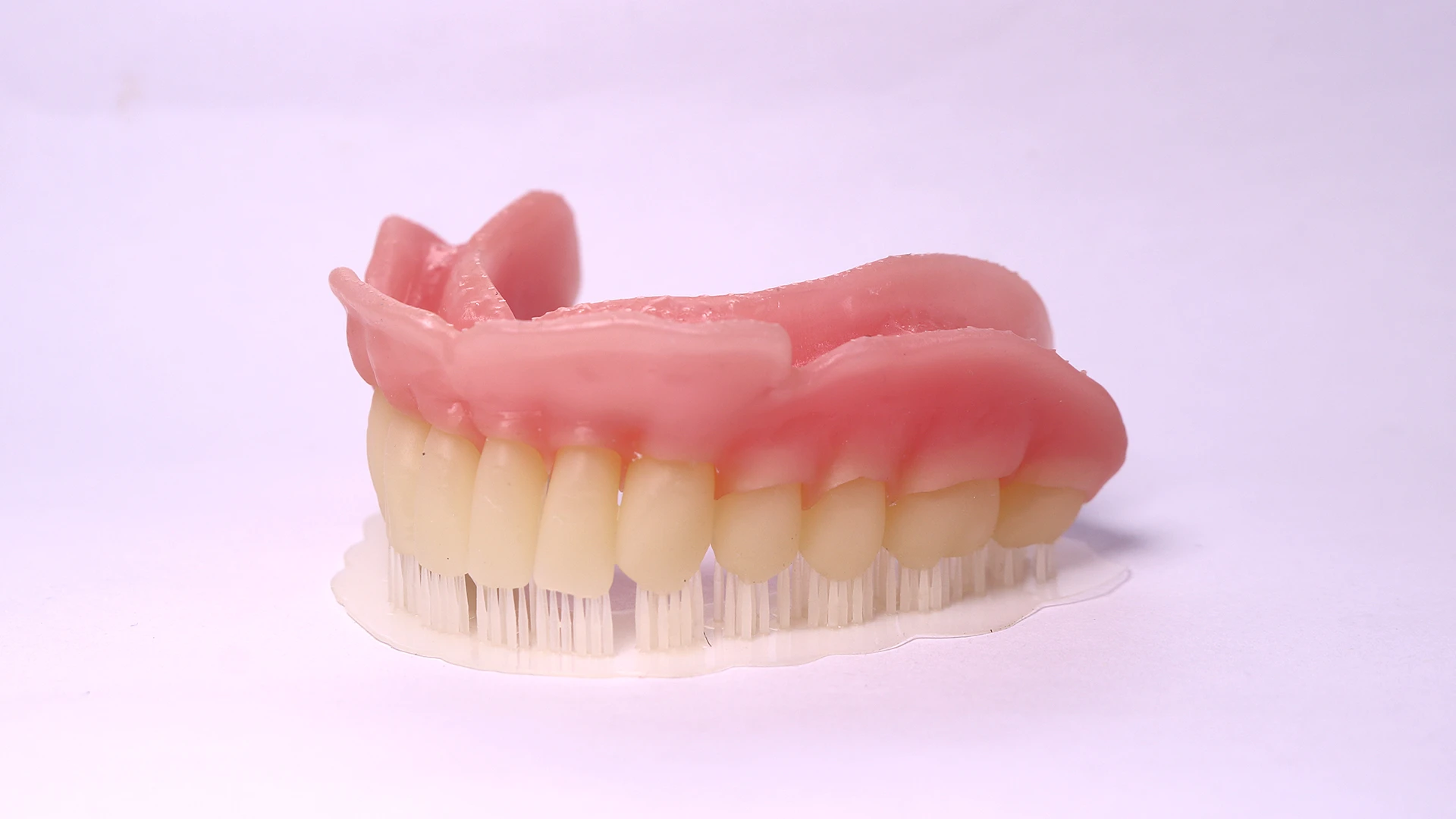
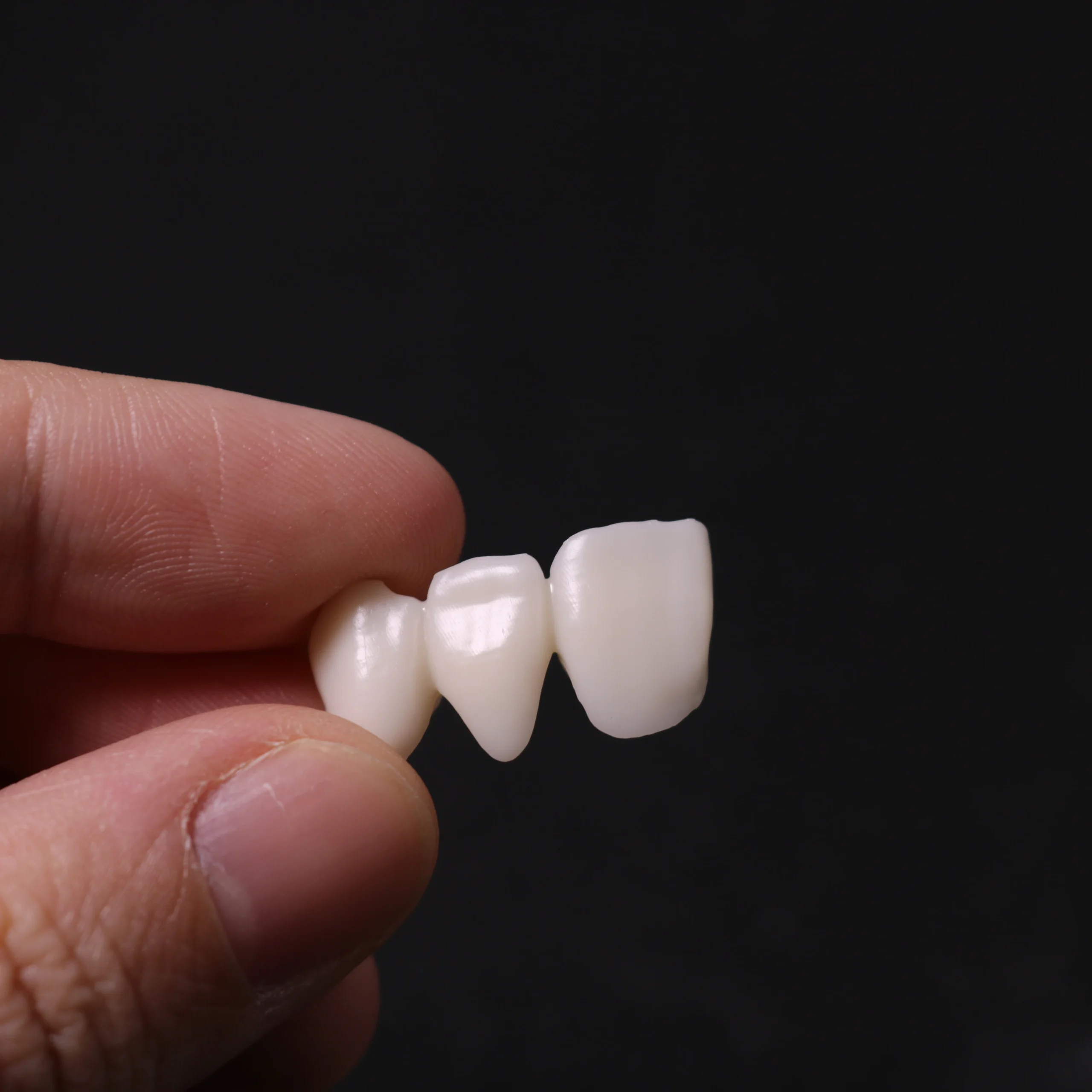
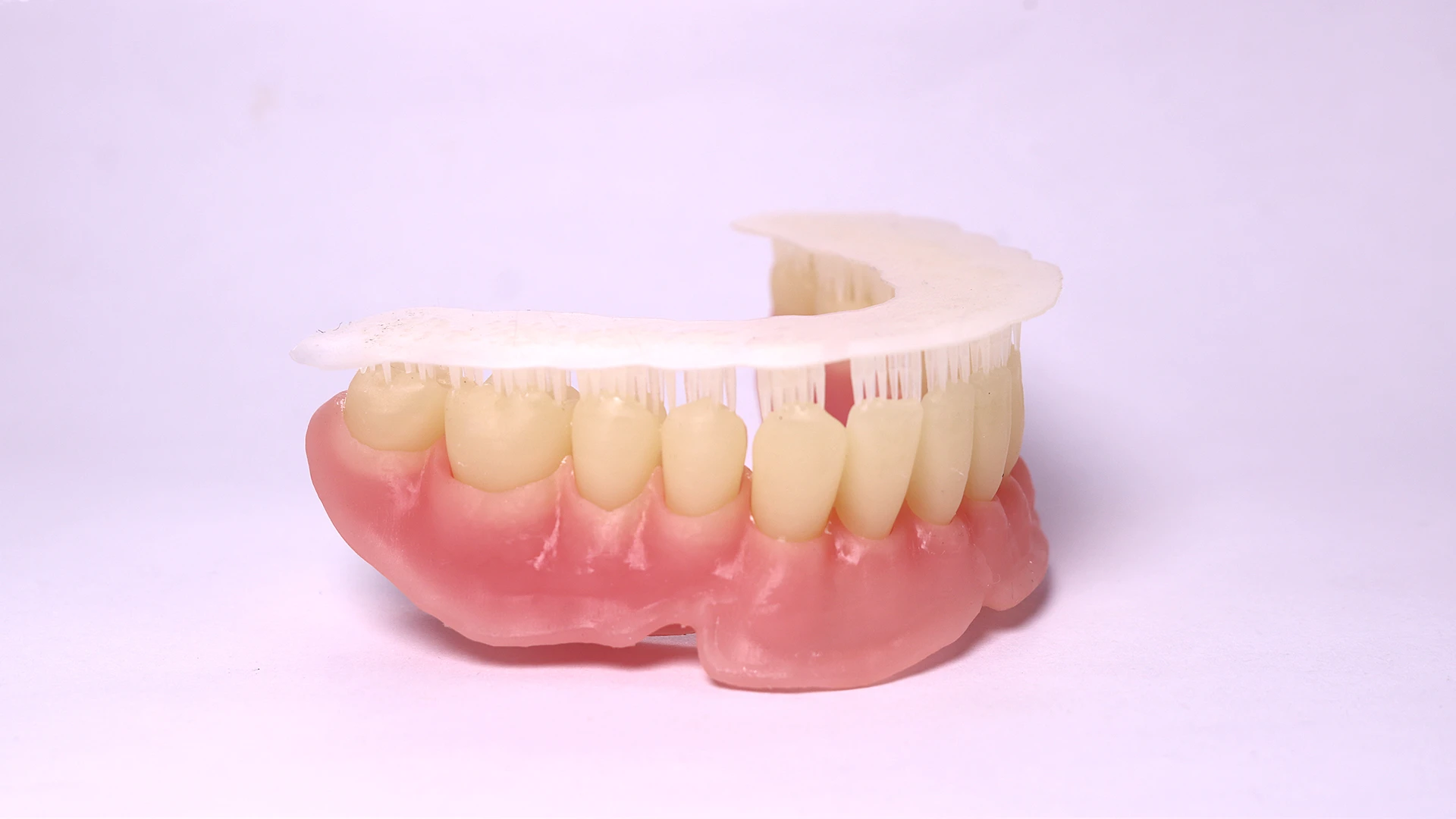
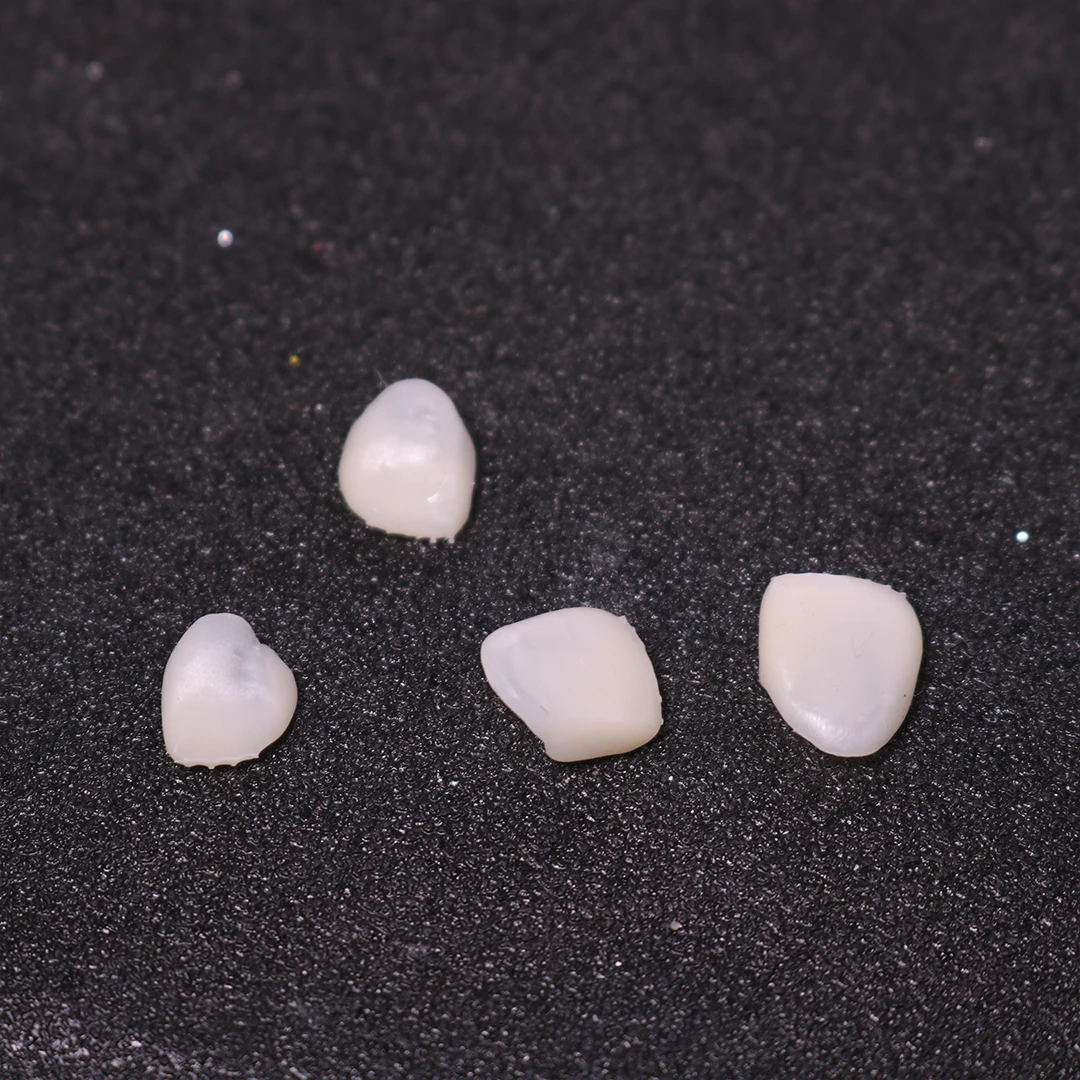
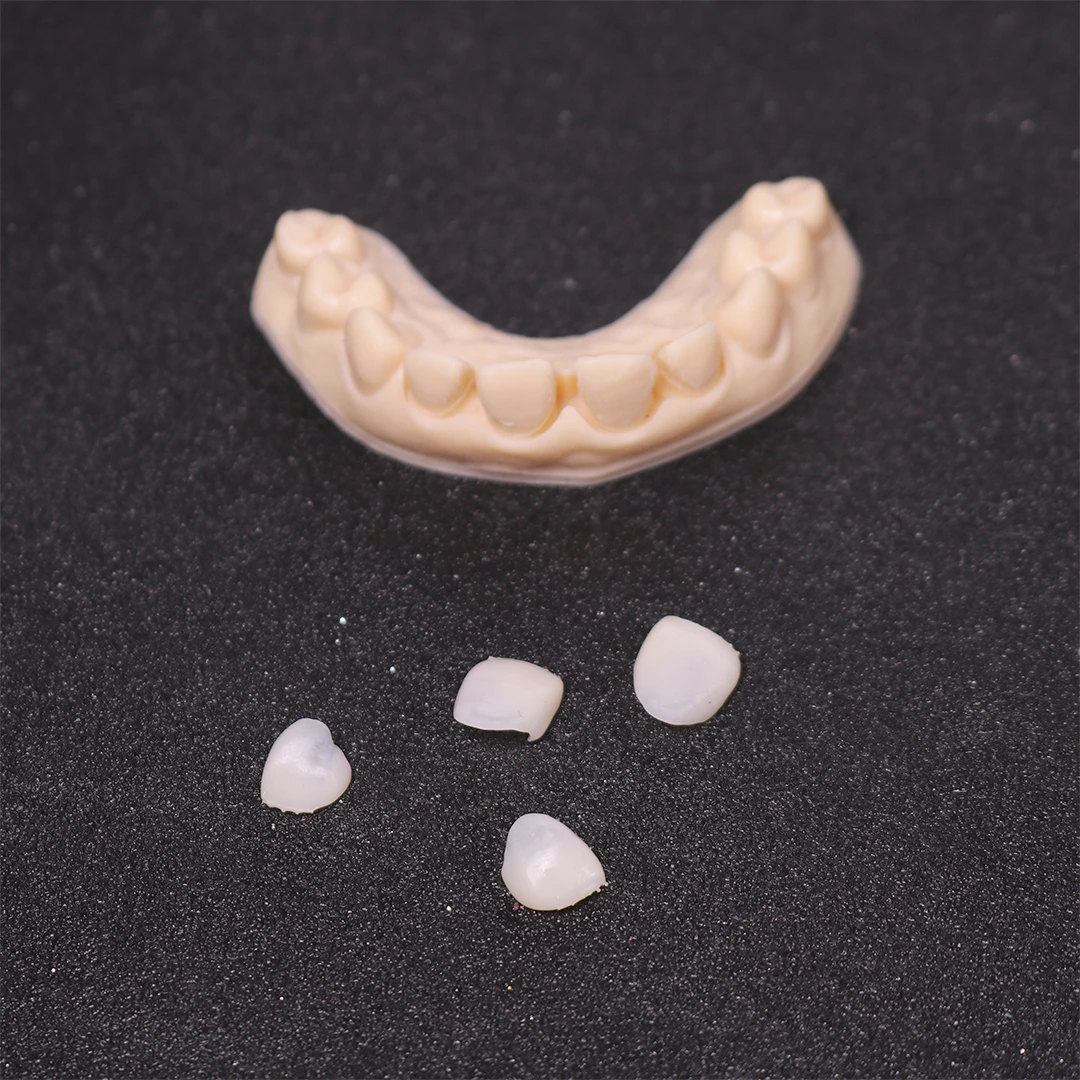
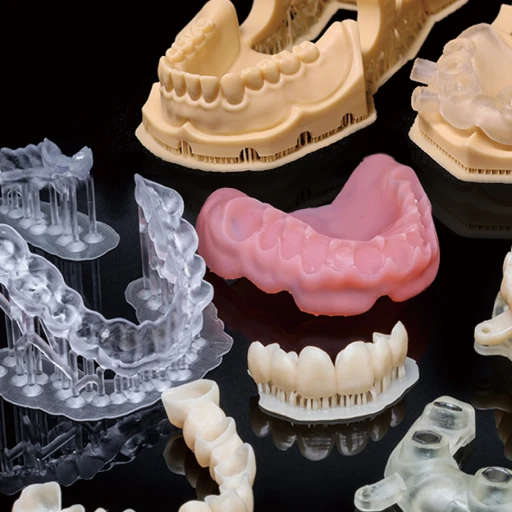
Print & Clinical Results
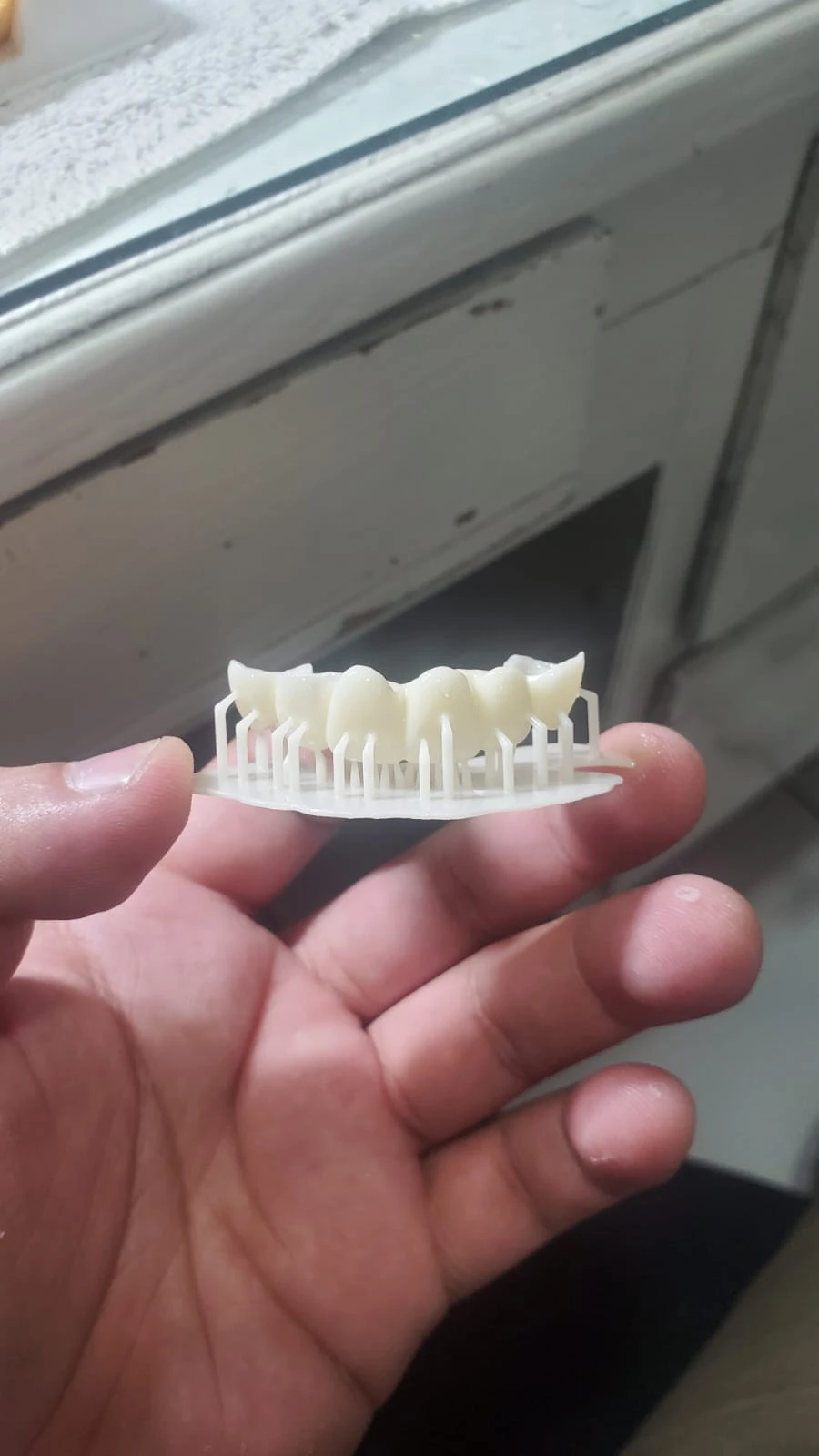
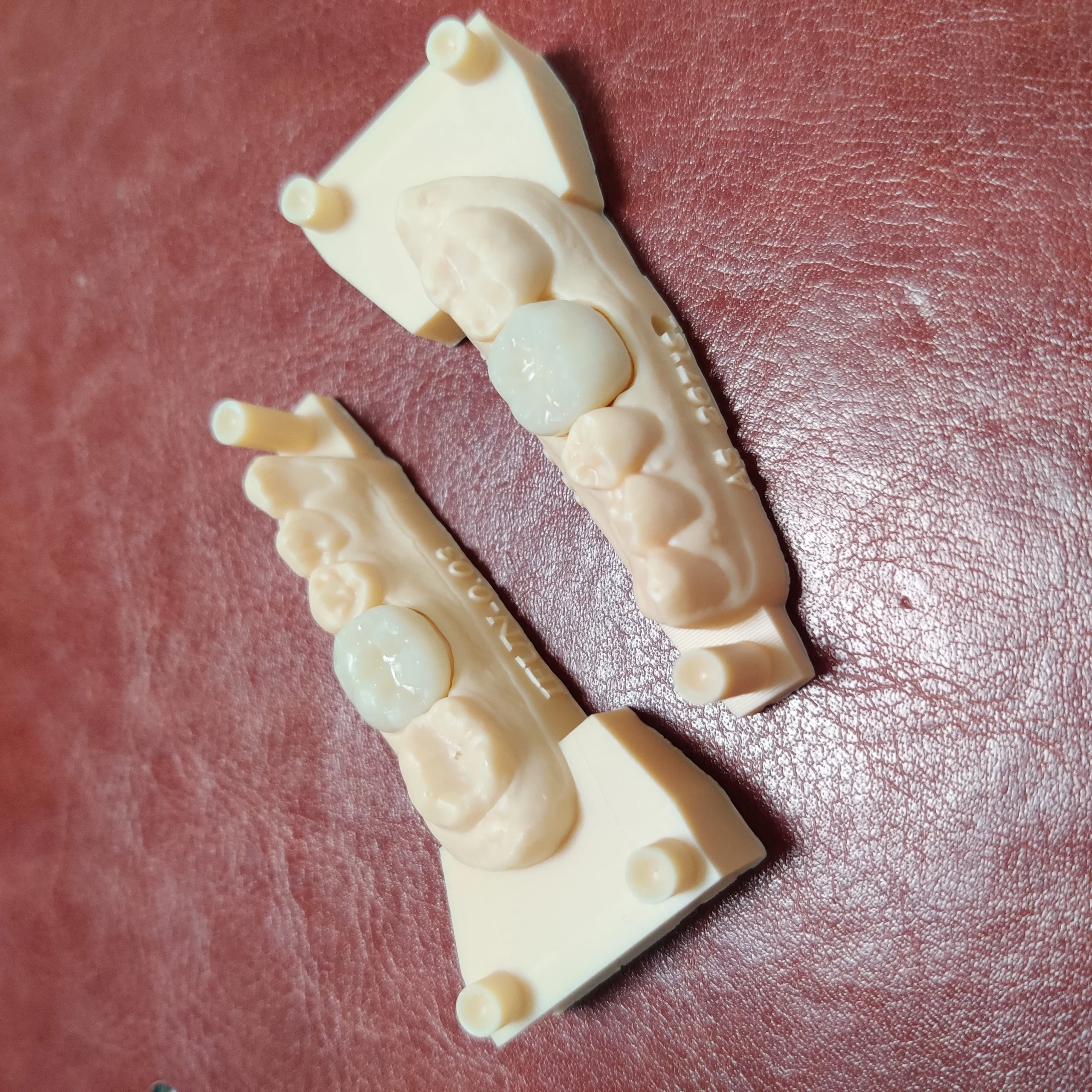
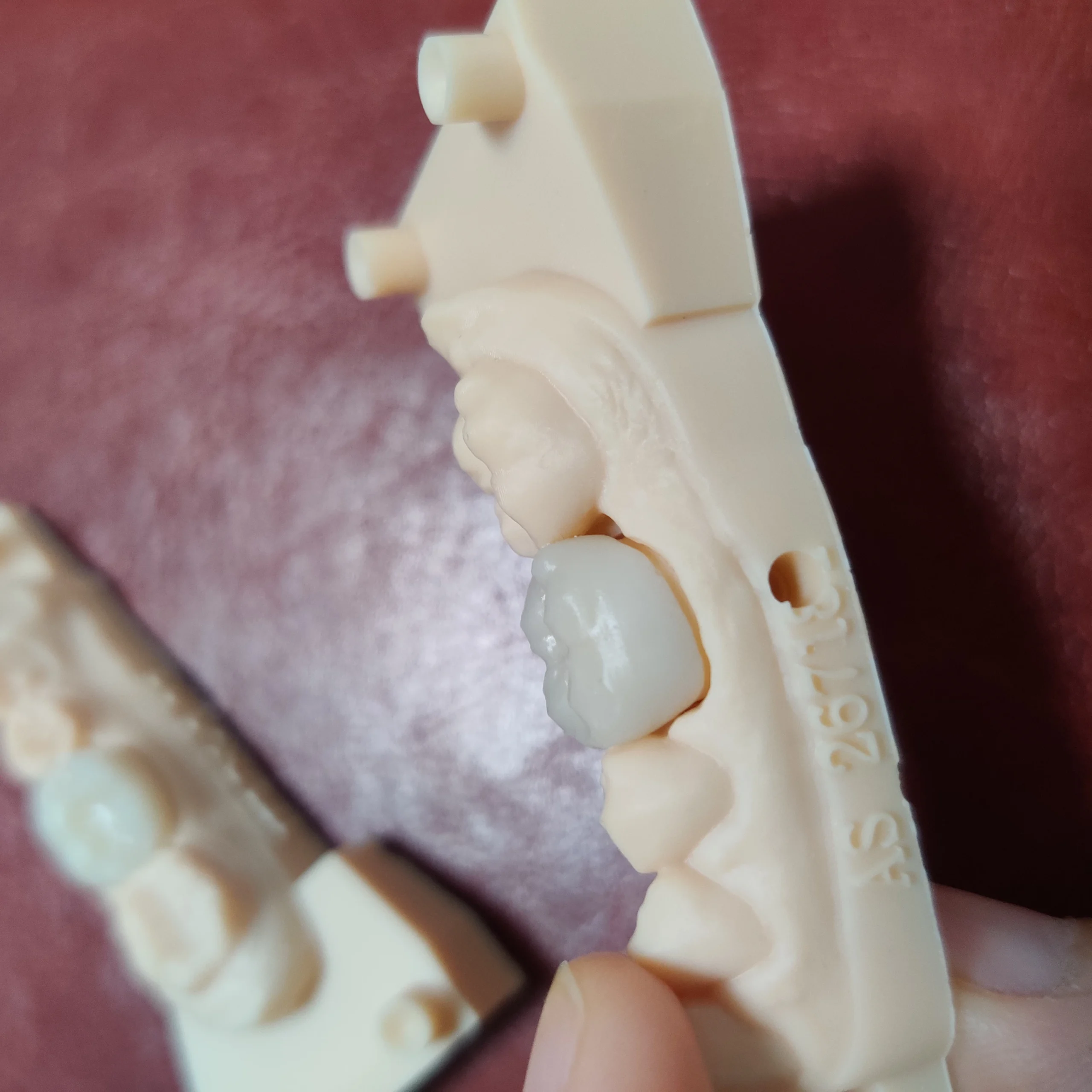
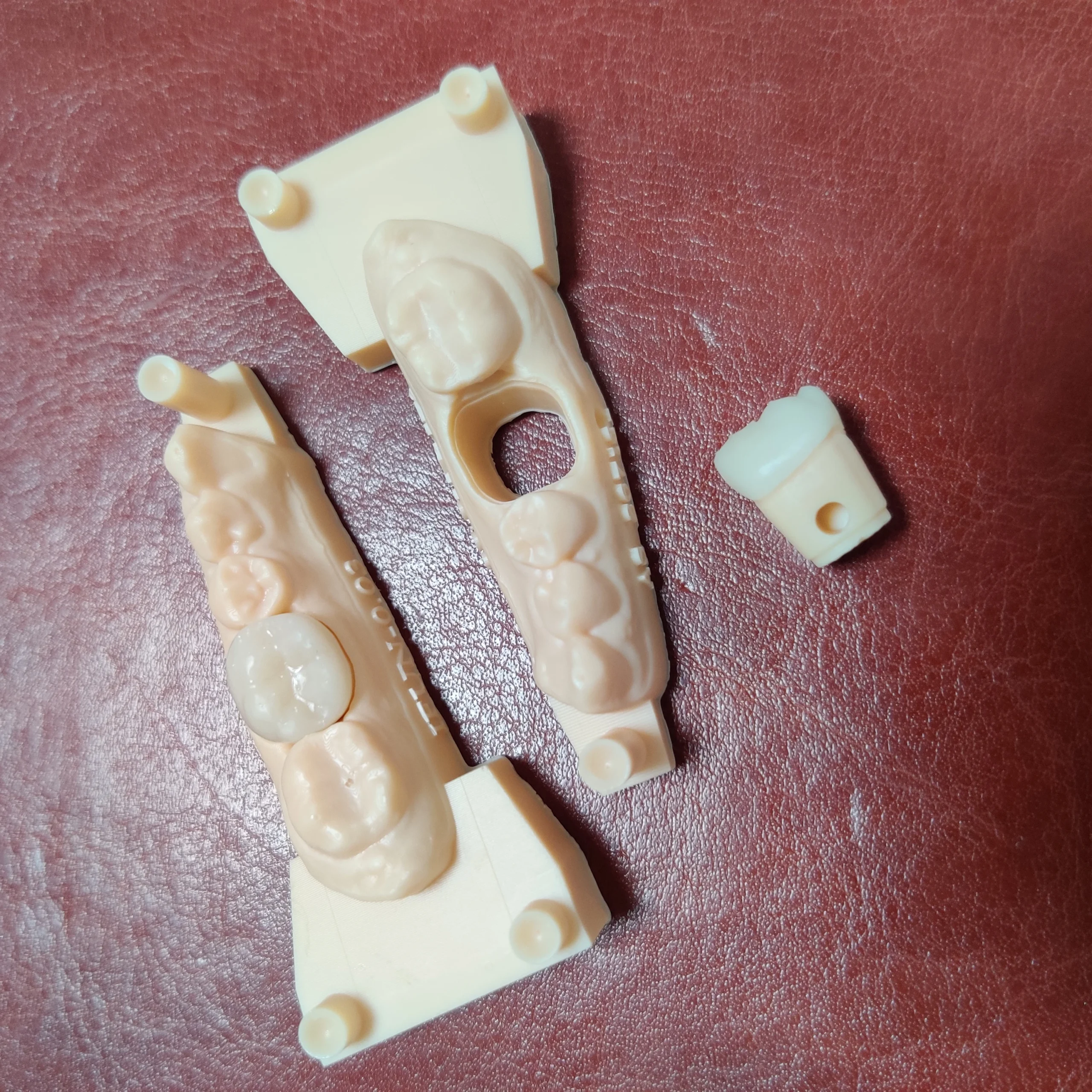
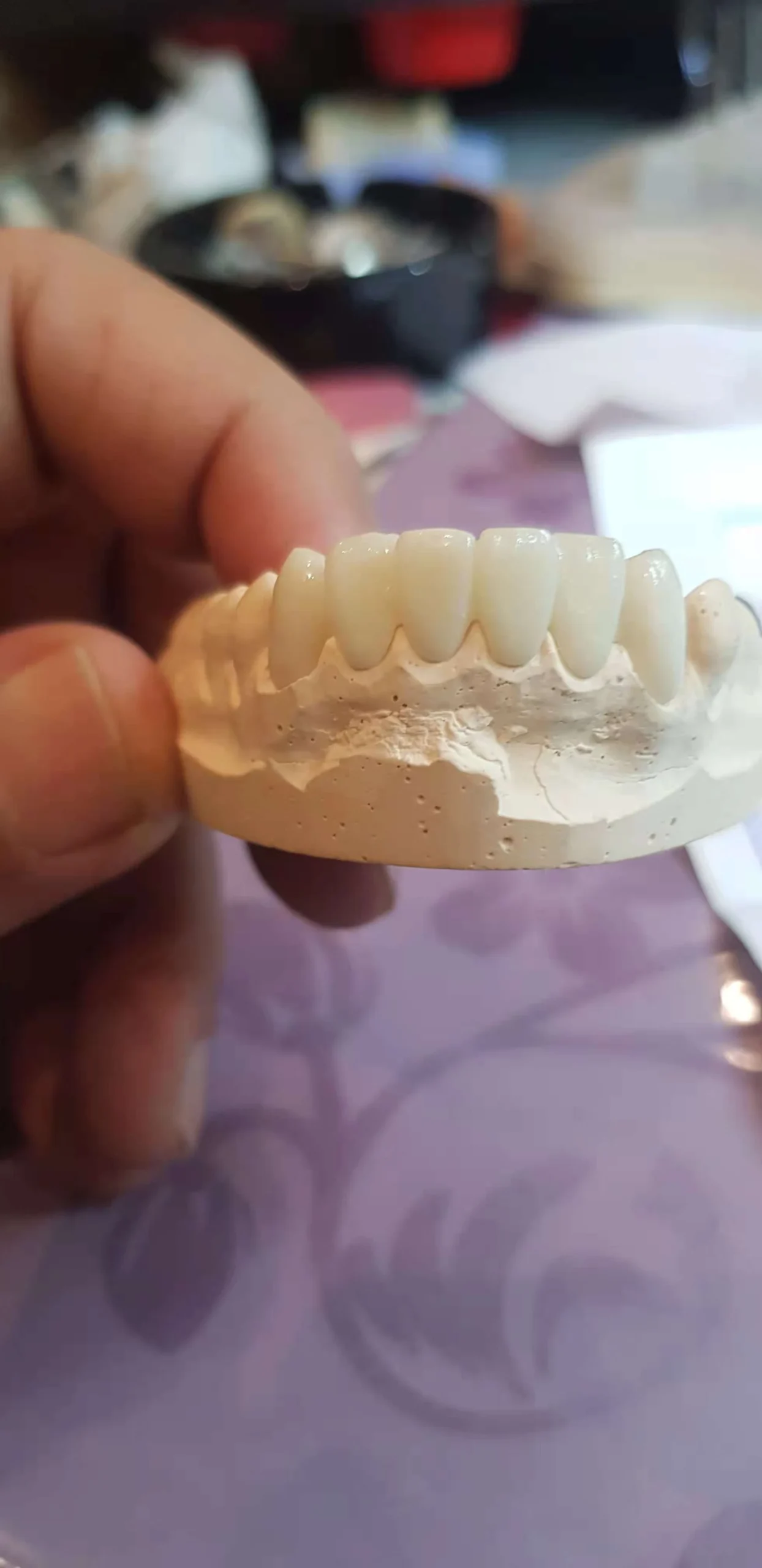
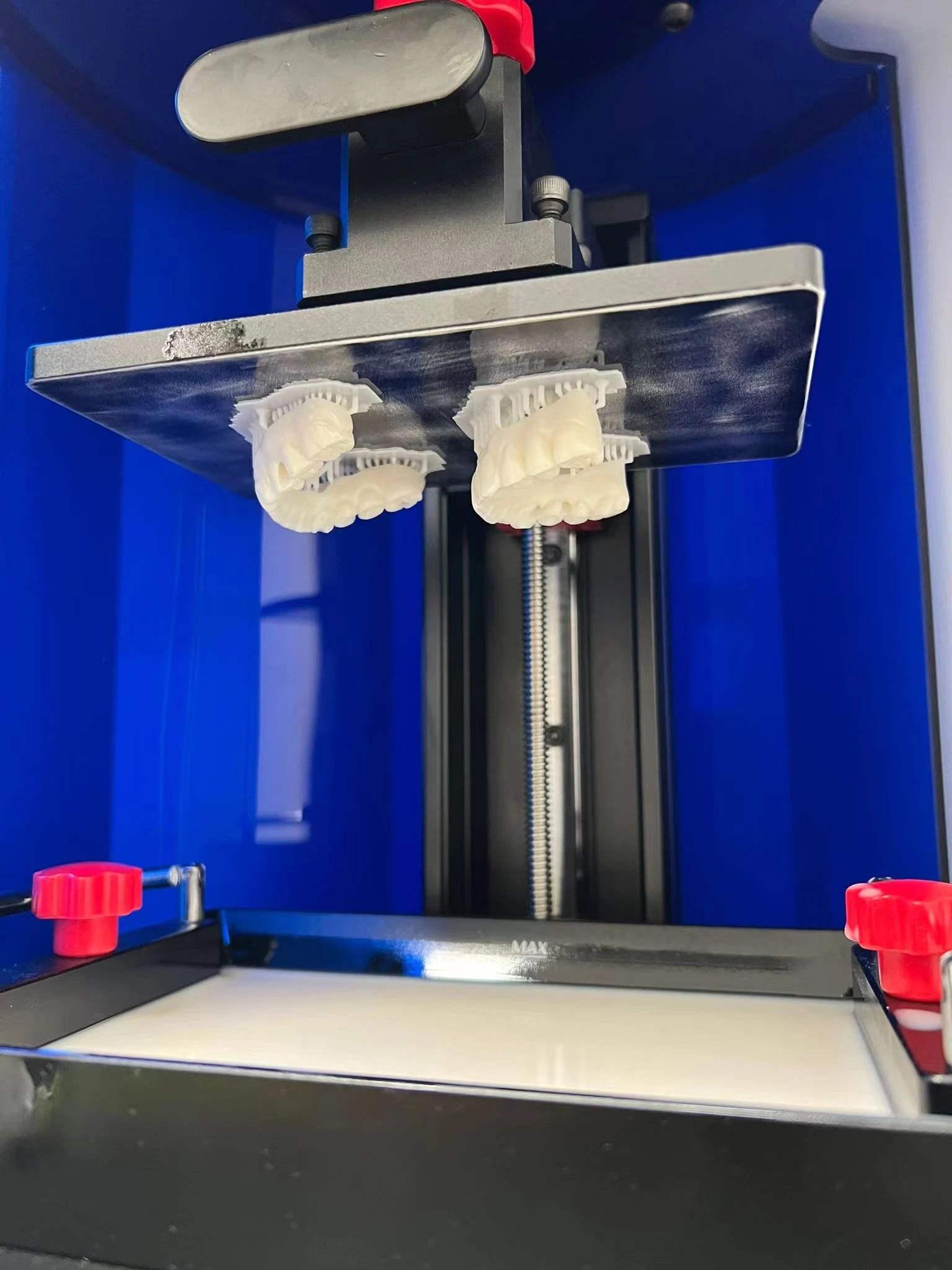
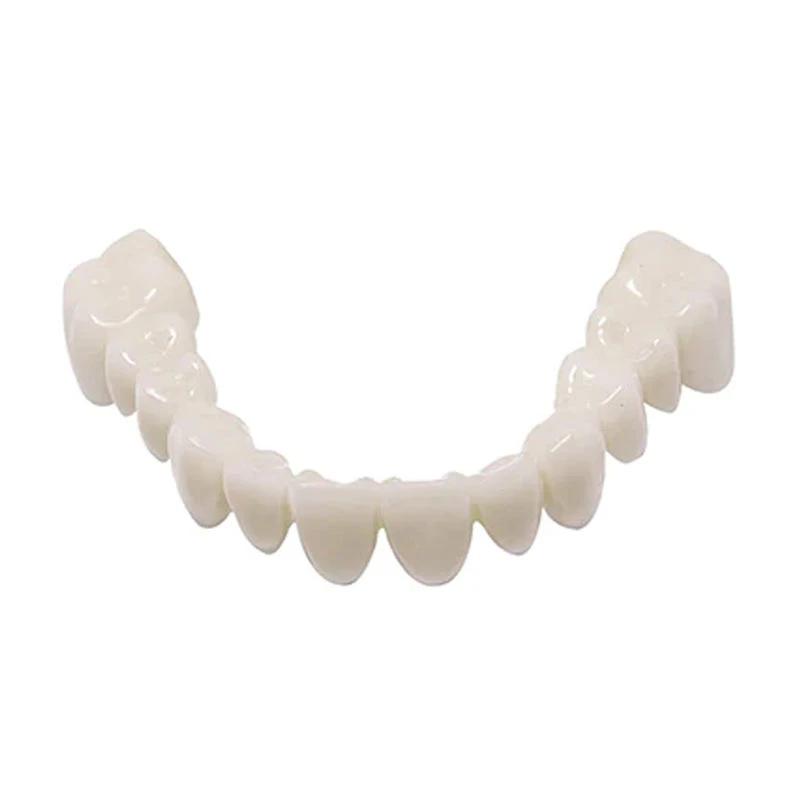
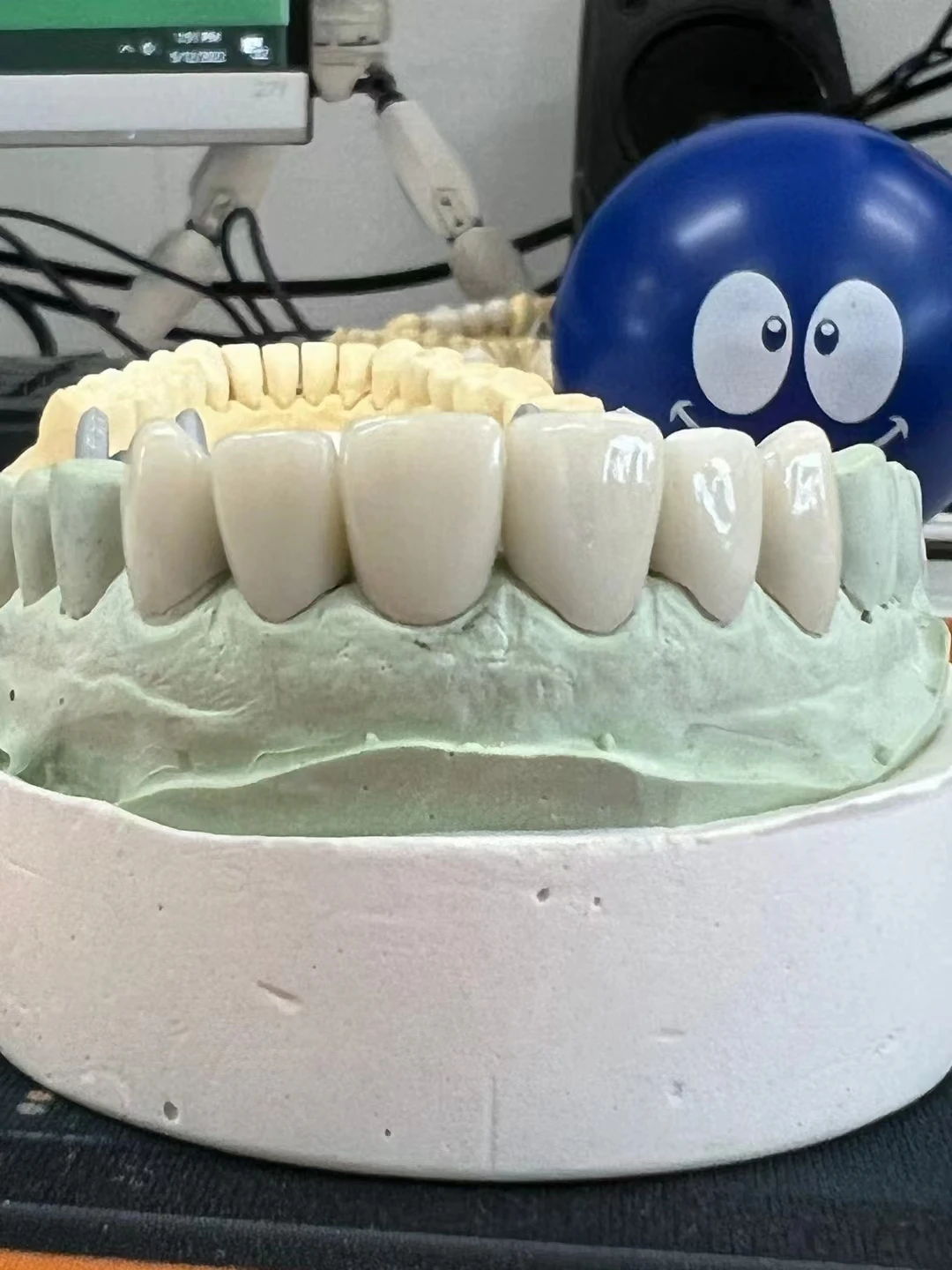
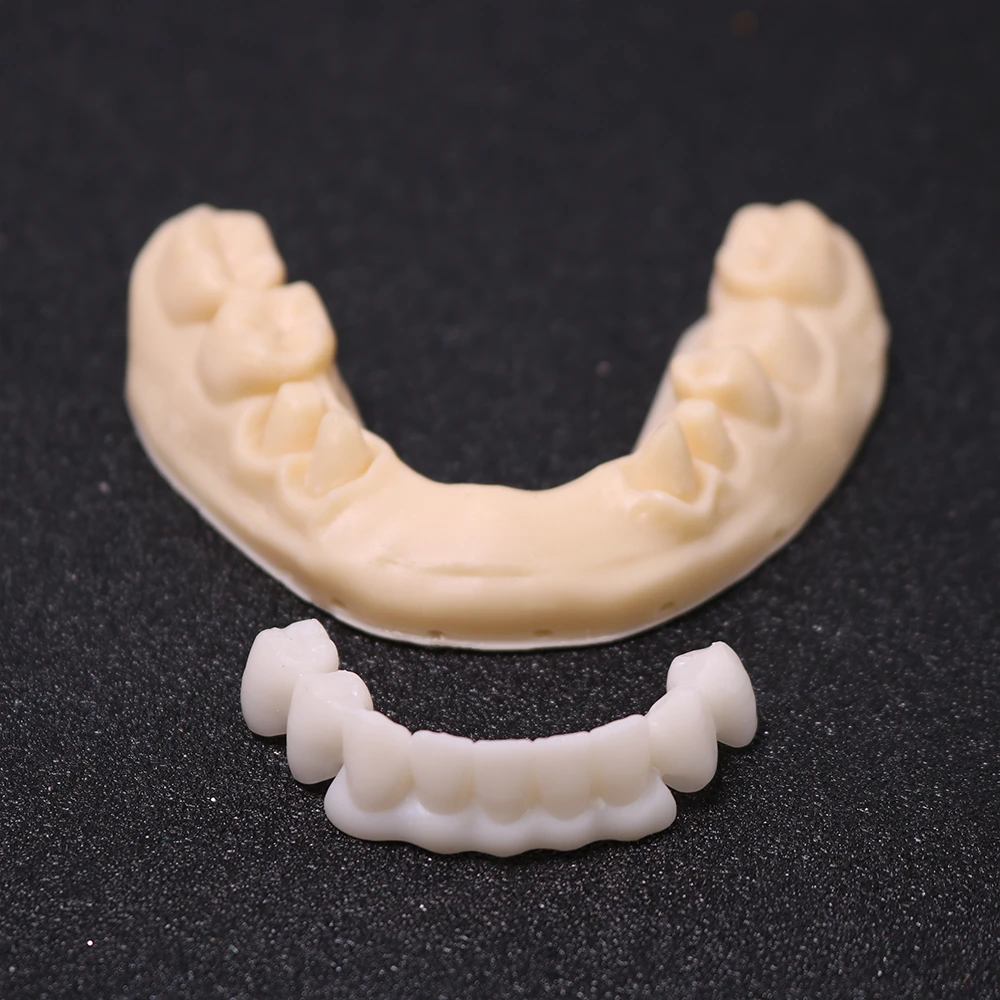
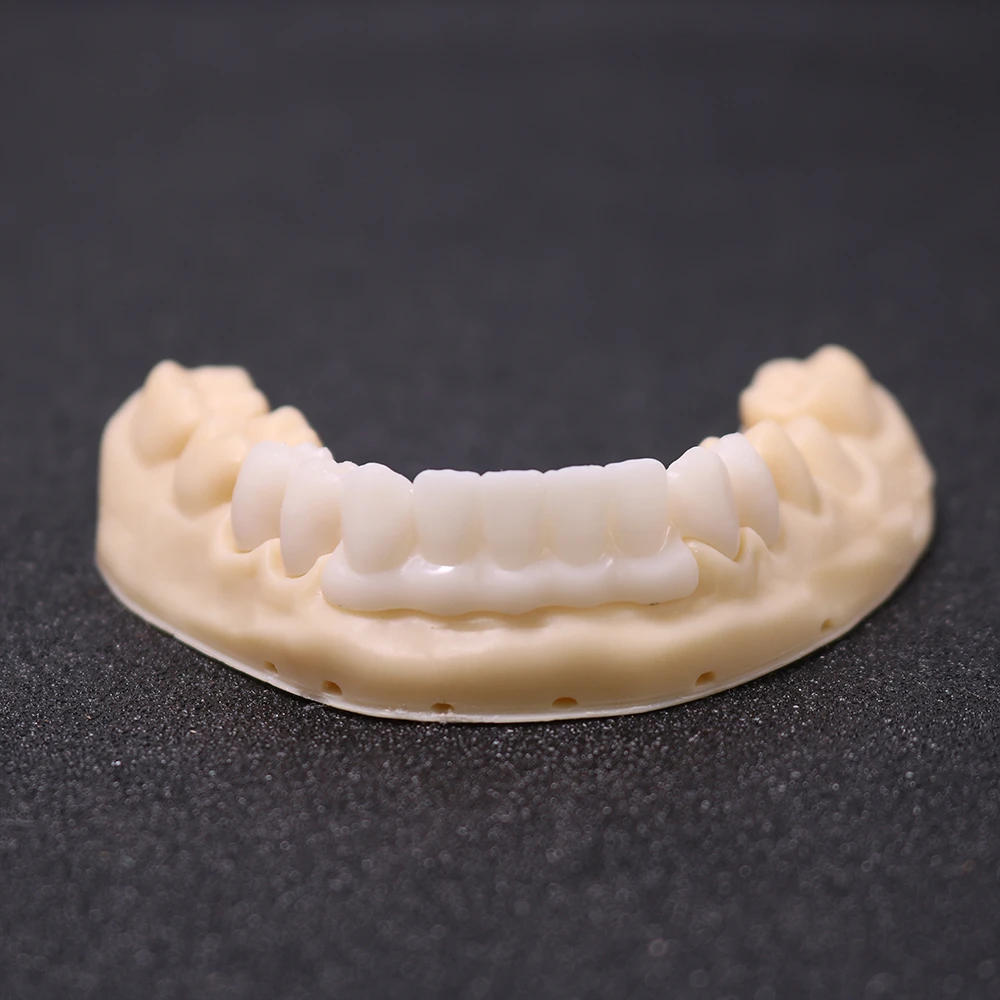
Explore 3D printed dental resins, precision models, and real-world clinical restorations.
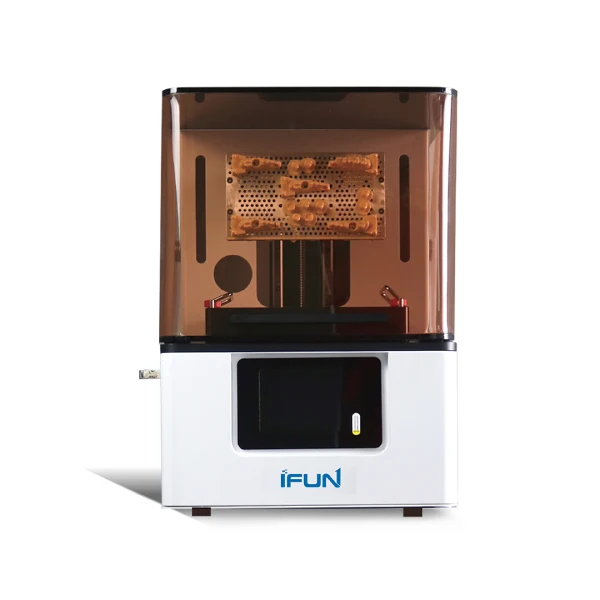
Related Products & Solutions
Discover high-performance 3D printing equipment, specialized resins, and end-to-end digital solutions tailored to your manufacturing needs.
Get an Instant Quote for Your 3D Printing Setup
Connect with our application engineers to select the ideal 3D printer (Resin/Wax) and materials (Dental/Jewelry) for your production, complete with unit cost calculations and a customized proposal.
Need a Faster Response?
Chat directly with our sales engineers on WhatsApp for quick price estimates, resin matching, or bulk ordering details.