The Digital Shift and the Durability Question
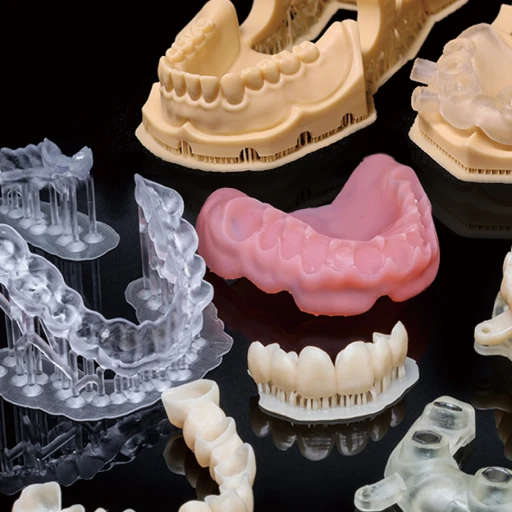
The landscape of removable prosthodontics is undergoing a seismic shift. For decades, heat-cured PMMA (Polymethyl Methacrylate) has been the gold standard, prized for its reliability and proven clinical history. However, the rise of additive manufacturing in dentistry is challenging this status quo. With the promise of reduced chairside time, lower material costs, and fewer appointments, 3D printed dentures are moving rapidly from the realm of temporary trials to final restorations.
But one critical question remains for clinicians and lab technicians alike: Is the durability of 3D printed denture bases sufficient for long-term clinical use? While the technology is ready for prime-time, the long-term data for the denture base material is still accumulating.
1. The Material Science: Photopolymers vs. Traditional PMMA
To understand durability, we must first look at the microstructure. Traditional heat-cured acrylics consist of long, linear polymer chains that are densely packed, providing excellent toughness. In contrast, 3D printed denture bases utilize photocurable resins.
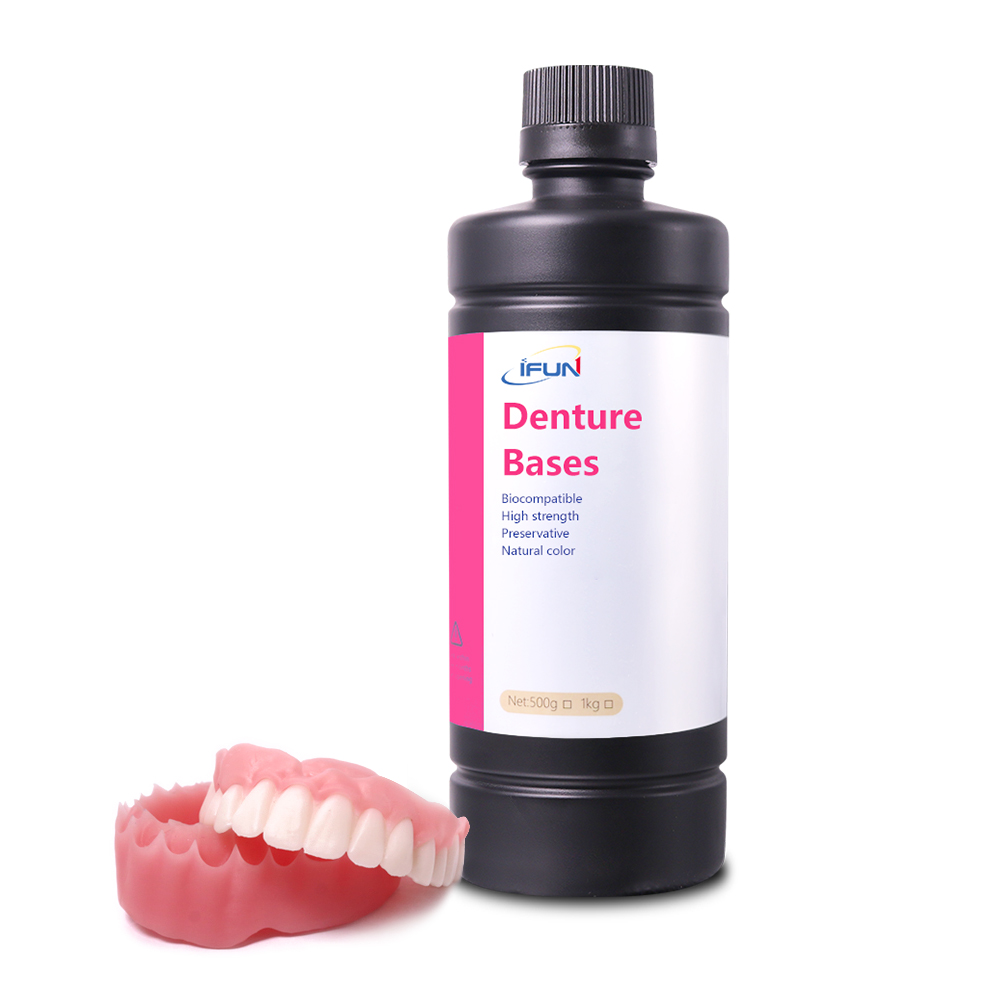
- Evolution of Resins: While early generations of these resins were brittle, modern formulations have evolved. They now rely on complex cross-linking chemistry to meet the ISO 20795-1 standard for denture base material polymers.
- Anisotropy vs. Isotropism: Unlike milled dentures (CAD/CAM), which are cut from a pre-cured, industrially dense puck (isotropic), printed bases are built layer-by-layer. This introduces the potential for anisotropy—meaning the strength can vary depending on the direction of the force applied. This layer-by-layer architecture is a critical consideration in additive manufacturing in dentistry.
- The Core Strength Contradiction: Research presents a complex picture. Some high-performance resins (often enhanced with nano-fillers like zirconia) demonstrate flexural strength and hardness that exceed traditional PMMA. Conversely, other studies indicate that some 3D printed denture resins may still exhibit lower hardness or elastic modulus than their conventional counterparts. The key takeaway: performance is highly dependent on the specific material formulation and brand.
2. Mechanical Integrity: Impact Resistance and Flexural Fatigue
A denture must survive both routine chewing forces and catastrophic failure events like accidental drops. For Removable Partial Dentures (RPD), material resilience around clasps is also critical.
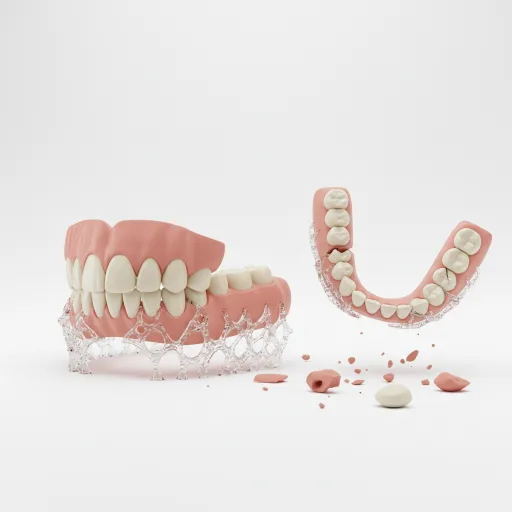
- The “Drop Test” Dilemma: Impact Resistance: Historically, impact strength was the most significant hurdle. Early 3D printed dentures tended to shatter. However, the industry now features high-impact resins that incorporate nano-ceramic fillers or rubber-toughened matrices, demonstrating fracture toughness that often rivals high-impact poured acrylics.
- Flexural Strength & ISO Compliance: Most modern dental resins easily surpass the 65 MPa threshold required by ISO standards, confirming they are rigid enough for mastication.
- The Fatigue Challenge: Beyond immediate impact, long-term durability is defined by resistance to fatigue. The layer interface inherent to additive manufacturing in dentistry is a potential weak spot. In the oral environment, constant thermal cycling (hot/cold) combined with long-term low-level mechanical loading can lead to delamination or fracture initiation at microscopic pores or layer lines.
3. Long-Term Performance: Dimensional Stability and Oral Aging
A successful denture requires stability of fit and integrity in a hostile chemical environment.
- Dimensional Stability: A Key to Fit: For Digital dentures, maintaining the fit over the alveolar ridge is paramount. 3D printing involves polymerization shrinkage, followed by later hygroscopic expansion (water absorption). Studies suggest that while 3D printed denture bases can achieve excellent initial fit, their long-term dimensional stability, particularly in the critical post-dam or flange areas, may be a challenge requiring further longitudinal study.
- Water Sorption and Degradation: 3D printed denture base material is hygroscopic. Over time, water absorption can act as a plasticizer, slightly softening the material. High-quality resins must demonstrate low water sorption to prevent this biological aging and mitigate the risk of odor retention or degradation.
- Surface Properties and Hygiene: The surface texture, dictated by the printer’s resolution and polishing protocol, plays a massive role. Some studies indicate that 3D printed denture surfaces might show greater changes in roughness after immersion in denture cleansers compared to traditional or milled bases, impacting plaque accumulation and cleaning efficacy.
4. The Critical Role of Post-Processing and Quality Control
Durability is not solely defined by the liquid in the bottle; it is defined by the quality of the manufacturing workflow.
- Post-Curing is Non-Negotiable: The mechanical integrity of a 3D printed denture is cemented during the post-curing phase. Inadequate light intensity or temperature control can leave residual monomers. These uncured monomers not only compromise biocompatibility but significantly reduce the physical strength, making the denture base material prone to premature failure.
- Addressing Internal Defects: Proper workflow in additive manufacturing in dentistry must minimize internal porosity (microbubbles or voids). These defects, often visible under scanning electron microscopy (SEM), act as stress concentrators and are guaranteed starting points for fatigue failure.
Conclusion: The Path to Universal Acceptance
So, are 3D printed denture bases durable enough for long-term use? The professional consensus is a conditional but increasingly confident “Yes.”
The era where 3D printing was only suitable for immediate or transitional dentures has passed. With the advent of High-Impact Digital Denture Resins and validated post-processing workflows, labs can now produce bases that meet the rigorous mechanical demands of long-term wear. However, material selection is paramount. Clinicians must distinguish between “economy” resins and “premium” resins engineered for permanent rehabilitation, whether for a complete Digital Denture or a Removable Partial Denture (RPD) framework.
Crucially, while in vitro data is overwhelmingly positive for new-generation materials, the ultimate long-term validation—the 5- to 10-year large-scale prospective clinical trials—is still in progress. The industry is rapidly closing the gap, positioning 3D printed dentures not just as an alternative, but as the inevitable future standard in removable prosthetics.