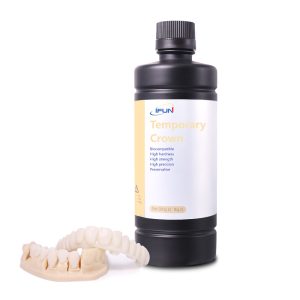
The field of dental implantology has moved toward a highly predictable, restorative-driven digital workflow. For complex cases like All-on-4 or All-on-6, the primary challenge is maintaining accuracy from bone reduction to the final placement of the provisional. By utilizing Dental Light-Curing 3D Printing, clinicians can now consolidate Stackable Surgical Guides, gingiva masks, and 3D-printed bridges into a single surgical appointment, significantly improving the Immediate Loading Protocol.
1. The Core Components of an Integrated Workflow
A successful one-surgery full arch restoration relies on three specialized 3D-printed components working in unison:
- Stackable Surgical Guides: These act as the “navigation system” for the surgery. Based on the patient’s CBCT and intraoral scans, they ensure implants are placed at the precise depth and angle to avoid anatomical structures like the mandibular nerve.
- 3D Printed Gingiva Masks: Often overlooked, these flexible components simulate soft tissue architecture. They help the clinician manage the “emergence profile,” prevent “black triangles,” and ensure the 3D Printed Temporary Bridge fits comfortably against the healing tissue.
- Temporary Bridges: These provide immediate function and aesthetics. Beyond looks, they stabilize the implants and serve as a biological blueprint for the final permanent restoration.
2. All-on-4 Digital Design and Data Fusion
The foundation of this workflow is the “virtual patient” created during the All-on-4 Digital Design phase. This process involves aligning three specific data sets:
- DICOM files: From CBCT scans to visualize bone density and volume.
- STL/PLY files: From Intraoral Scans (IOS) to capture soft tissue and dentition.
- Aesthetic Planning: Integrating face scans or 2D photos to align the smile line with the patient’s facial features.
By designing the surgical guide and the prosthetic simultaneously in CAD software, the final bridge is guaranteed to align with the implant platforms, reducing the need for intraoperative adjustments.
3. The Role of Dental Light-Curing 3D Printing
The physical realization of the digital plan depends on the hardware. When comparing DLP vs SLA Dental printing, DLP (Digital Light Processing) and high-resolution LCD printers are often preferred for their speed and XY accuracy.
- Precision: These printers offer micron-level resolution, which is essential for the “snap-fit” required by stackable systems.
- Biocompatible Dental Resin: Modern resins are engineered for specific clinical uses. Gingiva Mask 3D Printing requires flexible, tear-resistant materials, while surgical guides require rigid, autoclavable resins that maintain dimensional stability during drilling.
- Efficiency: High-speed printing allows for “chairside” production, where guides and temporaries can be adjusted or reprinted in a matter of hours rather than days.
4. Clinical Execution: The “Three-in-One” Surgery
On the day of the procedure, the workflow follows a precise sequence to ensure the Immediate Loading Protocol is successful:
- Base Guide Fixation: The base guide is anchored to the bone via anchor pins to provide a constant, fixed reference point.
- Guided Bone Reduction: If necessary, the guide directs the exact amount of bone leveling required to create sufficient prosthetic space.
- Implant Placement: The drilling guide is stacked onto the base, navigating the implants into the planned positions with high primary stability.
- Gingiva Mask & Bridge Delivery: The 3D-printed gingiva mask verifies soft tissue clearance, and the 3D Printed Temporary Bridge is secured. Because all parts share the same digital origin, the “pick-up” process is fast and accurate.
While various systems exist—ranging from stackable components to indexed guides (as seen in Figure 1)—the goal remains precision, minimally invasive insertion, and immediate restoration. This versatility allows clinicians to adapt the digital plan to specific patient anatomy while maintaining the integrity of the prosthetic-driven outcome.

5. Post-Processing and Biocompatibility Standards
To ensure patient safety, rigorous post-processing is a requirement. This is not just about aesthetics; it is about chemical stability.
- Cleaning: Using Isopropyl Alcohol (IPA) or specialized cleaners to remove any residual, uncured Biocompatible Dental Resin.
- Secondary UV Curing: A critical final step that completes the polymerization. Proper light-curing ensures the bridge achieves its maximum fracture toughness and meets ISO 10993 standards for long-term mucosal contact.
Conclusion
The integration of surgical guides, gingiva masks, and temporary bridges represents a move toward more predictable and efficient dentistry. By mastering the Full Arch Implant Workflow and leveraging the latest in 3D printing technology, clinical teams can provide patients with immediate aesthetic results while reducing the risks associated with traditional analog methods.