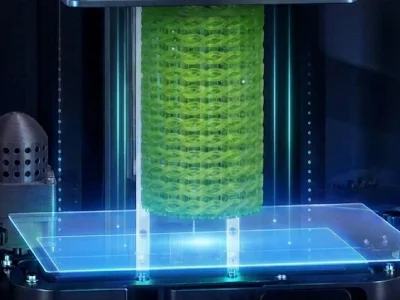
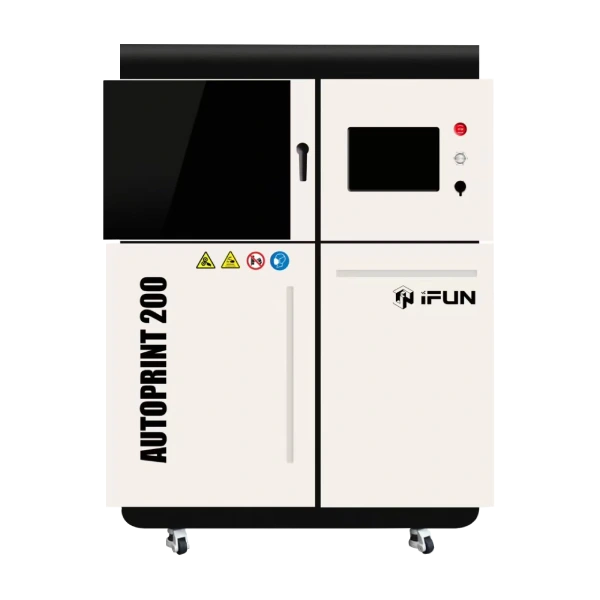
In resin 3D printing (SLA/MSLA/DLP), efficiency is defined by how much you can produce in a single Z-axis cycle. Whether you are running a small business or prototyping at scale, resin 3D printing batch production is the key to reducing unit costs. However, simply crowding the plate often leads to failure. To achieve SLA printing efficiency while maintaining dimensional accuracy in resin 3D printing, you need a systematic approach to hardware, slicing, and physics.
1. The Foundation: Hardware Precision and Stability
Before attempting to maximize 3D print build plate usage, your hardware must be perfectly calibrated. A full plate increases the mechanical load on the printer.
- Platform Leveling: For high-density layouts, the plate flatness error must be less than 0.01mm. Any slight tilt will cause parts on the edges to detach.
- Z-Axis Repeatability: Ensure your Z-axis lead screw has a positioning accuracy of less than 0.005mm to avoid layer lines across dozens of simultaneous parts.
- Light Uniformity: Most MSLA printers have a light intensity drop-off at the edges. Ensure your UV uniformity is above 95% to maintain consistent curing across the entire batch.
2. 3D Nesting Optimization: Beyond the X-Y Plane
Effective 3D printing nesting optimization involves using the entire volume of the printer, not just the surface of the build plate.
- Vertical Stacking: Utilize resin print stacking techniques by creating sacrificial “floors” or scaffolding. This allows you to print multiple layers of parts in one go, which is ideal for reducing 3D print time for small resin batches by running the machine overnight.
- Part Interlocking: Analyze the geometry of your models. Insert smaller components into the hollow areas or negative spaces of larger parts, maintaining a minimum gap of 1-2mm to prevent resin surface tension from fusing them together.
- Tree Supports: Use advanced tree supports. Research shows these can reduce material consumption by up to 40% while keeping overhang accuracy within ±0.1mm.
3. Managing Physics: Resin Suction Force Reduction
The biggest challenge for a full build plate is the “Tug-of-War” between the cured resin and the FEP film. This is how to print multiple resin parts at once without failure: manage the peel force.
- Staggered Heights: Avoid having all models reach a large cross-section at the same layer. By varying the heights or angles of your models, you distribute the suction force over time rather than hitting a peak that could snap supports.
- FEP Film Longevity in Batch Printing: A crowded plate wears down the FEP film faster. Use resin suction force reduction techniques, such as hollowing parts and adding drainage holes close to the base, to minimize the vacuum effect.
- Orientation Strategy: While a 45-degree tilt is standard, for batch production, vertical orientation (90-degree) often results in the lowest dimensional error for support structures.
4. Slicer Settings for High-Volume Accuracy
Finding the best slicer settings for full build plate resin printing requires a balance between speed and reliability.
- Exposure Compensation: When the plate is full, increase your “Normal Exposure Time” by 5-10%. This compensates for the slight UV drop-off at the edges and ensures structural integrity for the entire batch.
- Z-axis Shrinkage Factor: Resin shrinks more significantly along the Z-axis due to the cumulative effect of layers. Apply a shrinkage compensation factor (e.g., XY 1.001, Z 1.015) in your slicer to ensure maintaining detail in high-volume 3D printing.
- Rest Time After Lift: Increase the “Light-off Delay” or “Rest Time.” This allows the resin to flow back and settle perfectly under a crowded plate, preventing “ghosting” or thin-wall failures.
5. Thermal Consistency: The Secret to Precision
Resin viscosity changes with temperature, which directly affects SLA printing efficiency. For a 12-hour batch print, stability is vital.
- Ideal Temperature: Keep your resin between 25°C and 30°C. Cold resin is more viscous, leading to higher suction forces and a higher failure rate on packed plates.
- Active Heating: Use a thermostatically controlled enclosure or an internal vat heater. Maintaining a temperature variance of less than ±0.5°C is standard in precision manufacturing to prevent thermal deformation.
6. Streamlined Batch Post-Processing
Don’t let the post-print workflow become a bottleneck. Follow these MSLA mass production tips for cleaning and curing:
- Two-Stage Washing: Use a “Dirty” wash for bulk resin removal followed by a “Fine” wash in fresh IPA. Ultrasonic cleaners are highly recommended for batches to penetrate dense support “forests.”
- The Hot Water Technique: Soak the entire batch in 60°C water for 30 seconds before removing supports. This softens the plastic, allowing supports to peel away without leaving scars on the model surface.
- Standardized Curing: Use a UV oven that provides 360-degree coverage to ensure all parts in the batch reach the same structural hardness.
Conclusion
Successful batch production in resin 3D printing is an engineering balance between physical limits and digital optimization. By implementing 3D slicer auto-arrange hacks, managing suction forces, and ensuring thermal stability, you can maximize your output without compromising the precision of your final parts. This systematic approach transforms your 3D printer from a hobbyist tool into a reliable production asset.