1. Executive Summary: The Additive Shift in Modern Dentistry
In modern dental practices and laboratories, the transition from traditional, manual subtractive or analog workflows to high-precision additive manufacturing represents a substantial strategic upgrade. This comprehensive analysis evaluates the financial and operational mechanics of this transition, focusing specifically on Masked Stereolithography (MSLA) and Digital Light Processing (DLP) photopolymerization systems.
The core thesis of this study is straightforward: evaluating the digital vs traditional dentistry ROI cannot be limited merely to a superficial comparison of hardware Capital Expenditures (CapEx). Instead, a true business case must account for a compound optimization across material yields, technical labor hours, outsourcing fees, and clinical chairside turnaround times. By bringing digital manufacturing in-house, dental clinics and labs can systematically eliminate systemic inefficiencies that have long been accepted as standard operating costs.
2. Workflow Breakdown: Analog Gypsum vs. Digital Resin Models
To understand the financial benefits, we must first analyze the physical friction inherent in traditional methods compared to the streamlined digital alternative.
The Analog Path
The traditional workflow is highly labor-intensive and linear:
- Taking physical alginate or silicone impressions chairside.
- Physically packaging and shipping the impressions to an external laboratory.
- Manual pouring of plaster or dental gypsum.
- Waiting for material solidification, followed by manual trimming and physical articulation.
Primary Pain Points: Plaster and physical impression materials are highly susceptible to volumetric shrinkage, physical wear, and human-error rates. Physical storage of gypsum models requires significant facility square footage, and shipping delays introduce unpredictable clinical timelines. Furthermore, manual model fabrication consumes approximately 3 to 4 hours of total lead time, with a minimum of 8 minutes of highly skilled, active hands-on labor per model.
The Digital Path
The digital workflow replaces physical friction with data transmission:
- Acquiring a digital model via an intraoral scanner (IOS) in approximately 2 minutes.
- Instantaneous transfer of the digital STL/PLY files to CAD/CAM software.
- Designing the restoration or model and nesting/slicing the file.
- Executing high-precision 3D printing using MSLA or DLP systems.
- Automated isopropyl alcohol (IPA) washing and validated post-curing.
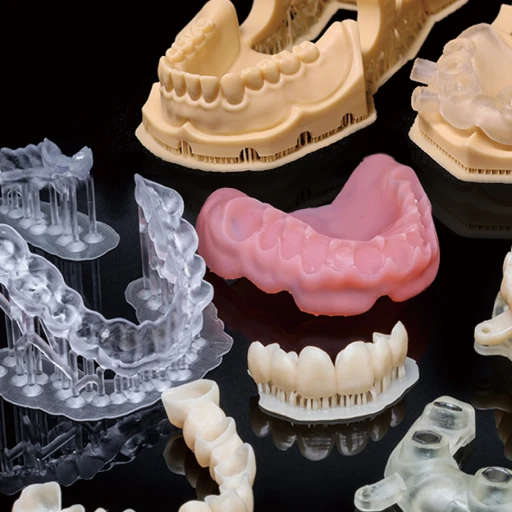
Key Insight for Clinicians: Comparing a traditional gypsum model with a high-precision digital resin model reveals a stark contrast in dimensional stability and margin definition. Gypsum dental stone is highly prone to chipping, abrasion, and micro-fractures during laboratory articulation. This physical fragility is a primary driver of costly remakes. In contrast, digital resin models maintain consistent physical tolerances of less than 50μm, virtually eliminating physical wear during technical handling.
3. Total Cost of Ownership (TCO): CapEx vs. OpEx in Digital Dentistry
A rigorous dental 3D printing cost analysis requires separating financial inputs into Capital Expenditures (one-time setup costs) and Operational Expenditures (ongoing recurring costs). Understanding the total cost of ownership dental 3D printer ecosystems prevents clinics from underestimating long-term operational costs.
Capital Expenditures (CapEx)
Establishing an in-house digital ecosystem requires an initial investment in hardware and software:
- Intraoral Scanner (IOS): The primary entry point for clinical data acquisition.
- Dental 3D Printer: Selecting between highly cost-effective mid-range MSLA systems and specialized industrial-grade DLP systems. Modern MSLA printers offer exceptional pixel resolutions (down to 17μm–19μm), providing a highly competitive cost-to-performance ratio.
- Post-Processing Units: Automated washing stations and validated ultraviolet (UV) post-curing chambers. These chambers are strictly necessary to meet biocompatibility certification requirements.
- CAD/CAM Software Licensing: Annual dental design software modules (such as exocad or 3Shape) vs. open-access nesting and slicing software.
Operational Expenditures (OpEx)
Running an in-house lab involves several recurring costs:
- Photopolymer Dental Resins: Costs vary between standard utility model resins and specialized, high-value biocompatible dental resin cost per print classifications (such as Class I and Class IIa resins for surgical guides, splints, denture bases, and temporary crowns).
- Consumables: Replacement LCD screens (for MSLA printers, which degrade over time), FEP/nFEP vat films, high-purity isopropyl alcohol (IPA) for washing, and disposable resin filters.
- Labor Costs: Technical active time spent on file preparation, digital nesting, slicing, machine setup, washing, curing, and minimal manual finishing.
4. Direct Cost-Per-Print & Payback Period Calculations
To demonstrate the viability of an in-house dental 3D printer ROI, we must compare the direct, variable cost of local resin printing against traditional laboratory outsourcing rates. Below is a detailed, application-specific financial comparison based on market-validated operational data:
| Application | Traditional Lab Cost (Outsourced) | In-House 3D Printed Cost (Material + Consumables) | Average Active Labor Time | Net Savings Per Unit |
|---|---|---|---|---|
| Surgical Guide | $80.00 – $150.00 | $3.50 – $6.00 (Biocompatible Guide Resin) | 10 – 15 minutes | $76.50 – $144.00 |
| Dental Model (Arch) | $15.00 – $30.00 | $1.80 – $3.00 (Standard Model Resin) | 5 – 8 minutes | $13.20 – $27.00 |
| Occlusal Splint / Nightguard | $90.00 – $180.00 | $5.00 – $9.00 (Class IIa Splint Resin) | 12 – 18 minutes | $85.00 – $171.00 |
| Denture Base & Teeth | $150.00 – $300.00 | $15.00 – $25.00 (Class IIa Denture Resin) | 20 – 30 minutes | $135.00 – $275.00 |
Material Cost Analysis (The Resin Math)
Let us look at a typical dental model to calculate precise material costs:
- A standard solid dental model arch requires approximately 50 cm³ of resin. With a typical density of 1.2 g/cm³, the net model weight is 60 grams.
- Accounting for an additional 10% material overhead (including print supports, platform adhesion layers, and residual resin in the vat), the total resin consumption is approximately 66 grams per model.
- With a standard high-quality dental model resin priced at $150.00 per kilogram (1,000 grams), the direct material cost per model is:( $150.00 / 1000g ) * 66g = $9.90 USD
- If utilizing highly optimized bulk-purchase or cost-effective professional-grade resin lines, this material cost can drop to as low as $4.76 per model set, representing a 70% to 90% reduction compared to the $35.00 to $50.00 outsourcing fees typically charged by traditional commercial labs.
The Payback Period Formula
The time required to fully amortize an in-house digital printing setup can be calculated using the following mathematical formula:
Real-World Example: A dental clinic that currently outsources an average of 50 surgical guides and splints per month, spending approximately $1,500.00 in outsourcing fees, transitions to an in-house digital ecosystem. With a total initial CapEx of $8,000.00 (comprising a mid-range MSLA printer, washing/curing stations, and initial software and materials), and achieving a net savings of $1,513.00 per month (after factoring in consumables, electricity, and minor print failures), the entire capital investment is fully recovered in approximately 5.3 months. After this initial payback period, the monthly savings directly improve the clinic’s operating margins.
5. MSLA vs. DLP: Analyzing Optical Accuracy and System Costs
A critical technical choice when evaluating the total cost of ownership is comparing subtractive milling vs additive 3D printing dentistry as well as internal printing technologies like MSLA vs DLP dental printing accuracy. Understanding how these technologies project UV light directly impacts clinical outcomes and maintenance overhead.
| Evaluation Metric | Masked Stereolithography (MSLA) | Digital Light Processing (DLP) |
|---|---|---|
| Light Projection Mechanism | LED array passing light through an LCD photomask screen. | Projector light source reflecting off a Digital Micromirror Device (DMD) chip. |
| Hardware Setup Cost | Low to Moderate (Typically $1,500 to $3,500 for professional systems). | High (Often $5,000 to $15,000+ due to complex optics). |
| Pixel/Voxel Resolution | Excellent (Modern high-density monochrome LCDs achieve 17μm to 19μm XY pixel sizes). | Very Good (Fixed pixel matrix, but resolution can degrade at the outer edges of larger build plates). |
| Dimensional Accuracy | High clinical trueness (mean error under 0.157mm, precision within 0.041mm; highly suitable for models and guides). | Excellent trueness (highly consistent focal path, optimal for high-precision crown/bridge applications). |
| Maintenance & Consumables | LCD screen is a wear item that requires replacement after 1,000–2,000 hours, but replacement screens are inexpensive. | Projector light source lasts longer (up to 10,000+ hours), but replacing optical engines or DMD chips is highly expensive. |
For most clinical practices and mid-sized laboratories, modern MSLA systems provide an exceptionally balanced solution. They deliver the high accuracy required for dental applications at a fraction of the initial capital cost of traditional DLP systems, accelerating the payback timeline.
6. Intangible and Compound ROI Metrics
Beyond immediate material cost reductions, the shift to digital manufacturing introduces compound operational efficiencies that improve clinic performance:
- Drastic Reduction in Turnaround Times: Instead of waiting 5 to 10 business days for an external laboratory to ship a finished physical model or appliance, in-house printing compresses the entire workflow to 12 to 24 hours. This fast turn-around allows for next-day or even same-day chairside delivery of splints, surgical guides, and temporary restorations.
- Minimized Remake Rates: Digital files do not warp, degrade, or break during transit. High-precision MSLA printing maintains highly repeatable tolerances, which ensures a precise first-time clinical fit and avoids costly clinical adjustment time.
- Enhanced Chair Time Efficiency: Utilizing highly accurate 3D-printed surgical guides minimizes intraoperative surprises, reducing patient discomfort and speeding up implant placement procedures.
- Improved Patient Experience and Retention: Replacing uncomfortable physical impression trays with rapid intraoral scanning improves patient comfort, which directly drives higher case acceptance rates.
7. Overcoming Implementation Friction: Validation & Compliance
Successfully integrating an in-house dental 3D printer ROI workflow requires addressing key clinical and operational requirements:
Strict Biocompatibility Standards: When fabricating appliances intended for intraoral placement—such as surgical guides, splints, or temporary crowns—it is critical to use certified medical-grade photopolymer resins (Class I and Class IIa). Furthermore, practitioners must strictly follow the manufacturer’s validated post-processing instructions, including specific IPA wash durations and precise UV post-curing temperatures and times, to ensure complete monomer conversion and eliminate potential toxicity.
System Integration: Selecting open-material 3D printers allows clinics to source materials from various certified resin manufacturers, reducing long-term material costs. It also ensures compatibility with widely used dental CAD design suites.
Routine Preventative Maintenance: Ensuring consistent accuracy and high print yields requires regular calibration of the optical engine, checking vat film tension, and performing routine cleaning of the optical interface to prevent print failures and minimize wasted resin.
8. Conclusion: The Competitive Imperative of the Digital Lab
Transitioning from traditional analog workflows to digital dental resin 3D printing is no longer an optional luxury reserved for high-volume commercial laboratories; it has become an essential operational standard for maintaining cost-competitiveness. By reducing material and labor costs by over 70%, compressing delivery turnarounds from days to hours, and significantly lowering clinical remake rates, in-house 3D printing offers a highly predictable and rapid return on investment.
Actionable Step: Begin your transition by analyzing your highest-volume outsourced dental applications (e.g., orthodontic models or implant surgical guides). Calculate your specific local payback timeline using the formula provided, and transition your workflow incrementally to maximize clinical success and financial return.