In the world of jewelry investment casting, the transition from traditional wax to 3D printing resin casting has introduced new challenges. While castable resin investment powder allows for incredible detail, many users struggle with mold failure. Success depends on understanding how gypsum-bonded investment interacts with photopolymer resins during the burnout process.
1. The Resin vs. Wax Dilemma: Why Expansion Matters
Unlike traditional carving wax, which melts at low temperatures, 3D printed resins are “thermoset” materials. They do not melt; they undergo a process of thermal decomposition. A major challenge is the coefficient of thermal expansion. As the temperature rises, the resin expands significantly before it begins to gasify. If your gypsum-bonded investment lacks sufficient strength or elasticity, this expansion causes the mold to crack—a problem known as “investment breakdown.”
2. Key Properties of High-Performance Investment Powders
To find the best investment for photopolymer resin, you must look for powders engineered to handle the unique thermal behavior of 3D prints. Consider these technical factors:
- Cristobalite Content: High-quality powders use Cristobalite and Quartz to manage expansion. Cristobalite undergoes a phase transformation around 275°C, providing the necessary “cushion” to offset resin expansion.
- High Hot Strength: Look for Type IV or Type V high-strength gypsum standards. This ensures the mold can withstand the mechanical stress of the metal flow.
- Low Ash Residual: The resin must have a low ash content (ideally <0.05%), and the investment must be porous enough to allow these gases to escape through a vacuum casting machine.
Phosphate-bonded vs. Gypsum-bonded Investment
| Feature | Gypsum-bonded Investment | Phosphate-bonded Investment |
|---|---|---|
| Best For | Gold, Silver, Bronze (Low-temp metals) | Platinum, Stainless Steel (High-temp) |
| Surface Finish | Ultra-smooth, easy to clean | Slightly rougher, harder to remove |
| Expansion Control | Moderate (Relies on Cristobalite) | High (Liquid-controlled) |
3. Top Recommendations: Best Investment for Photopolymer Resin
If you are looking for consistent results in your 3D printed jewelry casting workflow, these industry standards are the most reliable:
- R&R Plasticast: Specifically designed for 3D prints. Follow the R&R Plasticast instructions carefully regarding the water-to-powder ratio (typically 38/100 or 40/100) to ensure maximum strength.
- Gold Star Powercast: Known for its fine particle size, producing a mirror-like surface that reduces post-cast polishing time.
- Satin Cast 20: A classic choice that works well with low-expansion resins, provided the burnout cycle is strictly managed.
4. How to Prevent Investment Cracking in Resin Casting
Cracking is the most common failure. To avoid this, focus on these three practical steps:
- Precise Water-to-Powder Ratio: Using too much water weakens the gypsum structure. Always use a digital scale.
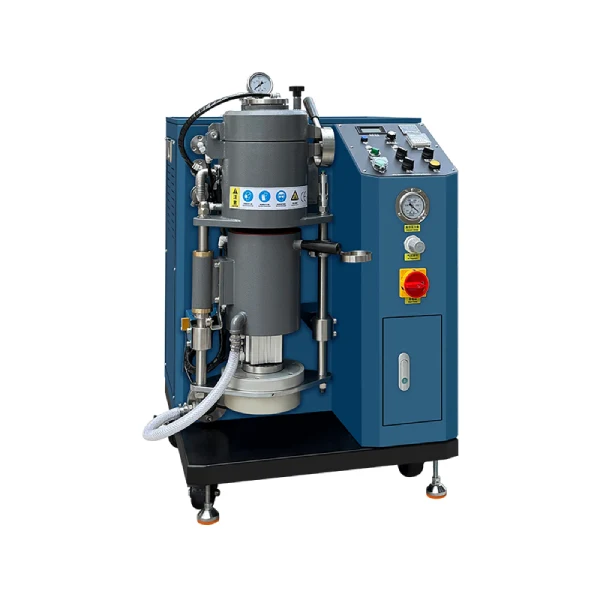
- Vacuum Degassing: Use a vacuum casting machine to remove all air bubbles. Bubbles on the resin surface create “investment-metal reactions” that ruin the finish.
- Hollow Your Models: Printing models with thin walls (0.5mm to 1.0mm) significantly reduces the total volume of resin expanding against the mold walls.
5. The Optimized Burnout Cycle for Castable Resin
Your burnout cycle for castable resin should be longer and slower than a standard wax cycle. A typical high-success schedule includes:
- Drying Phase: Hold at 150°C (300°F) to remove free water.
- Thermal Soak: Hold between 250°C and 450°C. This is the critical zone where resin expands and begins to decompose. Slow heating here prevents “flashing.”
- Peak Temp: Reach 730°C (1350°F) to ensure all carbon residues are completely gasified.
- Casting Temp: Drop to the appropriate flask temperature based on the metal being cast.
6. Troubleshooting Common Defects
- Flashing (Metal Fins): Usually caused by heating the flask too quickly or an incorrect water-to-powder ratio.
- Surface Porosity: Often due to incomplete burnout. If you see black spots on the metal, increase the “soak time” at your peak temperature.
- Orange Peel Texture: Caused by a reaction between the metal and the investment, often if the flask is too hot during pouring.