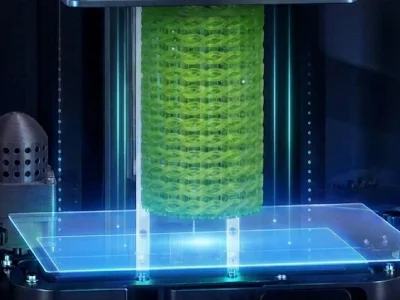
In high-end 3D jewelry manufacturing, the resin vat film (FEP, nFEP, or ACF) serves as the critical optical gateway. For professionals aiming for micron-level precision, the condition of this film is just as important as the resin or the light source itself. Over time, FEP film wear impact becomes a primary reason for failed prints and lost details. Understanding how this degradation affects your 3D printed jewelry surface finish is essential for maintaining a high-quality production line.
Why Are My 3D Printed Jewelry Details Blurry?
If you notice that sharp edges on prongs or fine milgrain textures are appearing “mushy” or rounded, the culprit is likely light diffusion. A new release film has high UV transparency (often above 92%). However, as the film ages, it undergoes “fogging” or “clouding” due to repeated UV exposure and chemical interaction with the resin.
- The Optical Impact: This clouded surface acts like a frosted lens, scattering the UV light instead of allowing it to pass through in a sharp, collimated beam.
- Effect on Jewelry: This scattering causes a “blooming effect,” where the resin cures slightly outside the intended boundaries. This results in loss of dimensional accuracy, making stone seats too small and filling in delicate engravings.
Surface Artifacts and Casting Prep
Mechanical wear, often from improper resin vat maintenance or debris, creates micro-scratches and pitting on the film. These physical defects are more than just cosmetic issues for the vat; they are directly transferred to the model.
- Texture Transfer: Scratches on the FEP or nFEP film are mirrored onto the resin surface as “ghost lines” or raised ridges.
- Increased Labor: These defects persist through the casting prep phase. When the resin is cast into gold or silver, the jeweler must spend significantly more time sanding and polishing, which can lead to the loss of precious metal and altered final weights.
Peel Force and Dimensional Accuracy
During the printing process, the platform lifts to separate the cured layer from the film. This creates peel force (suction). Over time, the film loses its tension and becomes “slack.”
A loose film increases suction, which is a major factor when SLA/LCD jewelry printing troubleshooting surface defects. High suction can lead to:
- Micro-layer shifting: Even a 10-micron shift can ruin the alignment of a pavé setting.
- Detail Tearing: Delicate, thin-walled structures or filigree may warp or break during the separation process.
Comparing Materials: nFEP vs. ACF for Jewelry
Choosing the best release film for high detail jewelry resin depends on your specific needs for speed versus precision.
| Film Type | Key Characteristics | Impact on Jewelry Details |
|---|---|---|
| FEP | Standard choice, high clarity. | Prone to rapid fogging and higher suction forces. |
| nFEP (PFA) | Smoother surface, lower surface tension. | Excellent for reducing suction force; preserves tiny prongs better than standard FEP. |
| ACF | Composite matte texture, ultra-low suction. | Best for fast printing and large batches, but may require exposure tuning to maintain micro-fine sharpness. |
Practical Strategies for Resin Vat Maintenance
To ensure 3D printed jewelry surface finish remains consistent, follow these practical steps:
- Preventative Replacement: Don’t wait for the film to leak. Establish a replacement log based on print hours or layers.
- Gentle Cleaning: Use only soft silicone spatulas and microfiber cloths. Avoid paper towels, which cause micro-scratches that degrade resin 3D printing jewelry quality.
- Parameter Optimization: As a film ages, you may need to slightly increase lift height or decrease lift speed to compensate for the loss of tension.
- Filter Your Resin: Always filter resin after a failed print to remove cured debris that can pit the film surface.
The relationship between how worn FEP affects 3D print detail and the final quality of a piece of jewelry is direct. By treating the release film as a precision optical component rather than a simple consumable, manufacturers can ensure that their artistic vision is accurately translated from the digital model to the final cast metal.